Lee Jae-myung wants to position S.Korea as ‘bridge’ between East and West; vision driven by historical policies, current international landscape: expert
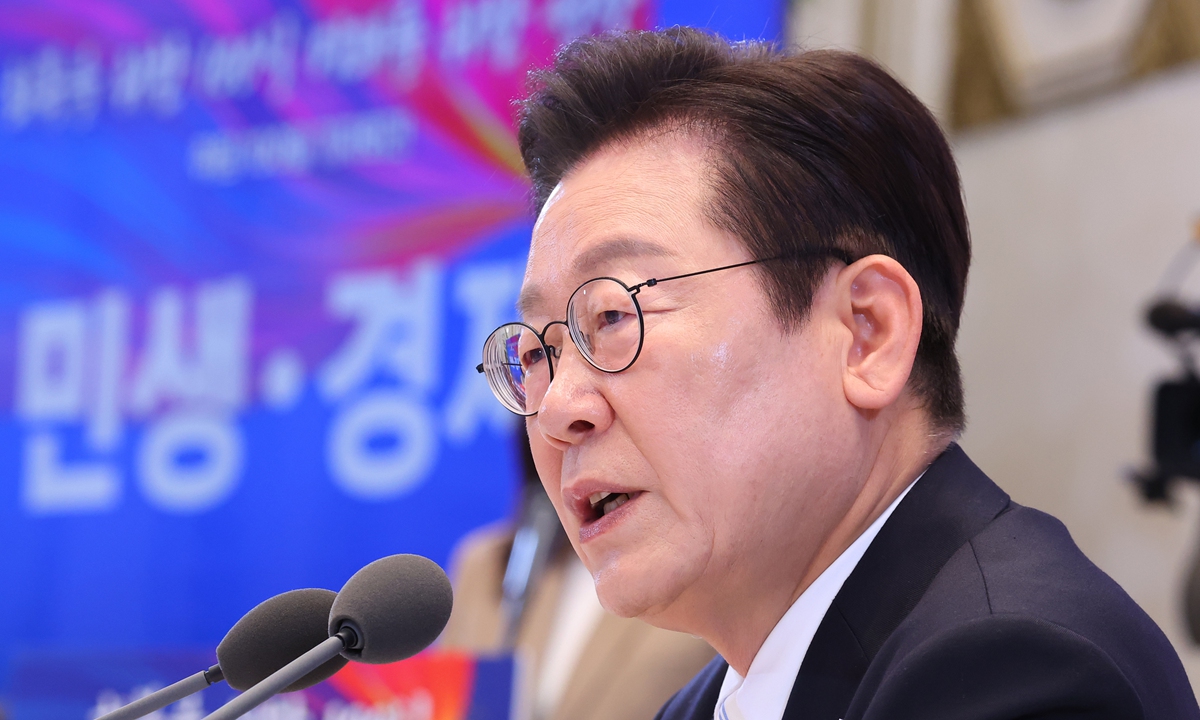
Photo: VCG
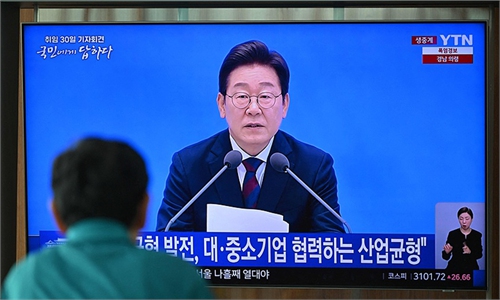
South Korea will stand together with the US in the new global order, but also manage its relationship with China, South Korean President Lee Jae Myung said during his interview with the Times Magazine released on Thursday. An expert said that the concept of South Korea seeking to play a mediating role between China and the US is driven not only by the continuity of historical policies but also by pragmatic considerations rooted in the current international landscape.Times Magazine published its exclusive interview with Lee on Thursday and featured his photo on its cover.
During the interview, Lee said, "One of my biggest accomplishments is that South Korea's domestic political situation has been stabilized."
He also said that South Korea is in "a very serious crisis," adding that "To address these issues, we need to bring our economy back on track for growth and increase opportunities for our people," according to the interview.
The interview article not only covers Lee's positions on domestic affairs but also includes his approach to handling diplomatic relations.
Times magazine said that geopolitically, Lee wants to position South Korea as a "bridge" between East and West. Critics say Lee may be tilting too close to historic ally the US, but there are also questions over whether Washington remains a reliable partner, said the report, adding that Lee, however, insists South Korea remains well-placed to act as a "bridge of exchanges and cooperation" in the region by cementing ties with the White House.
"We will stand together with the US in the new global order, as well as supply chains centered on the US, but there is a need for us to manage our relationship with China," Lee told the Times magazine, adding that otherwise, there's "a risk that South Korea could become the front line of a battle between two different blocs."
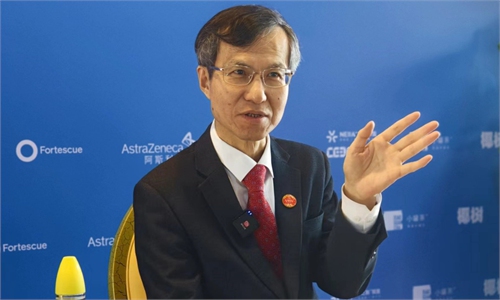
The notion of South Korea attempting to serve as a bridge between China and the US dates back to the administration of former South Korean president Kim Dae-jung, with the core objective of avoiding being forced to choose sides amid a China-US power play, Chen Xiangyang, director of the Center for Korean Peninsula Studies at the China Institute of Contemporary International Relations told the Global Times on Thursday.
Subsequent South Korean governments have also put forward similar propositions, advocating the role of a "rational mediator between China and the US," Chen said.
Chen said that Lee's reiteration of the bridge role is closely linked to South Korea's upcoming hosting of the 32nd APEC Economic Leaders' Meeting. As the host nation, South Korea hopes to facilitate signs of eased relations between China and the US by inviting the two leaders to participate in the summit, he added.
Progress in facilitating a China-US leaders' meeting would not only alleviate South Korea's geopolitical pressures but also enhance its international influence, the expert said.
RELATED ARTICLES