What 2025 WMC’s high international participation reveals about China’s manufacturing

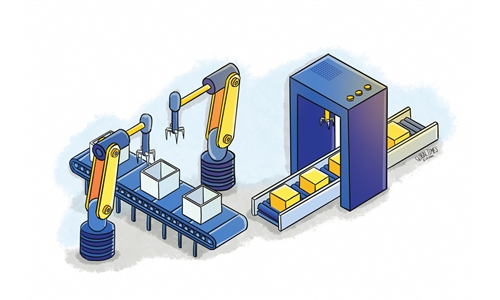
Illustration: Xia Qing/GT
The 2025 World Manufacturing Convention (WMC), now underway in East China's Anhui Province, offers a timely vantage point on how the country's industrial base is engaging with global supply chains. Delegations from more than 40 countries and regions are attending, with foreign participants accounting for more than half of all attendees - a notably high proportion, according to media reports. This scale and composition show that global manufacturers remain keenly attentive to developments in China.The gathering also comes amid a shift in the global policy climate. In recent months, the US has moved to restrict cross-border flows - frequently resorting to tariffs and tightening export controls - steps that risk further disrupting global supply chains. China, by contrast, has kept its manufacturing ecosystem open to international partners. That steady openness continues to create avenues for cooperation in manufacturing and trade.
Manufacturing was the earliest sector that China opened to the outside world, and it has also been the sector with the most intense market competition and the closest integration into the global division of labor and cooperation. Over the past several decades, China's manufacturing sector has consistently been an important destination for foreign investment, reflecting its advantages in scale, infrastructure, and an increasingly sophisticated industrial ecosystem.
The strong interest shown by international delegates at this year's convention underscores the enduring demand for cross-border expansion in manufacturing. Their presence serves as a market-driven endorsement, signaling that despite geopolitical headwinds, global industrial capital continues to find opportunities in deeper engagement with China. In this sense, the gathering represents a collective "vote with their feet" in favor of international cooperation in manufacturing.
China's continued openness in manufacturing offers international investors more than just access to a vast domestic market. It provides entry into one of the world's most comprehensive industrial ecosystems, where supply chains are both deep and highly adaptable. For multinational firms, this means the ability to expand production quickly, collaborate with a wide network of suppliers, and test new technologies in a competitive environment that rewards efficiency and innovation.
Beyond operational advantages, China's manufacturing sector also offers opportunities in emerging growth areas. The push to upgrade industry - from green technologies to advanced equipment and digital manufacturing - is generating fresh demand for foreign expertise, capital, and partnerships.
Admittedly, Chinese manufacturing enterprises are facing growing challenges from protectionism as they go global and deepen their participation in world value chain cooperation. Arbitrary moves by some countries, such as imposing unilateral tariff hikes and non-tariff trade barriers, have disrupted global industrial cooperation and created obstacles for Chinese companies seeking to engage in technology collaboration or invest in production facilities abroad.
However, the pace of Chinese companies' internationalization will not slow. China holds advantages in industrial foundation and technological innovation, which consolidate its important position in the global value chain. China's industrial upgrading has made high-tech products new growth drivers for Chinese manufacturing companies going global. China is also actively expanding diversified markets, engaging in regional economic cooperation, and enhancing institutional opening-up to mitigate overseas challenges and risks.
Investors from China have established 52,000 overseas enterprises in 190 countries and regions worldwide, including 19,000 in Belt and Road Initiative partner countries. These overseas enterprises now cover more than 80 percent of countries and regions across the globe, the Xinhua News Agency reported earlier this month.
For instance, Chinese companies have helped build industrial parks and special economic zones overseas. These facilities not only enhance local production capacity but also generate economic growth and create jobs in the regions where they are located.
Whatever challenges may appear in the external environment, China's manufacturing remains needed by the world, Chinese Foreign Ministry spokesperson Lin Jian noted at a routine press conference in June. Although trade protectionism may pose short-term obstacles to the Chinese manufacturing sector's move to go global, the trends of deeper integration into global value chains and increasing globalization of China's manufacturing sector remain resilient.
Against this backdrop, the 2025 WMC's high level of international participation highlights a global consensus on cooperation and mutual benefit. This strong foreign engagement demonstrates that, despite the rise of protectionism, global industrial chain collaboration and the international appeal of Chinese manufacturing continue to grow. The momentum of the internationalization of China's manufacturing sector remains irreversible.
The author is a reporter with the Global Times. bizopinion@globaltimes.com.cn
RELATED ARTICLES