China and Georgia substantially conclude negotiations to upgrade free trade agreement
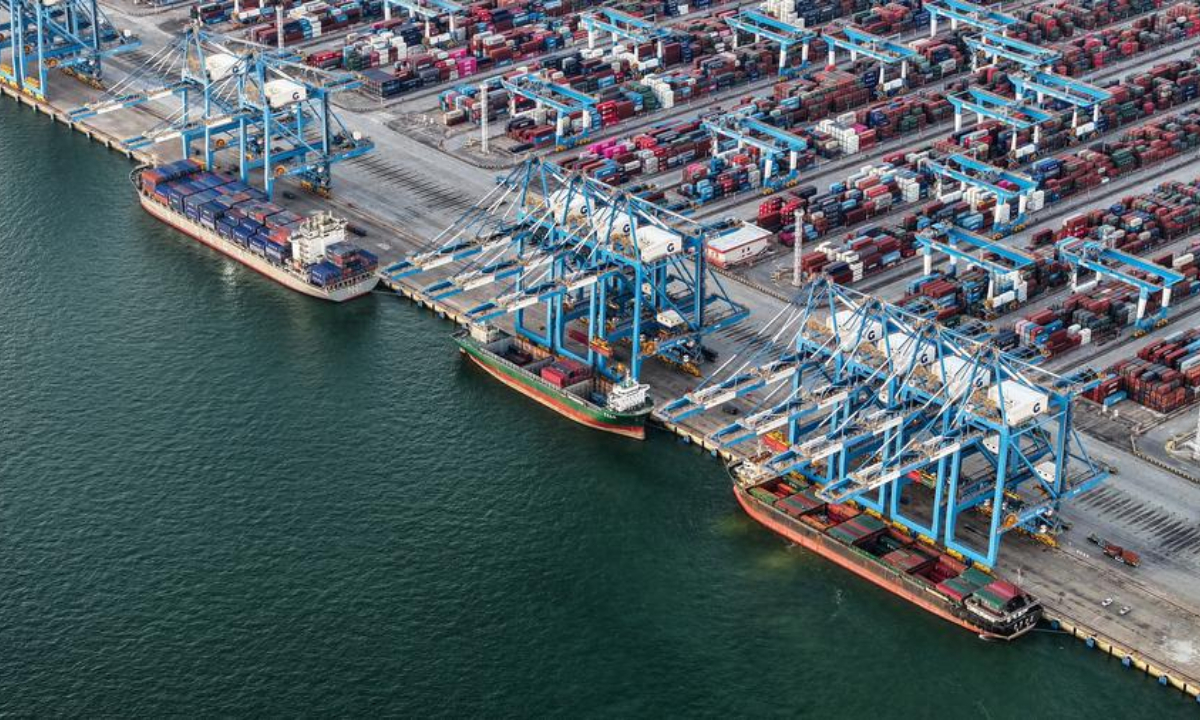
An aerial drone photo taken on September 4, 2025 shows cargo ships berthed at a container dock of Qinzhou Port in Qinzhou City, South China's Guangxi Zhuang Autonomous Region. Photo: Xinhua
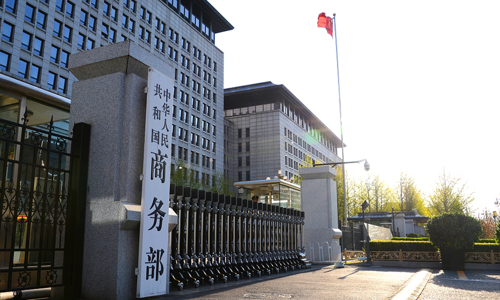
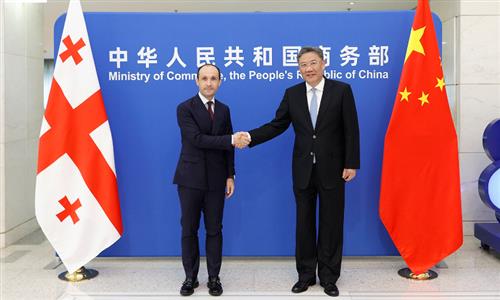
China and Georgia have substantially concluded the negotiations to upgrade the China-Georgia Free Trade Agreement (FTA), which will further enhance trade facilitation between the two countries and promote the deepening development of bilateral economic and trade relations, Chinese Ministry of Commerce (MOFCOM) announced on Monday in a statement.The second round of negotiations to upgrade the bilateral FTA was held in Tbilisi, the capital of Georgia from September 17 to 18. The two sides reached consensus on all four chapters of the text, covering technical trade barriers, sanitary and phytosanitary measures, investment, and e-commerce, thereby substantially concluding the negotiations, said MOFCOM.
The two sides also agreed to formally sign a memorandum of understanding as soon as possible to conclude the upgrade process for the FTA.
According to MOFCOM, the FTA entered into force on January 1, 2018, marking the first of its kind initiated and concluded by China following the proposal of the Belt and Road Initiative. It is also China's first FTA reached in the Eurasian region. The upgrade of the agreement will further enhance trade facilitation between the two countries and promote the deepening development of their economic and trade relations.
In the first eight months of 2025, trade between China and Georgia reached $1.78 billion, up 21.2 percent year-on-year. During the same period, China's imports from Georgia surged by 30.3 percent year-on-year, while exports to Georgia also witnessing an increase of 19.9 percent from the previous year, according to statistics from China's General Administration of Customs.
According to a previous statement, MOFCOM announced that the second meeting of the Joint Committee of the China-Georgia FTA, combined with the first round of upgrade negotiations, was held in Beijing in July. The meeting was co-chaired by Yan Dong, vice commerce minister of China and Genadi Arveladze, Deputy Minister of Economy and Sustainable Development of Georgia.
Yan stated that the upgrade of the agreement represents a comprehensive optimization and expansion of the existing pact.
"Amid the current backdrop of unilateralism and protectionism practiced by certain countries, it demonstrates the two nations' firm determination and pragmatic actions to advance trade and investment liberalization and facilitation, as well as to practice genuine multilateralism. This will inject new and strong momentum into deepening bilateral economic and trade relations," said Yan.
Aviladze noted that Georgia has consistently supported multilateralism and free trade. The implementation and upgrade of the China-Georgia FTA hold significant importance for Georgia.
Aviladze expressed willingness to seize this opportunity to expand exports of high-quality products such as wine, food, and agricultural goods to China, deepen cooperation in areas like e-commerce, pharmaceutical supply chains, customs procedures, and trade facilitation, and welcome more Chinese enterprises to invest and establish businesses in Georgia, according to the MOFCOM statement.
According to a release by MOFCOM in 2018, in terms of goods trade, Georgia immediately applied zero tariffs to 96.5 percent of products from China when the FTA entered into force, covering 99.6 percent of the total value of imports from China. China applied zero tariffs to 93.9 percent of products from Georgia, covering 93.8 percent of the total value of imports from Georgia, with 90.9 percent of products (42.7 percent of import value) immediately subject to zero tariffs, and the remaining 3 percent of products (51.1 percent of import value) would gradually reduce to zero tariffs within five years.
Global Times
RELATED ARTICLES