‘Peace must be valued’ an overarching principle guiding China-US relations: PLA lieutenant general
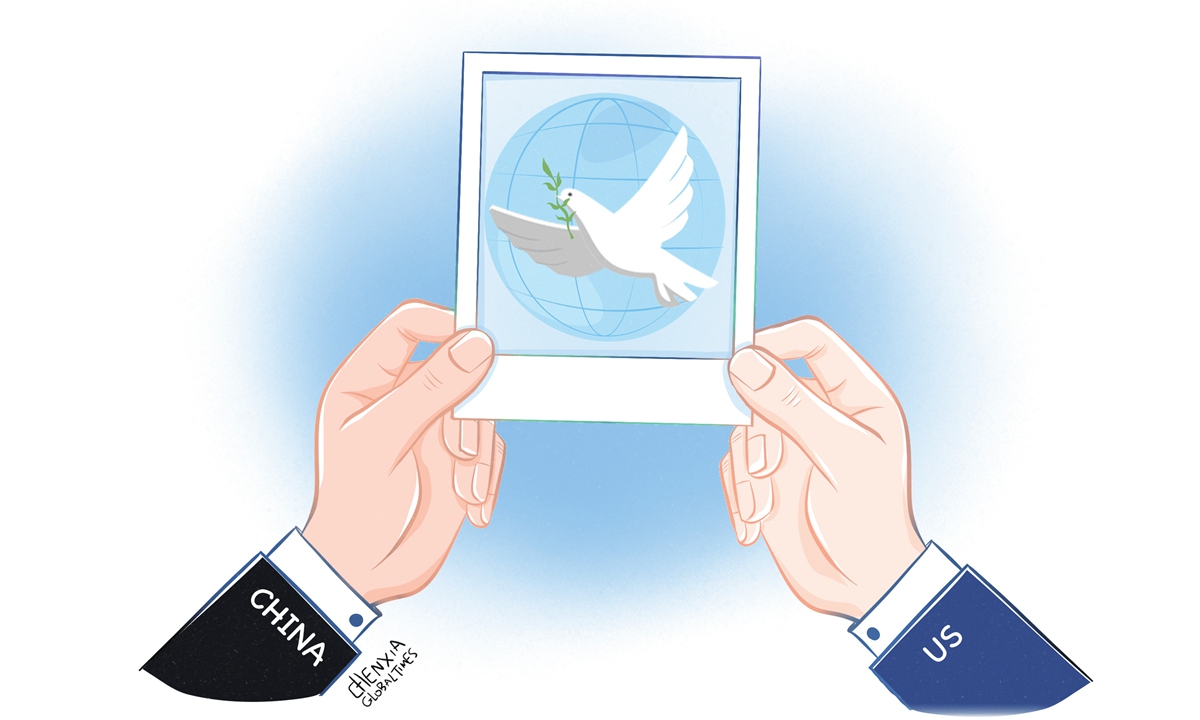
Illustration: Chen Xia/GT
Editor's Note:
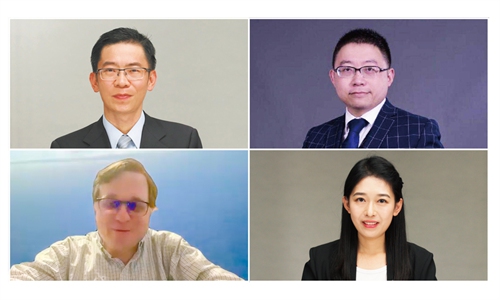
"Major-power relations should be based on mutual respect, peaceful coexistence, win-win cooperation, and shared responsibility," said Lieutenant General He Lei (He), former vice president of the Academy of Military Sciences of the People's Liberation Army (PLA), in an exclusive interview with Global Times (GT) reporter Ma Ruiqian on the sidelines of the recent 12th Beijing Xiangshan Forum. He also discussed China's defense policy, which is defensive in nature, emphasizing that China will not threaten or invade any country. However, he stated that China will never allow any external force to bully, humiliate, or infringe upon it. With rising security challenges in the Asia-Pacific region and globally, what principles and spirit should guide major-power relations? How should China respond to the "China threat" rhetoric, and what can China do to contribute to building a fair and reasonable global security governance system? The following is the full transcript of the interview.
GT: On the first day of the 12th Beijing Xiangshan Forum, you presented a photo as a gift to Chad Sbragia, former US deputy assistant secretary of defense. The photo depicts you presenting a Chinese calligraphy scroll inscribed with the words "peace must be valued" to Sbragia last year. Could you share the story and the significance behind this gift?
He: At last year's 11th Beijing Xiangshan Forum, I met with Sbragia and gave him a piece of calligraphy with the words "peace must be valued." The reason I gave it to him was that in 2024, when President Xi Jinping spoke on the phone with then US president Joe Biden, he underlined three overarching principles that should guide China-US relations. First, peace must be valued. Second, stability must be prioritized. Third, credibility must be upheld. The calligraphy corresponds with the first principle emphasized by President Xi.
Second, China pursues a defensive national defense policy. We will never threaten anyone, nor will we ever take the initiative to invade anyone. The idea of "peace must be valued" is embedded in this.
When I heard that Sbragia would come again this year, I downloaded the photo from the internet, enlarged it, and had it printed. I wanted to give it to him so he would have a keepsake. When he sees this photo, he will be reminded of China's defense policy and of President Xi's expectations for China-US relations. I call this "photo diplomacy." I think this helps bring people closer. I remember then Chinese premier Zhou Enlai once said that diplomacy should emphasize people-to-people exchanges and the more friends, the better. I think the "photo diplomacy" helps shorten the distance between people.
GT: Recently, President Xi held phone talks with US President Donald Trump. In your view, how should the two countries demonstrate the demeanor, vision and responsibility of major powers?
He: Major power relations should be based on mutual respect, peaceful coexistence, win-win cooperation and shared responsibility. China and the US are both world powers with significant global influence. President Xi has repeatedly emphasized the vital importance of China-US relations. These relations not only concern the security and well-being of the two peoples, but also have a major impact on regional and global peace and development. Therefore, the Chinese government and people attach great importance to and cherish China-US relations.
President Xi has stressed many times that there are a thousand reasons to make the China-US relationship work and no reason to break it. Communication is better than no communication. After talks, I believe this provides a good beginning for further improvement of China-US relations and military-to-military relations. Reaching more consensus in their phone conversations will help guide the improvement and development of China-US relations, benefiting the two countries, the region and world peace.
GT: The Asia-Pacific situation was one of the focal points of this year's Beijing Xiangshan Forum. On September 16, multiple Philippine official vessels engaged in illegal activities within the territorial waters of China's Huangyan Dao, and the China Coast Guard lawfully took control measures against them. What price will the Philippines have to pay for its continuous provocative actions?
He: Since Ferdinand Marcos Jr was elected president, the Philippines quickly leaned toward the US and the West. In the South China Sea, it has repeatedly provoked China's territorial sovereignty and maritime rights and interests, to which China has shown great restraint. The Philippine authorities treat the US as their backstage patron, emboldened to confront China by relying on American support, thereby placing their own security and development entirely in the hands of the US.
Recently, the Chinese government announced the establishment of the Huangyan Dao national nature reserve. Some Philippine vessels forcibly entered China's territorial waters at Huangyan Dao. In response, our coast guard took reasonable, lawful and legitimate actions in accordance with regulations.
The Philippines has been frequently provoking China's territorial sovereignty and maritime rights and interests in the South China Sea. Recently, it has even tried to stir up trouble by bringing up the Taiwan question, attempting to interfere in China's internal affairs in exchange for its so-called interests in the South China Sea. This method is despicable, a petty trick that will not achieve its purpose. The more the Philippines persists, the deeper it will fall, and in the end, it can only become a pawn of the US.
GT: Currently, regional conflicts are intensifying globally. How do you view the prospects of the Ukraine crisis and the security situation in the Middle East?
He: We hope that the Russia-Ukraine and Israel-Palestine conflicts can end as soon as possible. But ultimately, the resolution depends on the willingness of the two parties involved to pursue peace. Any other country or international organization can only play a supporting role.
GT: How do you view certain countries always misinterpreting China's normal military or trade activities, such as misrepresenting China's military parades and spreading the so-called "China threat" rhetoric?
He: In a world with nearly 200 countries, different ideologies and varying social systems, it is normal for the same issue to be viewed differently. If some countries propagate the "China threat" rhetoric, and there is no political prejudice involved, it may simply be a misunderstanding.
In fact, China pursues an independent and peaceful foreign policy, along with a defensive national defense policy. The military parade on September 3 showcased our armed forces. The purpose of developing our military is, first, to resolutely safeguard national territorial sovereignty, security and unity; second, to maintain regional and global peace; third, to contribute to the building of a community with a shared future for humanity; and fourth, to fulfill the responsibilities and obligations expected of a major power. We will not threaten or invade any country, but we will never allow any external force to bully, humiliate, or infringe upon us.
If we do not demonstrate our armed forces, outsiders will claim that China's military is not transparent; now that we have showcased our strength, they argue that it threatens them. So what should China do? As Karl Marx said: "Follow your own path, no matter what people say."
GT: Earlier this month, President Xi put forward the Global Governance Initiative (GGI). How do you think the Chinese military should contribute to building a fair and reasonable global security governance system?
He: In today's world, where century-old changes are accelerating and regional turmoil and conflicts occur frequently, President Xi's proposal of the GGI is both timely and important. It contributes Chinese wisdom and offers Chinese solutions for improving and strengthening global governance, and it has been welcomed and supported by participating countries and highly praised by the UN.
In practicing the building of a fair and reasonable global security governance system, the Chinese military should, first, unswervingly uphold and implement the GGI, acting as both a practitioner and a promoter of building a community with a shared future for humanity; and second, actively fulfill the international responsibilities of a major power military. Within the UN framework, China participates in and completes important tasks such as peacekeeping, escort missions in distant seas and humanitarian relief, providing high-quality public security goods to the international community and making greater contributions to global governance.
RELATED ARTICLES