China initiates probe into Mexico’s proposed tariff hikes
Nations should collectively oppose all forms of unilateralism, protectionism: MOFCOM

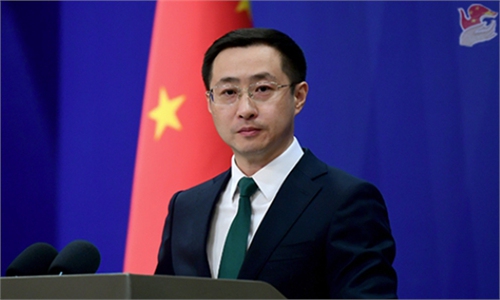
The Ministry of Commerce (MOFCOM) Photo: VCG
China's Ministry of Commerce (MOFCOM) announced on Thursday the initiation of an investigation into Mexico's restrictive measures that constitute trade and investment barriers against China, citing potential harm to Chinese enterprises, effective the same day.
The investigation was launched based on China's Foreign Trade Law and the MOFCOM's rules on investigation of foreign trade barriers, according to a MOFCOM statement.
Preliminary evidence and information obtained by the MOFCOM indicate that a proposal published in Mexico's official federal gazette on September 9, 2025, aiming to increase import tariff rates for products from non-free trade agreement partners including China, would seriously impair the trade and investment interests of Chinese enterprises.
The proposed measures cover a wide range of goods, including automobiles and auto parts, textiles, clothing, plastics, steel, household appliances, aluminum, toys, furniture, footwear, leather goods, paper and paperboard, motorcycles and glass. Additionally, the probe will examine other trade and investment restrictions imposed by Mexico against China in recent years, the MOFCOM said.
In response to media inquiries about the move, a MOFCOM spokesperson said that China firmly believes that, amid the current US imposition of excessive tariffs, all nations should collectively oppose all forms of unilateralism and protectionism. "No country should sacrifice the interests of third parties under external pressure," the spokesperson said.
Should Mexico's unilateral tariff increases take effect, even within the WTO framework, they would harm the interests of trading partners, including China, undermine the certainty of Mexico's business environment, and erode investor confidence in Mexico, according to the spokesperson, who said that China strongly opposes such measures.
The spokesperson said that this investigation will adhere to the principles of impartiality, fairness, and transparency. "MOFCOM will make an objective and fair determination based on the investigation's findings and will take necessary measures as appropriate to firmly protect China's legitimate rights and interests," the spokesperson added.
On the same day, the ministry announced that it will launch an anti-dumping probe into pecans imported from Mexico and the US effective immediately, citing evidence of below-value dumping that boosted imports, lowered prices and hurt domestic producers.
In response to questions about this investigation, the MOFCOM spokesperson said that given the low concentration of China's pecan industry and the large number of growers involved, the investigating authority, having obtained sufficient evidence to meet the requirements for initiating a case, lawfully decided to launch the investigation on its own initiative.
Zhou Mi, a senior researcher at the Chinese Academy of International Trade and Economic Cooperation, told the Global Times on Thursday that China and Mexico have for years engaged in mutually beneficial economic and trade exchanges and developed ties based on win-win cooperation.
Zhou said that the probe by the MOFCOM is based on multilateral rules and relevant Chinese laws and regulations, and is aimed at determining if Mexico put curbs on Chinese trade and investment, and if such acts undermined Mexico's multilateral pledges and infringed on Chinese laws.
Zhou pointed out that the anti-dumping investigations into pecans that originated from Mexico and the US are aimed at ensuring fair competition and should help the industry to grow in a more orderly fashion.
The investigation is now only at the initial stage and it is expected that the Chinese side will carry out the probe according to the circumstances, Zhou said.
Mexico is China's second-largest trading partner in Latin America, and China is Mexico's third-largest export destination.
According to China's General Administration of Customs, bilateral trade between China and Mexico reached $109.426 billion in 2024, with Chinese exports totaling $90.232 billion and imports standing at $19.195 billion.
RELATED ARTICLES