ARTS / CULTURE & LEISURE
New studies confirm Sanxingdui sacrificial pits date to late Shang Dynasty: experts
By in Deyang Published: Sep 27, 2025 05:48 PM
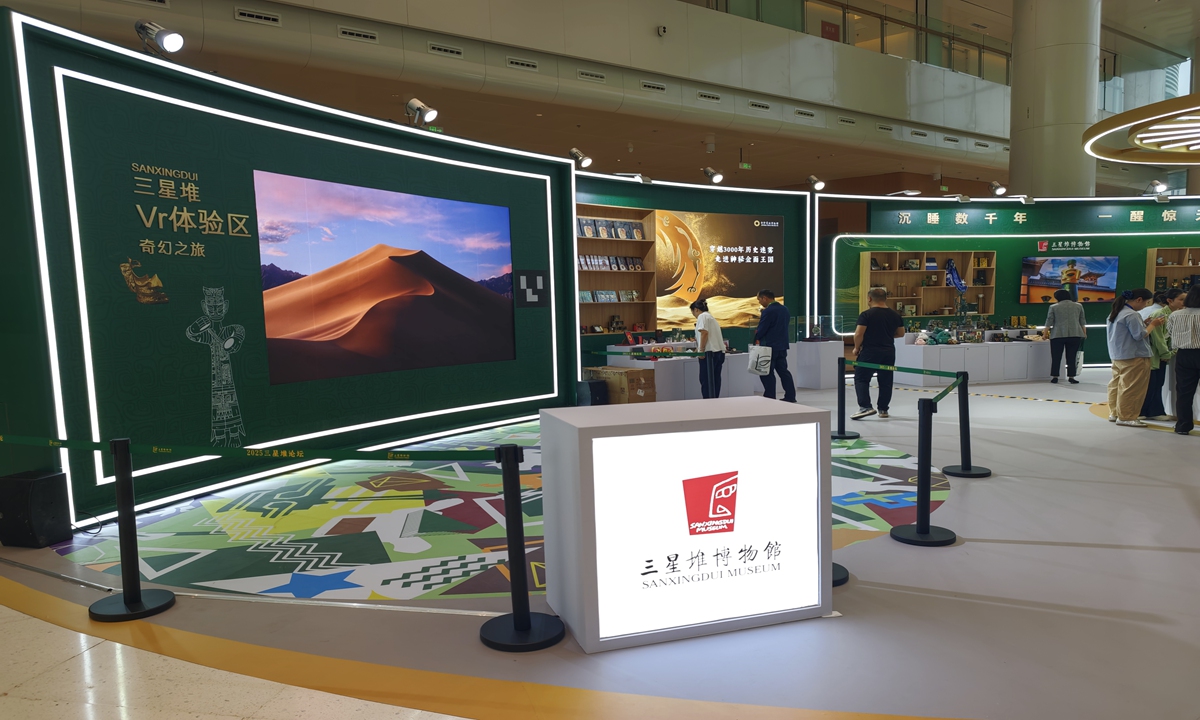
The 2025 Sanxingdui Forum opens in Deyang city, Southwest China's Sichuan Province, on Saturday. Photo: Chen Xi/GT
The 2025 Sanxingdui Forum opened in Deyang city, Southwest China's Sichuan Province, on Saturday, unveiling groundbreaking multi-disciplinary research findings that solidify the burial date of the site's sacrificial pits and reveal unique bronze-casting technologies, offering fresh insights into early Chinese civilization.
The forum, titled "Exchanges and Mutual Learning among Civilizations from an Archaeological Perspective," saw the Sichuan Provincial Cultural Relics and Archaeology Research Institute announce seven key research outcomes. These findings provide "strong evidence" for understanding the diverse yet integrated nature of the Chinese civilization, Chinese archaeologists said.
Among the key revelations was a timeline breakthrough from joint research by the Sichuan institute and Peking University. By using carbon-14 analysis, the team determined the No.3, 4, 6 and 8 pits have a 95.4 percent probability to have been buried between 1201 BC and 1012 BC, corresponding to China's late Shang period, said Ran Honglin, head of the Sanxingdui excavation team, at the forum.
"Matching fragments found across six pits (Nos.1,2,3,4,7,8) confirm they were interred simultaneously," Ran said. "This provides crucial evidence for establishing a precise chronological framework of the site."
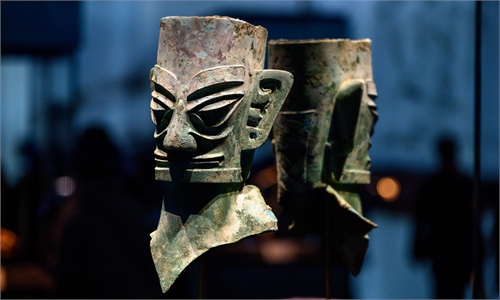
Originally discovered in the late 1920s, the Sanxingdui Ruins have been dubbed as one of the world's greatest archaeological findings of the 20th century. Located in the city of Guanghan, around 60 kilometers from the provincial capital Chengdu, the ruins, covering an area of 12 square kilometers, are believed to be the remnants of the Shu Kingdom, dating back some 4,500 to 3,000 years.
Equally significant was a collaborative study by Chinese and British institutions that uncovered an innovative bronze-casting system centered on modular production, combined with integral casting and forging.
The most striking revelation from this research was the "core frame-strip core support" technology, which solved the structural challenges of casting long, curved artifacts like the site's famous bronze sacred trees, demonstrating localized technological adaptation and innovation.
"This achievement not only deepens our overall understanding of ancient China's bronze casting system but also provides new evidence for revealing the pattern of a diverse yet integrated Chinese civilization and the mechanisms of global bronze technology exchange," Ran added.
Researchers also documented five other notable findings spanning goldwork, lacquer craftsmanship, pottery production, agriculture and artifact conservation.
Gold usage at the site exceeded 2 kilograms, with artifacts like gold masks crafted from gold-silver alloys refined via cupellation (an ancient separation technique) from alluvial gold sources.
Additionally, cinnabar-and-lacquer painted bronzes from Sanxingdui represent China's earliest copper-base lacquerware, a discovery that links the site to the later Jinsha site through shared lacquer craftsmanship traditions.
Notable too was the standardization of late Shang pottery at the site, with consistent clay additives, vessel proportions and rim shapes indicating advanced production systems.
Archaeologists also confirmed that intensive wetland rice cultivation supported dense populations in the area, providing the foundation for Sanxingdui's rapid rise as a major cultural center.
On the conservation front, newly developed techniques now allow ivory artifacts unearthed at the site to be displayed in regular museum environments, following detailed research into their preservation status, deterioration mechanisms and diseases.
Sun Hua, academic director of the Sanxingdui Research Institute, underscored the site's broader cultural importance amid the new findings.
"These were temple relics, including sacred statues and ritual objects, preserved for 3,000 years in Sichuan's geographically enclosed basin. Sanxingdui merged the essence of Yangtze and Yellow River civilizations while retaining unique characteristics that reflect the creativity of the ancient Shu people," he told the Global Times.
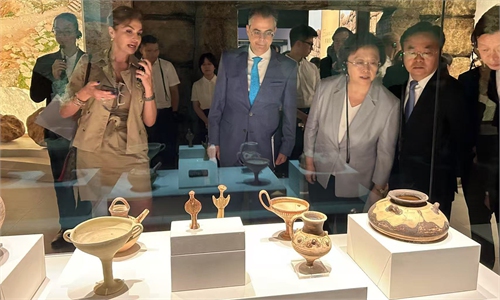
Meanwhile, foreign delegates visiting the Sanxingdui Museum expressed profound admiration for the artifacts.
Douglas C. Comer, former President of the International Council on Monuments and Sites International Scientific Committee on Archaeological Heritage Management and President of the US National Committee of the ICOMOS, told the Global Times that the Sanxingdui Ruins rank among the "most fascinating, well-researched, and well-presented sites" he has ever encountered. He highlighted their aesthetic appeal, mysterious allure, and the deep interest they have sparked among people across the globe.
Comer also emphasized the important role archaeological sites play in enhancing mutual understanding between cultures. The uncovering of human history through artifacts, he noted, helps connect international visitors to our shared heritage and fosters a deeper appreciation of humanity's common journey.
Stamatios Boyatzis, a Professor at the Department of Conservation of Antiquities and Works of Art at the University of West Attica in Greece, told the Global Times that exhibiting these precious cultural relics overseas would be an effective way to help more people around the world learn about Sanxingdui culture. He also expressed his welcome for a potential exhibition of Sanxingdui artifacts to be held in Greece.
The organizer also outlined its future research roadmap at the forum, stating plans to continue excavations, advance artifact conservation and deepen interdisciplinary studies of the site.
"We will further explore the unknown, uncover origins, and showcase the brilliant ancient Shu civilization as part of China's diverse yet integrated cultural heritage," said Ran.
RELATED ARTICLES