Global forum calls for scientific marine spatial planning, applauding China’s cooperative efforts
By Published: Sep 28, 2025 08:07 PM Updated: Sep 28, 2025 10:32 PM

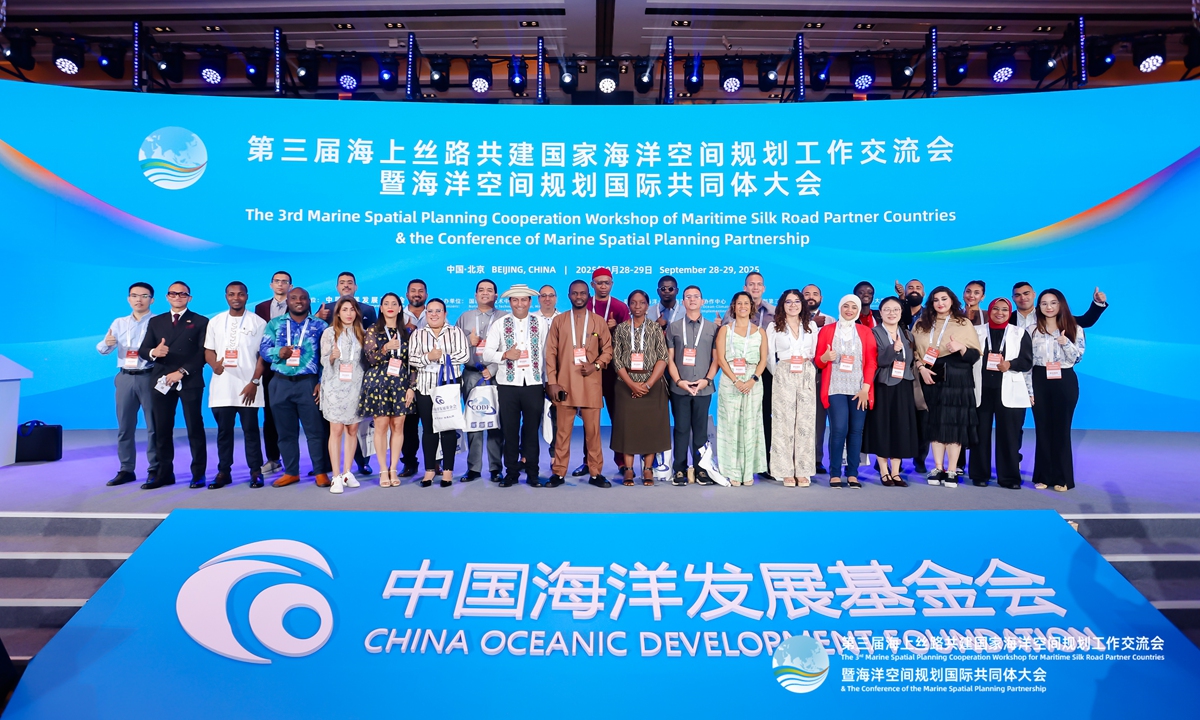
The 3rd Marine Spatial Planning Cooperation Workshop for Maritime Silk Road Partner Countries and the Conference of the Marine Spatial Planning Partnership, hosted by the China Oceanic Development Foundation (CODF), is held in Beijing from September 28 to 29, 2025. Photo: Courtesy of CODF
The 3rd Marine Spatial Planning Cooperation Workshop for Maritime Silk Road Partner Countries and the Conference of the Marine Spatial Planning Partnership, hosted by the China Oceanic Development Foundation (CODF), is being held in Beijing from Sunday to Monday. The event brings together over 3,300 participants online and offline, including representatives from more than 60 countries involved in the Belt and Road Initiative, United Nations organizations, Chinese ministries and think tanks.
Participants collectively called for enhanced technical support and strengthened cooperation to improve ocean governance capabilities among Maritime Silk Road partner countries, to promote the development of the blue economy, and facilitate the swift implementation of more "small and beautiful" marine projects to enhance the sense of gain and happiness among people in these countries.
Many speakers acknowledged China's efforts as a major coastal nation in promoting cooperation in marine spatial planning, highlighting its role as a reliable partner in advancing sustainable ocean governance.
Lü Bin, President of the CODF, emphasized the foundation's commitment to a shared future for humanity through the Blue Partnership Action and Marine International Exchange and Dialogue Action.
Through bilateral and multilateral projects, exchanges, and talent development, the CODF fosters trust with international and regional partners, Lü stressed, while highlighting the organization's efforts in mobilizing societal forces for sustainable marine resource use, ecological protection, technological innovation and public education to cultivate a society that values and governs the ocean responsibly.
Tang Yong from the United Nations Commission on the Limits of the Continental Shelf noted that the continental shelf, boasting abundant strategic natural resources and holding an important strategic position, serves as a crucial strategic underpinning for coastal states to develop the blue economy in the future. It bears on the maritime rights and interests of coastal states and constitutes a key focus in global ocean governance. While advanced deep-sea technology provides high-resolution data for delineation, developing nations, like 38 African coastal states with only five approved submissions out of 20 due to high resolution data shortages, face challenges. China supports capacity-building through five joint cruises in Nigeria, Mozambique, Madagascar and Seychelles, establishing the China-Africa continental shelf joint laboratory and marine sciences and blue economies centers and hosting training to bolster African blue economies.
Athill Dean Jonas, Blue Economy Ambassador of the Government of Antigua and Barbuda, emphasized China's cooperation in marine spatial planning and utilization when addressing the conference, describing it as a "shining example of collaboration."
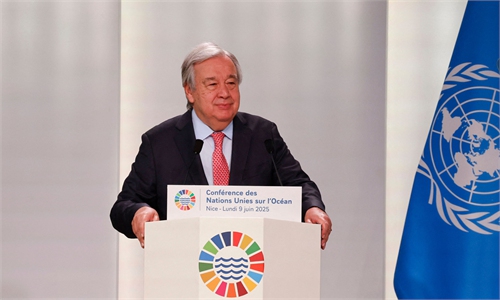
At the third United Nations Ocean Conference Nice 2025 in June, the CODF, the government of Antigua and Barbuda and the National Ocean Technology Center of the Ministry of Natural Resources of China co-hosted a side event on data-driven strategies and China-Caribbean cooperation for resilient marine economies. Jonas highlighted the forthcoming China-Caribbean marine cooperation center, calling it a hub for technology and training to support regional marine planning.
"This spirit of partnership - pooling knowledge, technology, and resources - is exactly what we need to promote marine spatial planning globally. I am proud that Antigua and Barbuda, in collaboration with China's National Ocean Technology Center and other partners, is establishing a China-Caribbean marine cooperation center, which will become a new hub for marine technology and training benefiting the entire region. Such partnership platforms will be invaluable in supporting marine spatial planning by providing cutting-edge data and expertise," Jonas told the Global Times on Sunday.
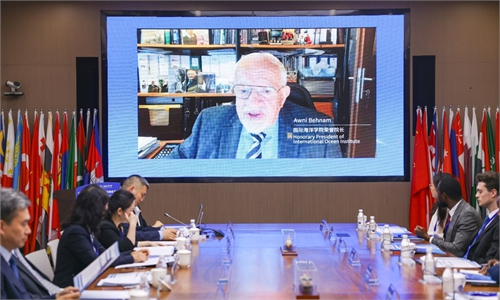
Wu Shicun, Chairman of the Huayang Center for Maritime Cooperation and Ocean Governance and Chairman of the Academic Committee of the National Institute for South China Sea Studies, stressed that "translating the potential of the ocean into effective governance tools and steering the marine and blue economies toward a green and resilient transition is no longer an 'option' but an 'urgent responsibility and inevitable path that all nations must jointly undertake.'"
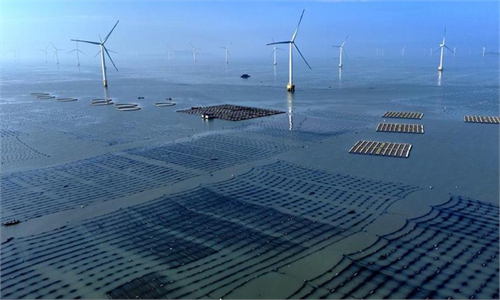
China's advancements in marine ecological zones, offshore wind, eco-aquaculture and integrated marine ranching-wind farm models offer a global reference, Wu said. The scholar recommended that countries leverage greater political wisdom and action, utilizing platforms such as the 21st Century Maritime Silk Road Initiative to accelerate the building of a "blue partnership."
The workshop and conference serve as an important platform for Maritime Silk Road countries to exchange expertise and strengthen cooperation, contributing to the development of marine infrastructure, supporting the blue economy and promoting responsible investment in shipping and ports, said Fadhl Ali Hussien Al-Shairi, Assistant Secretary General of the Council of Ministry for the Sector of Plans and Programs of Yemen, at the conference.
Aminath Hussain Shareef, Minister of State for Fisheries and Ocean Resources of the Republic of Maldives, underlined the Maldives' historical role in the Maritime Silk Road and its revitalized BRI partnership since 2017. "China's Global Development Initiative, Global Civilization Initiative, Global Security Initiative, Global Governance Initiative and the Belt and Road Initiative are opening new pathways for collaboration, which align closely with Maldives' own priorities," said Shareef, noting that the Maldives hopes to exchange experiences and work hand-in-hand with other countries including China to wisely plan vast marine spaces.
The host CODF's initiatives in maritime development and cooperation include the Maritime Silk Road Blue Economy Action, Coastal Sustainable Development Capacity Action and the UN Ocean Decade Action. It has signed agreements with 21 countries and four international organizations, completed marine spatial planning for Cambodia, Bangladesh, Mauritius, Thailand, Fiji and Malaysia, conducted over 30 training sessions for 3,000 personnel, completed over 100 studies and hosted 10 investment activities.
At the conference, the CODF announced eight initiatives to support the Marine Spatial Planning Partnership and five public products, including donating "Jingwei" buoys to Antigua and Barbuda, Malaysia, Fiji and Yemen.
RELATED ARTICLES