Translators' Voices: The sense of the Chinese nation as one community a source of inspiration for multi-ethnic countries
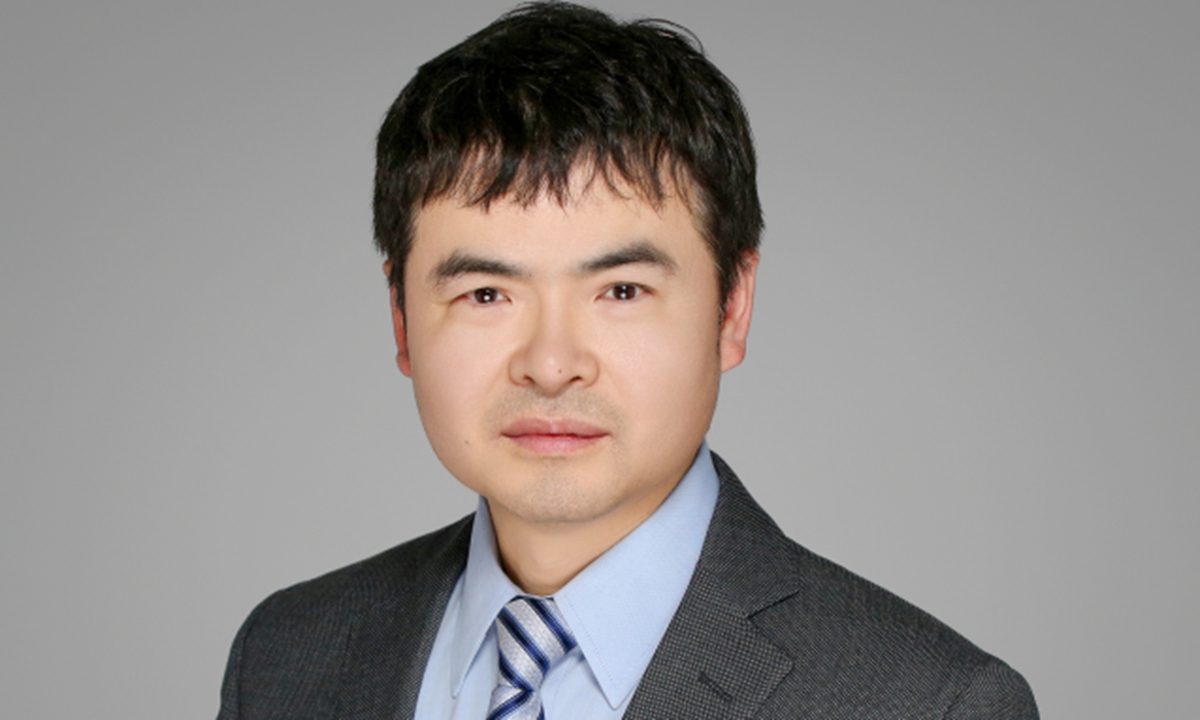
Zhu Xianghui Photo: Courtesy of Zhu
Editor's Note:Recently, Chinese President Xi Jinping, also general secretary of the Communist Party of China (CPC) Central Committee and chairman of the Central Military Commission, led a central delegation to attend a grand gathering in celebration of the 70th founding anniversary of the Xinjiang Uygur Autonomous Region. On September 24, while listening to work reports from the CPC Xinjiang regional committee and the regional government, President Xi once again stressed that "it is imperative to foster a strong sense of the Chinese nation as one community in Xinjiang and promote the construction of the community."
Just about a month earlier, while attending a grand gathering to mark the 60th founding anniversary of the Xizang Autonomous Region, President Xi delivered the same requirement after listening to work reports from the CPC Xizang regional committee and the regional government. President Xi attaches great importance to the work of ethnic unity in Xinjiang and Xizang. He has convened a number of important meetings and articulated the original and pioneering conclusion of "reinforcing the sense of the Chinese nation as one community," establishing it as the focus of our Party's work on ethnic affairs and indeed for all our endeavors in ethnic minority areas in the new era.
Multiple important speeches included in the book series Xi Jinping: The Governance of China reflect President Xi's ideas for strengthening and improving the Party's work on ethnic affairs. For example, in the article "Heighten a Sense of Chinese Identity" in Volume III, President Xi pointed out: "We must fully implement our Party's theories and policies concerning ethnic groups, work together for common prosperity and development, and help all ethnic groups remain as closely united as the seeds of a pomegranate, so that the Chinese nation will become a more inclusive and cohesive community." In the article "Unite the Chinese Nation as One Community" in Volume V, Xi emphasized that "heightening the sense of national identity is a shared mission of the entire Party, the whole country, and the people of all ethnic groups."
In the 13th installment of the special series "Decoding the Book of Xi Jinping: The Governance of China," the Global Times, along with People's Daily Overseas Edition, continues to invite Chinese and foreign scholars, translators of Xi's works, practitioners with firsthand experience and international readers to discuss the theme of "fostering a strong sense of the Chinese nation as one community and promoting the construction of the community," in a bid to explore its profound practical significance and value in action.
In the 13th article of the "Translators' Voices" column, the Global Times (GT) interviewed Zhu Xianghui (Zhu), a professor at the School of Foreign Languages at Shenzhen University, who is one of the translators of the Myanmar edition of the book series Xi Jinping: The Governance of China.
GT: Volume V of Xi Jinping: The Governance of China pointed out that "on the new journey in the new era, the central task facing the Party and the country is to build a great country and advance national rejuvenation through Chinese modernization, which requires that the people of all ethnic groups unite as one and work tirelessly together." How significant is uniting the Chinese nation as one community for realizing the rejuvenation of the Chinese nation?
Zhu: The rejuvenation of the Chinese nation is the common aspiration of all Chinese people. The sense of the Chinese nation as one community — being the foundation of national unity, the basis of ethnic solidarity and the soul of spiritual strength — guides all ethnic groups to forge a strong sense of the Chinese nation as one single community with a shared future, in which all ethnic groups share weal and woe and go through thick and thin together. Our vast territory, long history, splendid culture and great spirit have been jointly nurtured by all ethnic groups. The Chinese nation was forged through the exchanges, interactions and integration of all ethnic groups, and the rejuvenation of the Chinese nation will also be realized through this very process. Promoting unity in ideals, beliefs, sentiments and culture is an important step in strengthening the sense of the Chinese nation as one community.
Today's world is undergoing profound changes unseen in a century, and China is at a critical stage of realizing national rejuvenation. Only by strengthening the sense of the Chinese nation as one community and building a solid ideological Great Wall to safeguard national unity and ethnic solidarity, can China, in the course of realizing the Chinese Dream of national rejuvenation, offer new choices for countries and nations worldwide that wish to accelerate development while maintaining their independence.
GT: Volume V of Xi Jinping: The Governance of China emphasizes that reinforcing the sense of Chinese nation as one community requires "upholding the Party's leadership" and "building a spiritual home shared by all the Chinese people." How do you view the importance of Party leadership and the sense of identity with the Chinese culture?
Zhu: The Party's leadership provides strong political and organizational guarantees for developing the Chinese nation as one community. Ethnic work is highly complex and demands extraordinary political wisdom and firm strategic resolve. The CPC Central Committee has made important statements such as "the focus of our Party's work on ethnic affairs — and indeed for all our endeavors in ethnic minority areas — is to reinforce the sense of the Chinese nation as one community," ensuring that ethnic work always proceeds along the right path.
Cultural identity is the deepest form of identity — it is the root of ethnic unity and the soul of harmony. Chinese culture is broad and inclusive, capable of absorbing the cultural essences of all ethnic groups while remaining innovative and up to date. This provides lasting vitality to the sense of the Chinese nation as one community. A deep identification with Chinese culture naturally transforms into recognition of the path of socialism with Chinese characteristics under the leadership of the CPC, because the Party has always represented the forward direction of China's advanced culture and leads the rejuvenation of the Chinese nation.
Upholding Party leadership and strengthening cultural identity are not separate but mutually reinforcing. Party leadership ensures the institutional support for cultural identity: the Party actively advocates and promotes the inheritance and development of fine traditional Chinese culture, launching projects that provide strong political support and resource input for building a spiritual home shared by all the Chinese people.
GT: President Xi has emphasized that all ethnic groups should "remain as closely united as the seeds of a pomegranate." What lessons does this concept offer for other countries with multiple ethnicities in terms of maintaining social stability and national unity?
Zhu: The concept of the Chinese nation as one community, especially the pomegranate metaphor, is not only China's core guiding principle for handling ethnic relations, but also offers profound inspiration for other multi-ethnic countries facing similar challenges. It stresses reinforcing overarching national identity while respecting diversity, and pursuing a shared destiny and collective endeavor.
This suggests that the key to maintaining stability and unity in multi-ethnic states lies in building an overarching national identity that embraces all ethnic groups, and in adopting practical policies to ensure fairness, dignity and hope for all communities. Ultimately, this forms a community with a shared future, in which all ethnic groups share weal and woe and go through thick and thin together.
On the new journey, by constantly reinforcing a strong sense of the Chinese nation as one community and bringing all ethnic groups together like pomegranate seeds, the Chinese nation can move toward a more inclusive and cohesive community of shared future, building a better homeland and creating a brighter future together.
GT: For a long time, the West has misrepresented and smeared China's ethnic policies. The Myanmar edition of Xi Jinping: The Governance of China was jointly translated by Chinese and Myanmar scholars. As the translator, what feedback did you receive from your Myanmar colleagues about China's ethnic policies? How do you think the translation of this book deepens the understanding of China's ethnic policies and the concept of the Chinese nation as one community?
Zhu: Based on my interactions with people from all walks of life in Myanmar, the translation and dissemination of Xi Jinping: The Governance of China has built a bridge for the Myanmar people to better understand the Chinese nation as one community. For a long time, the information about China's ethnic policies available in Myanmar was often filtered or distorted by Western media. The Myanmar edition of the book provides the most authoritative and systematic interpretation of China's ethnic policies and the concept of Chinese nation as one community, enabling people to directly engage with the core concepts.
Many Myanmar people, after experiencing prolonged ethnic conflicts at home, admire China's ability to maintain stability and economic development in its ethnic regions and hope Myanmar can learn from China. A Myanmar writer who once visited China told me: "China has achieved remarkable results in infrastructure, poverty alleviation and education in its ethnic minority areas. Myanmar's ethnic reconciliation should draw on such pragmatic, development-oriented approaches."
GT: Volume V of Xi Jinping: The Governance of China noted that "through mutual learning and integration, China's diverse ethnic cultures have transcended regional boundaries, blood ties, and religious beliefs, forming a national culture characterized by strong cohesion and lasting appeal, and a Chinese civilization marked by unity in diversity." Based on your experience in China's Yunnan Province, could you share your thoughts on the diversity and inclusiveness of Chinese culture? How do you see the intrinsic connection between the Global Civilization Initiative and the concept of the Chinese nation as one community?
Zhu: Yunnan, home to the largest number of ethnic minorities in China, is a vivid embodiment of the pluralistic unity of Chinese civilization. Here, cultural diversity and inclusiveness are not abstract ideas but living practices. At markets near Lugu Lake, Mosuo, Pumi and Han vendors set up stalls side by side. The Mosuo sell Sulima wine, the Pumi offer mountain delicacies, while the Han sell daily goods. This economic interdependence naturally nurtures cultural understanding.
In a village school in Lisu Autonomous Prefecture of Nujiang, children can both write their own ethnic scripts and communicate with the outside world in Putonghua. The promotion of the national common language and the preservation of minority cultures are not contradictory but complementary. Chinese civilization, with its capacity to embrace diversity, allows cultures to thrive through interaction. Diversity is the source of innovation, and inclusiveness makes differences a strength of the community. This is the contemporary significance of the "unity in diversity" pattern of Chinese civilization.
The Global Civilization Initiative and the concept of the Chinese nation as one community, though one focuses on global civilizational dialogue and the other on domestic ethnic integration, are philosophically and value-wise interconnected. Both embody the Chinese cultural wisdom of "harmony in diversity." This inclusiveness is highly applicable to today's complex international relations, providing a clear and workable path to transcend ideological and systemic differences and achieve cooperative coexistence.
GT: How do you see the relationship between "reinforcing the sense of the Chinese nation as one community" and the people-centered governance philosophy advocated by China? What inspiration does this people-oriented approach offer for promoting a more inclusive and fair global governance system?
Zhu: "Reinforcing the sense of the Chinese nation as one community" and the people-centered philosophy of governance together form the core philosophy of China's national governance today. They are unified in the grand practice of realizing the rejuvenation of the Chinese nation. This governance approach, deeply rooted in the wisdom of Chinese civilization, also offers valuable insights for addressing the dilemmas of global governance.
Both serve the ultimate goal of the rejuvenation of the Chinese nation, which is, in essence, the common prosperity and happiness of all Chinese people. Reinforcing the sense of the Chinese nation as one community aims to rally the consensus and strength of all Chinese people, while upholding a people-centered approach ensures that the fruits of development benefit everyone pointing to the value destination of this unity. In both cases, the broadest participation of the people is the fundamental source of strength.
By promoting common development, narrowing regional gaps, ensuring and improving people's livelihoods, and enabling all ethnic groups to enjoy a stronger sense of gain, happiness and security in the process of joint contribution and shared benefits, China continues to enhance identification with the sense of the Chinese nation as one community and socialism with Chinese characteristics. This logic, which closely links internal unity with people's well-being, provides a new paradigm for global governance. A fairer and more equitable global governance system must center on enhancing the common well-being of all humanity, respecting diversity and fostering solidarity and cooperation to meet shared challenges. This is not only China's pathway but also a positive vision for the future of global governance.
RELATED ARTICLES