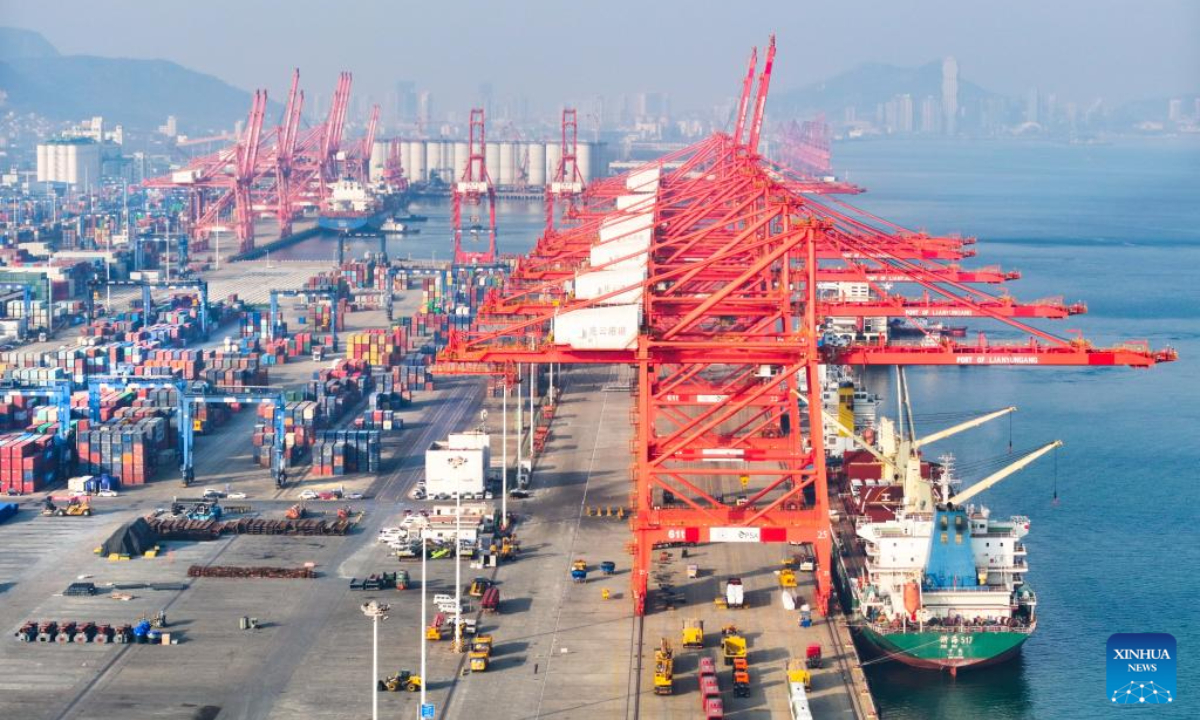
An aerial drone photo shows the container terminal of Lianyungang Port in east China's Jiangsu Province, Jan 13, 2025. Photo:Xinhua
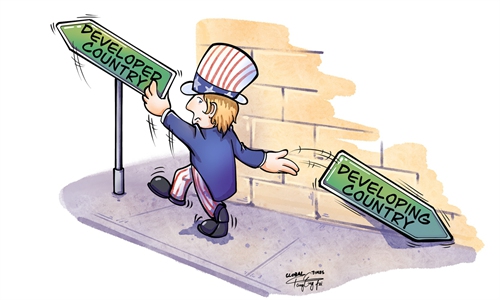
Recently, China announced that it would not seek new special and differential treatment (SDT) in current and future negotiations at the World Trade Organization (WTO), a statement that has drawn wide international attention. This position highlights China's role as a responsible major country. However, it is important to clarify that this does not mean China has changed its status as a developing country. China's international status as the world's largest developing country has not changed. China will always stand together with other developing countries to safeguard the multilateral trading system and the common interests of developing countries worldwide.
China remains the world's largest developing country. This is a scientific judgment based on the objective realities of China's national conditions. Although China's total economic output ranks second in the world, its per capita GDP remains far below that of developed countries. According to the World Bank, China's GDP per capita in 2024 is $13,303, while the US GDP per capita in 2024 is $85,809. At the same time, China still faces issues of unbalanced and inadequate development. The gaps between urban and rural areas and between regions remain significant, and the living standards of hundreds of millions of people still need to be further improved.
China still lags developed countries in areas such as technological innovation, industrial structure, and social welfare. Its high-tech industries remain in a catch-up stage, and dependence on foreign sources for key core technologies has not fundamentally changed. Globally recognized brands and leading original technologies are relatively insufficient. In social security areas such as education, healthcare, and elderly care, China still requires long-term investment and continuous improvement. These facts fully demonstrate that China's status as a developing country is an objective reality and will not change simply because of the growth in its total economic output.
China clearly stated that it will not seek new SDT in current or future WTO negotiations. This decision reflects a strategic adjustment based on China's own development realities, rather than a change in its status as a developing country.
SDT is a principle established by the WTO in recognition of structural gaps between developing and developed countries, aimed at providing developing countries with more flexible policy space. After more than 40 years of reform and opening-up, China has gained stronger competitiveness and adaptability in certain areas. China's announcement that it will not seek new SDT is based on an assessment of its own stage of development and reflects China's responsible attitude toward the multilateral trading system.
This adjustment does not mean that China is giving up its status as a developing country or the rights that come with it. China will continue to enjoy the corresponding treatment under existing agreements while demonstrating greater flexibility in new negotiations. This approach aligns with China's own development needs and also helps safeguard the authority and effectiveness of the multilateral trading system.
China's announcement that it will not seek new SDT reflects its responsibility as the largest developing country toward global development. As the world's largest developing country, China has always stood together with other developing members and remains committed to strengthening solidarity and cooperation with other developing countries.
Through the Belt and Road Initiative and South-South cooperation platforms, China has provided substantial assistance to other developing countries within its capacity. In international affairs, China consistently upholds the common interests of developing countries and actively promotes greater representation and voice for them in the reform of the global governance system, working toward a more fair and equitable international order.
China's development experience provides an important reference for other developing countries. By following a development path suited to its own national conditions and combining a market economy with government regulation, China has achieved rapid economic growth and long-term social stability. This development model challenges the "Western-centric" mindset and offers new options for developing countries.
China's policy adjustments within the WTO framework reflect its active participation in and contribution to the global governance system. As a staunch defender of the multilateral trading system, China actively engages in WTO reforms, promoting its better adaptation to the new demands of globalization. By proactively adjusting its approach to SDT, China helps break negotiation deadlocks and advance the multilateral trading system. At a time when trade protectionism is rising and multilateralism faces severe challenges, China has demonstrated flexibility, injecting positive momentum into WTO reform and the development of global trade.
China consistently upholds the concept of a community with a shared future for humanity and adheres to a global governance approach based on consultation, contribution, and shared benefits. China's status as a developing country will not change, nor will its solidarity with other developing countries. While pursuing its own development, China will continue contributing to the common development of developing countries worldwide.
The author is a professor at the School of Global Governance, Shanghai University of International Business and Economics (SUIBE). bizopinion@globaltimes.com.cn
RELATED ARTICLES