China's Golden Week sees record rail travel, unleashing tourism-driven economic momentum
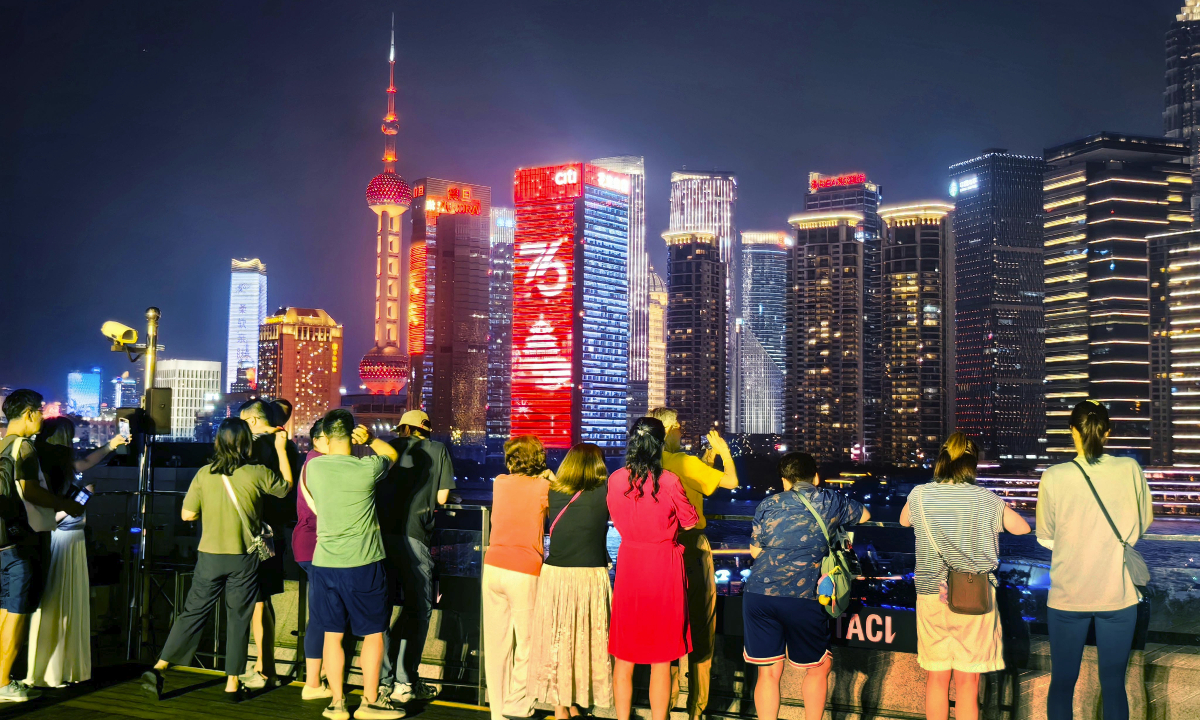
Tourists watch the night light show of the Lujiazui skyline in Shanghai on October 1, 2025. Photo: VCG
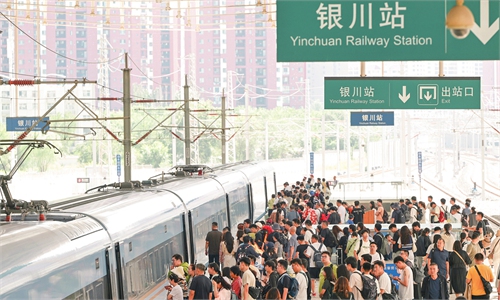
China's Golden Week holiday opened with record-breaking travel, with analysts saying surging long-distance trips are set to unlock strong consumption momentum across sectors from tourism to retail.On Wednesday, the first day of the National Day and Mid-Autumn Festival holiday, the nation's railways carried 23 million passengers, setting a new single-day record, according to data from their operator China State Railway Group Co.
Rail travel remains the dominant mode of transport during this year's Golden Week, with passenger traffic peaking on October 1. The operator also plans to add 2,106 passenger trains during the holiday.
As of 8 am on Thursday, China's 12306 railway booking platform had sold 120 million tickets for the September 29-October 10 holiday period, the platform said in a statement to the Global Times.
On the same day, the national railway network is expected to handle 19.3 million passengers, with 1,409 additional trains scheduled. Cross-regional passenger traffic across China is expected to exceed 336 million trips, up 1.7 percent from a year earlier, CMG reported on Thursday.
Major transport hubs were packed on the first day of the Golden Week, with authorities deploying extra staff and tightening management to ensure smooth travel for passengers. Air travel reached 2.48 million passenger trips, up 3.4 percent, with 19,682 flights scheduled and an on-time rate of 96 percent.
Over the entire National Day and Mid-Autumn Festival holiday, passenger traffic by air is expected to reach 19.2 million trips, a record high for the period, CMG reported.
Beijing Capital International Airport is forecast to handle 1.67 million travelers, while Sanya Phoenix International Airport in Sanya, South China's Hainan Province is expected to serve 504,000, the report said. Major hub airports are working closely with airlines to optimize route networks and capacity allocation.
Such long-distance journeys not only stimulate demand in sectors such as lodging, dining and specialty goods, but also amplify regional exposure, foster the discovery of potential business and investment opportunities, and incentivize local governments to refine policies and services that enhance the overall business climate, Bian Yongzu, executive deputy editor-in-chief of Modernization of Management magazine, told the Global Times on Thursday, noting that this year's Golden Week holiday offers one day longer than last year, giving travelers more time for long-distance trips.
Bian stressed that long-distance travel creates far richer consumption scenarios compared with short trips, producing a more pronounced impact on regional economies. Visitors' spending on hotels, restaurants and shopping is far greater than that of local residents, making holiday travel a powerful engine for consumption growth.
In addition, cultural and tourism authorities in several cities released figures showcasing the first day of the Golden Week holiday.
Shanghai welcomed 3.58 million visitors on October 1, up 18.5 percent year-on-year, according to the city's tourism big data monitoring system, Jiefang Daily reported on Thursday.
Data from Chinese travel platform Ctrip.com showed that overall tourism orders in Shanghai rose 32 percent year-on-year on the first day of the National Day holiday.
In Chengdu, Southwest China's Sichuan Province, the city reportedly received 1.48 million visitors from outside the city on Wednesday, up 3.9 percent from a year earlier, while inbound tourist arrivals jumped 28.8 percent.
Meanwhile, Chengdu's A-rated tourist attractions welcomed 1.437 million visitors, an 18.3 percent year-on-year increase on a comparable basis. Online booking data showed hotel orders rose 3.9 percent and air ticket orders climbed 10 percent.
Ahead of the holiday period, the nation's National Cultural and Tourism Consumption Month for the upcoming National Day holiday was launched, with more than 480 million yuan ($66 million) in subsidies to be issued, Xinhua News Agency reported. Analysts expect the consumption-boosting effect to gradually materialize as the majority of travelers reach their destinations.
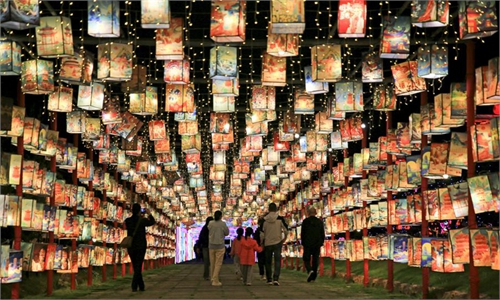
During the holiday, more than 29,000 cultural and tourism events will be staged nationwide, covering highlights such as theatrical performances, sightseeing tours, Mid-Autumn Festival family gatherings, cultural experiences, red tourism, major national achievements, and contemporary lifestyles.
Bian estimated that with the extended holiday and a marked increase in long-distance travel this year, consumption could increase by around 10 percent from 2024. He observed that with holidays clustered in the latter half of the year, the tourism-driven lift to spending is even more pronounced. At a time when some traditional industries show weaker momentum, tourism is emerging as a critical new growth engine and is set to play an important role in meeting China's economic targets for the second half of 2025.
RELATED ARTICLES