China's improvement of rare earth governance safeguards stability of global supply chain: Global Times editorial
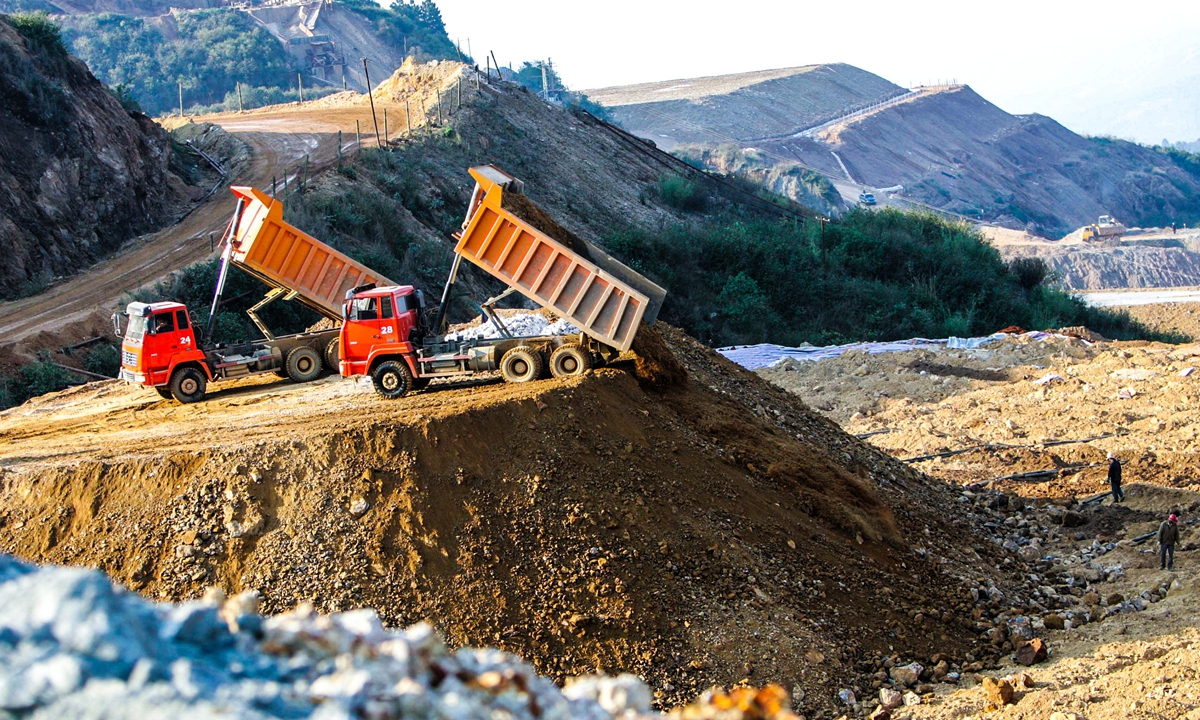
rare earth Photo:VCG
China's Ministry of Commerce announced on Thursday measures aimed at strengthening export controls on certain rare earth-related items and technologies. The new measures further refine China's regulatory framework and mechanisms for controlling the export of specific rare earth-related items and technologies, drawing attention both domestically and internationally. The new regulations will help China better safeguard national security and interests, while also demonstrating the country's consistent stance of firmly upholding world peace and regional stability as well as actively contributing to international non-proliferation efforts.
This decision is by no means an improvised move. Rather, it is a part of China's systematic efforts to promote the standardized management of the rare earth industry. Rare earths-related technologies were already included in China's Catalog of Technologies Prohibited and Restricted for Export as early as 2001. In April, the Chinese government also imposed export controls on the export of rare earth items by Chinese organizations and individuals. The latest announcements represent a further improvement and strengthening of the existing management system, reflecting the continuity and stability of China's export control regime as well as the country's enhanced governance capacity in the rare earth sector. It is a routine measure taken by China in accordance with the law to manage the rare earth industry. Some foreign media have expressed concern that normal rare earth trade might face disruptions or even supply cuts, which is completely unnecessary.
Rare earth-related items have dual-use attributes for both civilian and military purposes, and implementing export controls on them is an international common practice. Preventing rare earths from being used in activities that undermine international peace and security is a non-proliferation obligation that all countries must shoulder.
A spokesperson for China's Ministry of Commerce revealed on Thursday that recently, some foreign organizations and individuals have directly or indirectly transferred or provided rare earth-controlled items of Chinese origin, either in their original form or after processing, to entities and individuals in sensitive sectors such as the military. Facing such actions, which cause significant harm or pose potential threats to China's national security and interests, and negatively affect international peace and stability, China must take action. This further underscores the necessity for China to regulate the export of rare earth-related technologies.
China's rare earth control measures represent a natural extension of its modern governance system into the industrial field. In the 1990s, China's rare earth industry developed in a disorderly manner due to extensive management practices, which not only depleted its resource endowment but also caused severe environmental damage. Such development was unsustainable and would ultimately undermine the stability of global supply chains. Actively aligning with international practices, standardizing, and improving rare earth industry governance is both a domestic necessity for China's industrial development and an inevitable step in fulfilling its responsibility as a major supplier of critical minerals globally.
China holds 37 percent of the world's rare earth reserves and accounts for more than 60 percent of global production. As a major rare earth supplier, China has never turned its resource advantage into a tool of hegemony. The goal of China's rare earth control measures has always been to "regulate exports," not to "prohibit exports." In addition, relevant control policies have remained open and non-discriminatory, setting up no barriers against specific countries and leaving ample room for compliant trade.
Since the implementation of China's export control measures on rare earths, the global rare earth industry chain has not experienced a rupture, contrary to claims made by some Western media outlets; instead, it has accelerated the industry's transformation from chaotic competition based on low prices to high-quality development. The new regulations also specifically reserve policy space for technologies that have already entered the public domain, as well as those necessary for basic scientific research and ordinary patents. These measures fully reflect the Chinese government's responsible attitude in considering the actual needs of market entities. The West's claim that China is "getting the world in a rare earth choke hold" is akin to projecting one's own mindset onto others, as it ignores the long-standing regulatory framework and peaceful nature of China's rare earth regulation, and it misinterprets its deep value to the global industrial chain.
Building an open world economy has always been a consistent stance of China. For China, as long as it complies with World Trade Organization rules, resource and technology export controls will never become a form of resource and technology blockade. In the series of China's export control measures on rare earths, we can see various green channels, exemption processes, and a categorized management model of "case-by-case review and issue-by-issue discussion." As the spokesperson for the Ministry of Commerce stated, these precise measures aim to ensure the security and stability of the global industrial and supply chains.
From these measures, the international community can clearly see China's development concept of interdependence among countries and a shared future for the world. Globally, regulations on rare earth-related technologies are bound to move toward a more standardized and transparent direction, and China is playing a constructive role in this process. Through frank dialogue and cooperation, China is jointly promoting the establishment of a fairer and more reasonable international rare earth trade order with the international community, safeguarding the stability and prosperity of the global strategic resource supply chain.
RELATED ARTICLES