Illustration: Liu Rui/GT
Canada's federal government is now facing backlash for its decision to impose a 100 percent tariff on Chinese electric vehicles (EVs). Manitoba Premier Wab Kinew on Saturday publicly wrote to Prime Minister Mark Carney, urging the federal government to lift the tariffs on Chinese EVs, saying "the current approach has created a two-front trade war that disproportionately impacts Western Canada."
"The retaliatory tariffs imposed by China have already caused steep price declines for canola, threatening the livelihoods of thousands of Manitoba farmers and the stability of rural communities. The tariffs are also causing steep losses in the pork industry ... Every day these tariffs remain in place, the harm to prairie producers deepens," wrote Kinew.
This open letter from a provincial leader clearly shows that Ottawa's protectionist policy is backfiring. "It is now evident that the policy's intended goals and actual results have diverged. It has failed to protect domestic manufacturing, while deepening rifts between federal and provincial governments and severely impacting the economies of western agricultural provinces - all of which are the costs of this policy," Liu Dan, a researcher at the Center for Regional Country Studies at Guangdong University of Foreign Studies, told the Global Times.
"Canada's trade policy must balance long-term industrial goals and national security with immediate economic realities as well as the national responsibility to grow every region of Canada's economy," Kinew stated in his letter. However, for a long time, Canada's blind alignment with the US has made its China trade policy unbalanced, unrealistic and irresponsible.
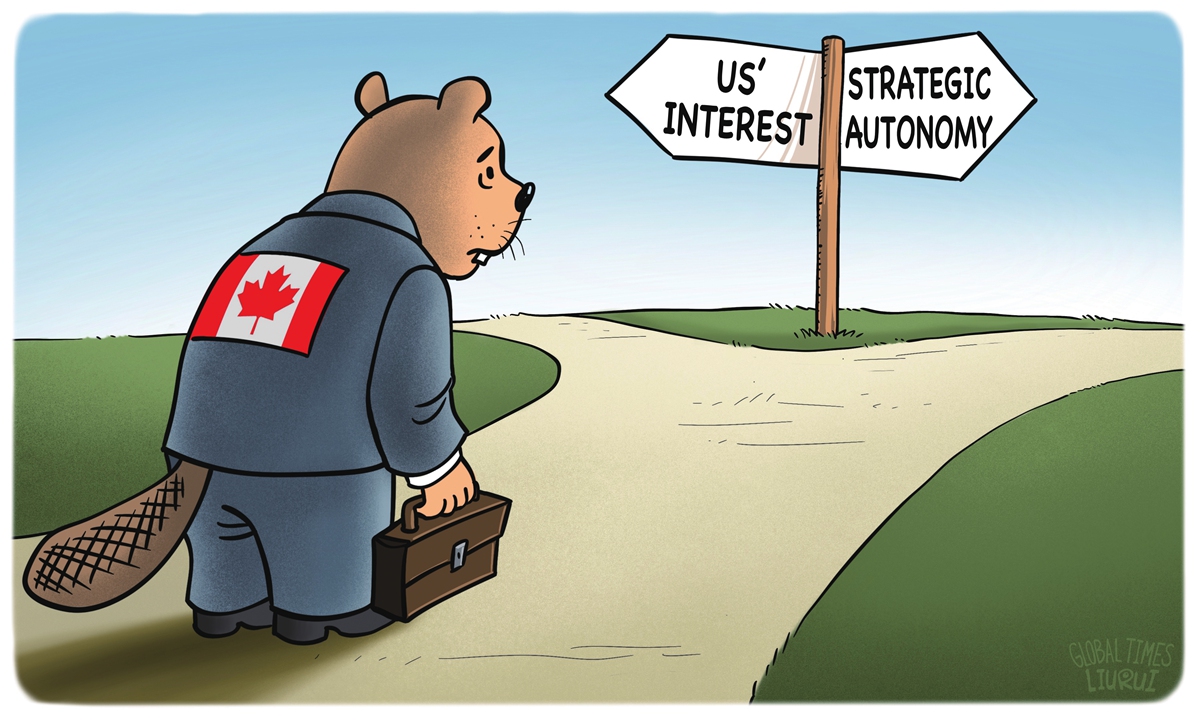
First, the current tariff policy in step with Washington is not based on Canada's own national interests, highlighting its lack of strategic autonomy.
Moreover, such alignment has led to a disconnect between Canada's economic interests and reality. The Carney government's top priority has been to diversify Canada's trade, yet its current approach damages ties with one of its largest trading partners - China - while it remains almost impossible to find alternative markets of comparable scale. Ottawa's protectionist policies against China, taken in lockstep with the US, are undermining the very foundations of Canada's economy.
At home, the country is also facing growing public division. Multiple polls show that more Canadians support canceling or reducing tariffs on Chinese EVs. The federal government is now struggling to balance political consensus, economic rationality and foreign policy.
The consequences of trade friction with China are not new - American farmers have learned the hard way, with soybeans piling up and farms going bankrupt. Now, Canada's canola industry faces similar risks. China used to be a major export market for Canadian canola, and prolonged loss of market access could lead to rural hardship and regional economic contraction across western Canada. At the same time, the cost of this trade war will inevitably fall on ordinary consumers - rising EV prices, disrupted supply chains and worsening inflation. Ultimately, such politically driven economic decisions will make both Canadian farmers and consumers pay the price.
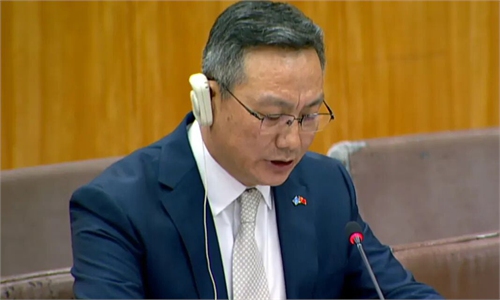
Chinese Ambassador to Canada Wang Di said recently that if Canada removes the unilateral unjustified tariffs on Chinese products, China will also reciprocate accordingly. Kinew described this as a "critical moment" and urged the federal government to "seize the opportunity."
China's proposal reflects a pragmatic diplomatic approach. Ambassador Wang's suggestion provides a clear path toward breaking the ice in bilateral trade, offering both a concrete solution to the dispute and demonstrating China's sincerity in resolving issues on an equal footing. Meanwhile, China's decision to extend the anti-dumping probe period into Canadian canola leaves a valuable window for negotiation.
For Canada, the best response - considering national and local interests - is to take advantage of this negotiation window and adjust its foreign policy mindset to prioritize its own national interests, rather than blindly following the US and undermining China-Canada relations. Otherwise, protectionism will only backfire.
RELATED ARTICLES