Illustration: Xia Qing/GT
The 45th edition of GITEX Global is taking place in Dubai, bringing together some of the world's leading innovators in artificial intelligence (AI), the Internet of Things, and big data. According to CCTV News, 372 Chinese companies are participating this year, a notable rise from the 260-plus firms reported last year. The increase suggests not only the growing technological competitiveness of Chinese enterprises but also their expanding interest in the Middle Eastern market, which has rapidly become one of the world's most dynamic centers for digital transformation.The GITEX Global - widely recognized as one of the most influential technology events in the Middle East - has evolved into an increasingly visible platform for emerging industries and the digital economy. In recent years, some Middle Eastern economies have pursued deliberate strategies to integrate AI into their long-term development plans. Backed by substantial financial resources and a strategic vision to diversify beyond hydrocarbons, these economies are positioning themselves as active participants in the global development of AI, seeking to translate technological innovation into sustainable growth and enhanced competitiveness on the world stage.
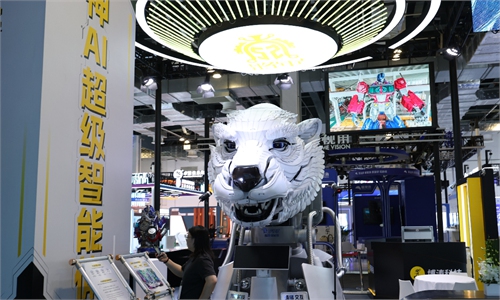
Against this backdrop, it is hardly surprising that an increasing number of Chinese companies are turning their attention to this fast-growing market. According to the Xinhua News Agency, an exhibitor from Oman noted that an increasing number of Chinese companies are participating in the event, and technologies such as flying vehicles and AI-powered robots from China have attracted significant interest. This points to a broader shift: China's technological engagement with Middle Eastern economies is no longer confined to traditional sectors such as energy and infrastructure. Instead, it increasingly encompasses innovation-driven fields, ranging from smart manufacturing to the digital economy.
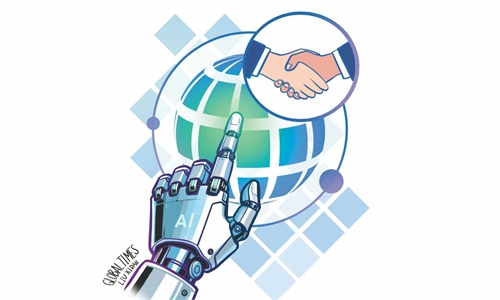
Despite facing fierce international competition and external restrictions, China's AI industry has achieved substantial breakthroughs, powered by homegrown technological innovation. China is not only making continuous advances in core technologies, but also sharing its low-cost and open-source AI products with the global community in a spirit of openness and inclusiveness - promoting mutually beneficial cooperation that contributes to economic growth and improved livelihoods across more countries and regions.
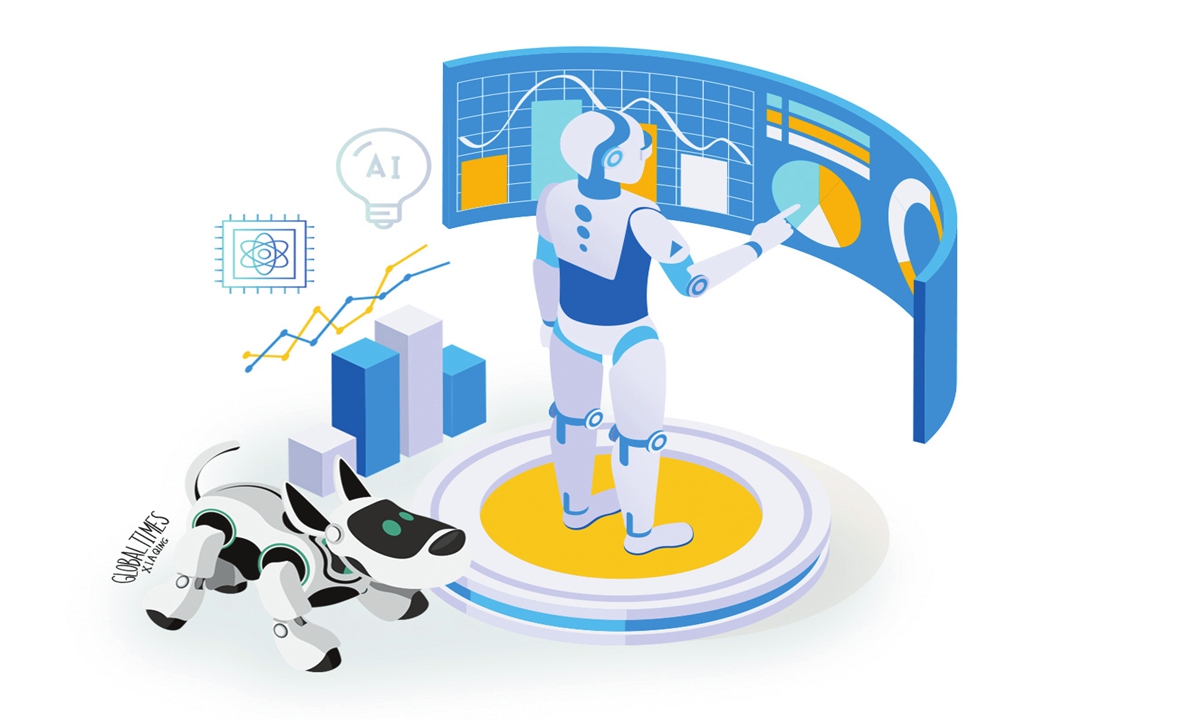
China's AI is shifting from isolated technological breakthroughs to system-level capability development. Notably, Chinese companies have achieved a "dual advantage" in algorithmic innovation, combining technical progress with substantial cost efficiency.
One key reason Chinese technology and products are well-suited to the needs of Middle Eastern economies is the notable alignment between what each side can offer and what each side requires. Middle Eastern economies provide capital, concrete application scenarios, and a strong impetus for digital transformation, yet sometimes lack the advanced algorithms, engineering capacity, and large-scale deployment experience necessary to translate AI concepts into operational solutions. Chinese firms, by contrast, have refined their capabilities under the pressures of a highly competitive domestic market, producing AI solutions that are cost-effective, modular, and relatively easy to deploy.
At this year's GITEX Global, Chinese companies further expanded their presence, with AI products emerging as a key highlight, signaling that China's AI industry is steadily advancing in its internationalization efforts.
Algorithms honed in complex domestic scenarios - from unmanned mining zones to 5G-enabled factories - have provided a solid foundation for China's AI to extend abroad. These mature technological solutions are now being deployed in projects ranging from photovoltaic power plants to smart ports, where they can be adapted to local requirements with minimal modification, demonstrating both versatility and commercial potential.
At the same time, the Middle East is prioritizing digital transformation and AI development, with a strong appetite for AI-driven innovation across multiple sectors. Combined with robust capital resources, concrete application scenarios, and policy support, these conditions offer significant opportunities for Chinese companies to expand their international footprint.
However, these opportunities are not without challenges. Some analysts note that the US is not only promoting AI-related products in the Middle East but also seeking to export its technological standards and governance frameworks, constructing a digitally centered ecosystem aimed at limiting the influence of other countries in the region's technology landscape, according to media reports.
Yet such efforts appear to underestimate the practical economic complementarities between China and Middle Eastern economies in the AI sector. The potential for cooperation in emerging technologies - as evidenced by this year's GITEX Global - continues to take shape, suggesting that collaboration in emerging technologies could become a new focal point in bilateral economic engagement, offering tangible benefits for both sides.
The author is a reporter with the Global Times. bizopinion@globaltimes.com.cn
RELATED ARTICLES