China requests consultations at WTO against India’s EV, battery subsidies
By Published: Oct 15, 2025 04:59 PM

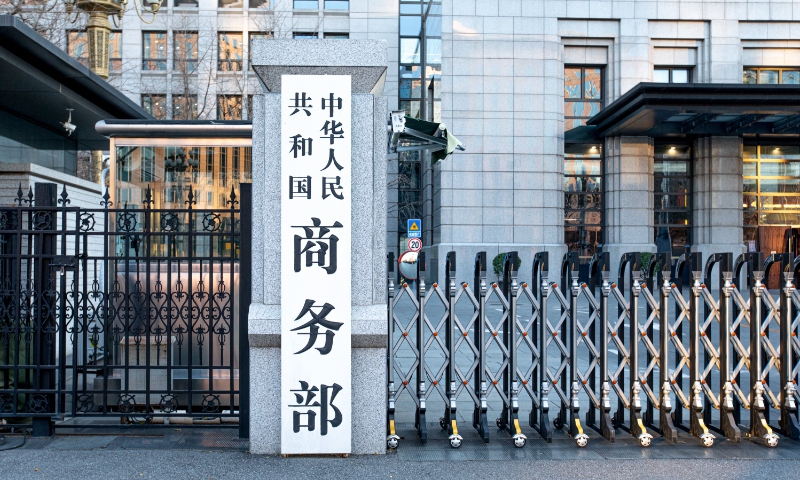
The Ministry of Commerce of China File photo: VCG
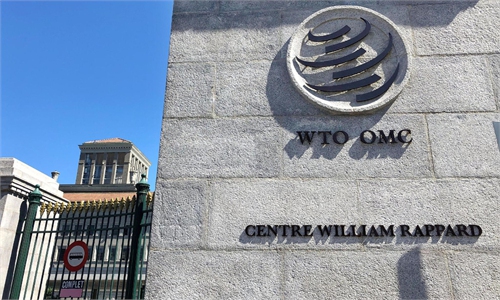
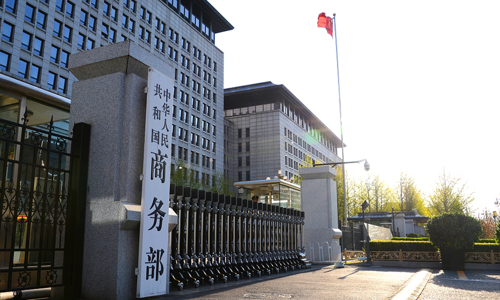
China requested consultations at the World Trade Organization (WTO) against India's subsidy measures in its electric vehicle (EV) and battery sectors on Wednesday, a spokesperson of China's Ministry of Commerce (MOFCOM) said on the same day.
On Wednesday, China submitted a request for consultations with India at the WTO regarding its subsidy measures for EVs and batteries, the MOFCOM spokesperson said.
India's relevant measures are suspected of violating multiple obligations, including national treatment, and constitute import substitution subsidies, which are explicitly prohibited by the WTO, the ministry spokesperson said.
"The measures grant unfair competitive advantages to India's domestic industries and harm the interests of Chinese enterprises. China will take resolute measures to effectively safeguard the legitimate rights and interests of its domestic industries," said the spokesperson.
China has noted that, for some time, a number of India's economic and trade measures have been suspected of non-compliance with WTO principles. "These actions have drawn extensive attention from other WTO members. We urge India to abide by its WTO commitments and promptly correct its wrong practices," the spokesperson said.
Qian Feng, director of the research department at the National Strategy Institute at Tsinghua University, told the Global Times on Wednesday that EVs and batteries are seen as vital components of India's manufacturing strategy as well as a prioritized means for the Indian government to address climate change and extreme weather.
The South Asian country has been stepping up imports of EVs and batteries in recent years for its development, although the overall volume is limited, according to Qian. "However, the main emphasis is placed on developing its own EV industry.
US carmaker Tesla said that it launched the Model Y in India in July, marking its entry into the world's third-largest car market.
China and India have been seeing improving signs in bilateral ties and people-to-people exchanges recently.
However, the country has also often resorted to trade protectionist acts.
Among the 20 monitored countries and regions, India topped the ranking in the global trade friction index in June, according to a survey released in August by the China Council for the Promotion of International Trade (CCPIT), China's trade promotion agency.
India also topped the ranking in the trade friction index with China, with trade frictions in electronics industries such as cameras, routers and chips staying at a high level, the CCPIT report showed.
"It is important that during India's efforts to develop its domestic car and new-energy industries, it should comply with relevant rules of the WTO and fulfill its obligation as a WTO member. It should not undermine WTO rules and harm the interests of other countries with its domestic policies," Qian said, adding that China's request at the WTO is totally legitimate.
RELATED ARTICLES