US officials call China’s rare earth controls a supply chain threat; Washington's irresponsible remarks may complicate situation, expert says
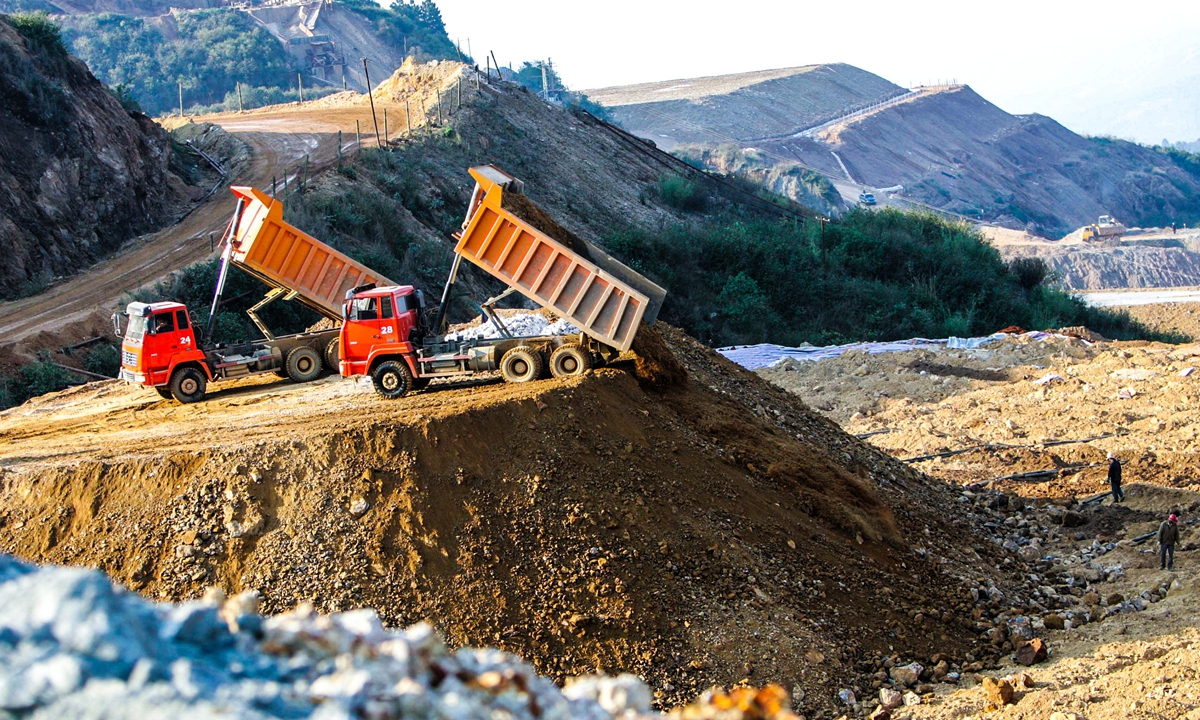
rare earth Photo:VCG
Senior US officials on Wednesday again claimed China's rare earth export controls as a threat to global supply chains, a latest statement that Chinese analysts say distorts China's justified policy actions, and may further escalate tensions between the two economies.
China's export controls on rare earths are legitimate and compliant measures that reflect its international non-proliferation efforts, a Chinese expert said, stressing that US' discriminatory restrictions targeting China are the real trigger behind rising trade tensions.
US Trade Representative Jamieson Greer told a press conference that China's new export restrictions were a "global supply-chain power grab" and the US and its allies would not accept the restrictions, according to a Reuters report on Wednesday.
On the same day, Treasury Secretary Scott Bessent said that the US administration is seeking to counter new economic measures from China by exerting more control over American companies in key strategic sectors, New York Times reported.
Washington's misreading of China's legitimate moves and continuous threats would only complicate the situation and risk escalating tension, Li Yong, a senior research fellow at the China Association of International Trade, told the Global Times on Thursday.
"China's export control measures are not an embargo, but a lawful regulatory practice implemented in accordance with international law, established norms and common global practice," Li said.
Li urged Washington to first reflect on its own actions, noting that US' restrictive measures disregard China's legitimate rights and interests, along with its double standards, are the root cause of the escalating tensions.
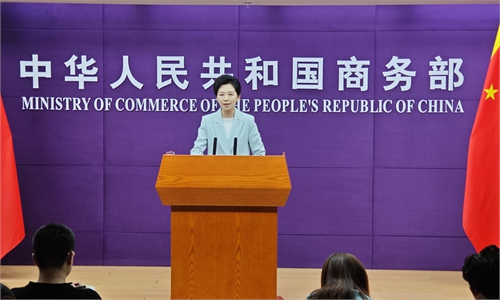
The US has long overstretched the concept of national security and abused export controls by taking discriminatory measures against China, a statement from the Ministry of Commerce (MOFCOM) said on Sunday.
MOFCOM data showed that the US control list covers more than 3,000 items, while China's contains only around 900. The US has long applied the "de minimis" rule in its export control regime, with thresholds as low as zero percent.
Since the China-US economic and trade talks in Madrid in September, Washington has continued to roll out a series of new restrictive measures against China.
A MOFCOM spokesperson said on Sunday that US actions have seriously undermined the legitimate rights and interests of enterprises, disrupted the international economic and trade order, and jeopardized the security and stability of global industrial and supply chains.
China's measures do not target any specific country and will ensure that all reasonable demand for rare earths is met, Li said, adding "this is fundamentally different from US' long-standing practice of abusing export controls."
As materials with both civilian and military uses, China's restrictions on rare earths are intended to prevent their misuse for military purposes, safeguard industrial and national security, efforts that also help promote global peace and stability, per the expert.
On Wednesday, Bessent also dangled the possibility of extending a pause of import duties on Chinese goods for longer than three months if China halts its plan for strict new export controls on rare-earth elements, a Bloomberg report said.
"Is it possible that we could go to a longer roll in return? Perhaps. But all that's going to be negotiated in the coming weeks," Bessent said during a press conference in Washington, according to the report.
The US and China have agreed to a series of 90-day truces since earlier this year, with the next deadline looming in November. But tensions have recently intensified, as the US government threatened to impose 100 percent tariffs on Chinese goods and to introduce export controls on all key software products.
Previously, Greer claimed that whether the additional 100 percent tariffs on Chinese goods kick in on November 1 or sooner depended on what China does.
In response, the Chinese Foreign Ministry (FM) on Wednesday said that China took export controls on relevant items in accordance with the law to better safeguard world peace and regional stability, and fulfill non-proliferation and other international obligations. "These measures are in line with international practice," FM spokesperson Lin Jian said.
"It is the US who asks for talks while threatening high tariffs and new restrictions. This is not the right way to deal with China," Lin said, urging the US to correct its wrong approach as early as possible and address relevant issues through dialogue and consultation on the basis of equality, respect and mutual benefit.
RELATED ARTICLES