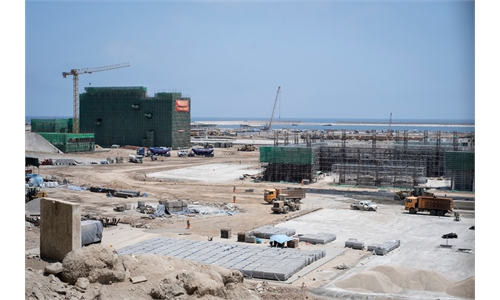
Over 150,000 tons of goods transported via Chancay-Shanghai shipping route in Jan-Sep, reflecting deepening trade ties
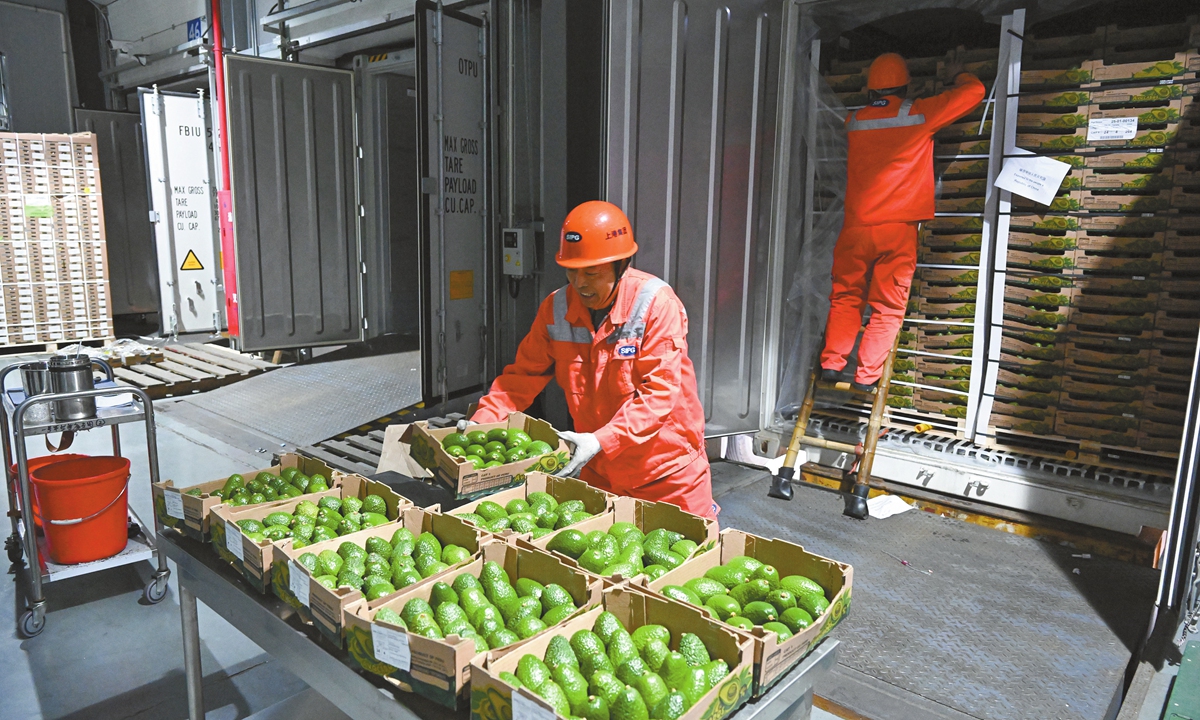
Port workers load fresh Peruvian fruit from Chancay Port in Peru, which arrived at Shanghai's Yangshan Port, onto trucks for distribution on December 19, 2024. Photo: VCG
More than 150,000 tons of goods were transported via the Chancay-Shanghai shipping route in the first three quarters of 2025, driving Shanghai's trade with Peru up by 56.9 percent year-on-year, according to data released by Shanghai Customs, CCTV News reported on Monday.
Analysts said that the surge reflects the strengthening cooperation between China and South American countries such as Peru, despite rising global protectionism and trade uncertainties, noting that the momentum of bilateral trade remains strong with significant potential for further growth.
According to Shanghai Customs, a total of 154,000 tons of imports and exports worth 3.97 billion yuan ($547 million) were handled along the route from January to September. The operation of the route has significantly boosted Shanghai's overall trade with Peru, with total trade value increasing 56.9 percent compared with the same period last year, per the CCTV report.
As a flagship project under the high-quality Belt and Road cooperation between China and Peru, the Port of Chancay has ushered in a new era of Asia-Latin America maritime connectivity. "Its official operation has opened up a new channel for bilateral trade exchanges and cooperation," the report said.
Recently, the first batch of exhibits for the upcoming 8th China International Import Expo (CIIE) arrived at Shanghai's Shengdong Terminal at Yangshan Port aboard a COSCO Shipping's vessel from the Port of Chancay in Peru. The expo will be held from November 5 to 10 in Shanghai, according to CCTV News.
The shipment, consisting of 764 handicraft items including alpaca plush toys and ceramic bulls, was smoothly cleared under the supervision and facilitation of Shanghai Customs. This also marked the first batch of CIIE exhibits transported through the newly inaugurated Chancay-Shanghai maritime corridor, per the report.
As a 21st-century smart port, Chancay Port is deepening cooperation between China and Latin America, advancing connectivity and shared prosperity across continents, Wang Peng, an associate researcher at the Beijing Academy of Social Sciences, told the Global Times on Monday.
The route not only boosts the competitiveness of Latin American exports, including fresh produce and agricultural goods, in China and Asia, but also improving Peru's domestic and the broader regional connectivity through a more diversified and efficient transport network, the expert said.
The port was inaugurated in November 2024. As South America's first smart and green port, Chancay's launch has shortened sea transportation time between Peru and China to around 23 days, per CCTV News. The port has quickly proven its value as a regional shipping hub during the trial operation phase.
"The Chancay-Shanghai route is a vivid example of how Belt and Road cooperation is evolving toward higher quality and deeper mutual benefit," said Wang. "It demonstrates that China's cooperation with Latin America, including Peru, goes far beyond trade. It fosters industrial upgrading, infrastructure connectivity, and sustainable growth on both sides."
Nearly a year after the port's official launch, exports of Chinese household appliances, automobiles, machinery, and light industrial goods to South America have also shown steady growth, becoming an important driver of regional economic activity, per CCTV News.
Meanwhile, Peruvian specialty agricultural products, such as blueberries, avocados, and other fruits, have been continuously shipped to China and other Asian markets via the Chancay Port. Since the opening of the port, Shanghai border inspection authorities have processed over 240 international voyages between Chancay and Shanghai, highlighting the growing vitality of the route, official data showed.
From January to May this year, total import and export value through Chancay Port exceeded $777 million, with container throughput reaching 94,400 TEUs and bulk cargo volume totaling 626,900 tons — all showing steady monthly increases, the People's Daily reported in August, citing official data.
Global Times
RELATED ARTICLES