ARTS / CULTURE & LEISURE
Community-based Suchao reveals amateur football’s untapped potential
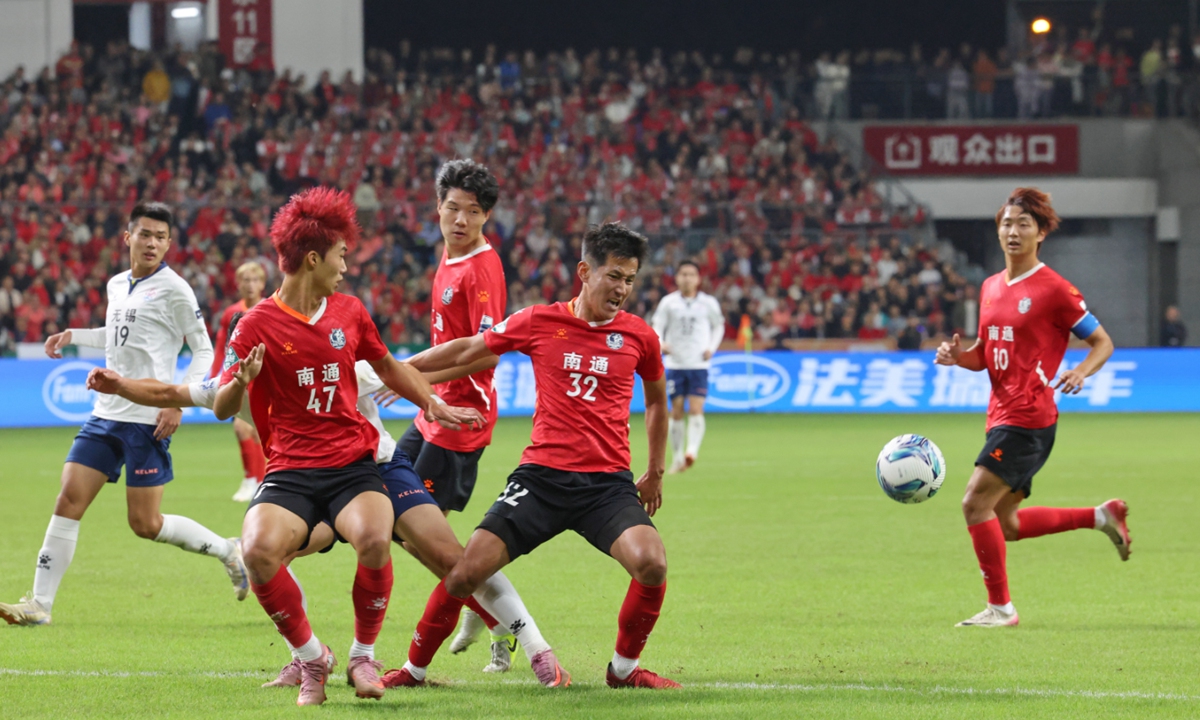
Suchao Photo: VCG
The Jiangsu City Football League, more commonly referred to as Suchao (Jiangsu Super League), is just one game away from the culmination of the season. The past weekend witnessed two near-capacity stadiums showcasing a blend of tactical brilliance and a community spirit that challenges the past notion that only professional games could thrive.The semifinal clashes were nothing short of cinematic. Taizhou, the underdog sixth seed, faced off against second-placed Nanjing in a match that epitomized resilience on Saturday. Taizhou's young squad clawed back from 1-0 down with a cleverly executed corner-kick goal, forcing a penalty shootout. In a nail-biting ninth round of sudden death, Taizhou edged out Nanjing 9-8, cementing their status as the tournament's biggest surprise. Their victory marked their second consecutive upset via penalties, having already dispatched a higher-ranked opponent in the quarterfinals.
Meanwhile, top-of-the-table finisher Nantong took on Wuxi in a tactical chess match. Despite dominating possession, Nantong faced relentless pressure from Wuxi's compact defense and rapid counterattacks. In a bold move, Nantong's coach sent the substitute goalkeeper Cai Tianlong in the final two minutes of regular time, a decision that paid dividends when Cai saved two beginning shots from Wuxi in a 4-2 penalty shootout win.
What sets the Suchao apart, however, is its ability to galvanize communities. Launched earlier this year with 13 city teams, the league is proof that when properly intertwined with local pride and lived experience, even non-professional football can attract attention once reserved for high-profile professional-level games.
The two amateur semifinals were also live broadcast by state broadcaster CCTV Sports, a rare move for amateur-level football games. The Nanjing Olympic Sports Center, hosting the Taizhou-Nanjing clash, drew an astonishing 61,565 fans, shattering the record for amateur football attendance in China. This marked the fifth consecutive time the venue set a new benchmark, a testament to the league's growing allure. The Nantong-Wuxi match, despite a low ticket-lottery success rate, still attracted 32,000 spectators, bringing the total semifinal attendance to 93,000, surpassing the average turnout of the domestic second-tier professional league China League One.
This fervor reflects a deeper connection: Suchao is not just a tournament but a celebration of city pride and local identity. Teams like Taizhou, blending youth talent with homegrown amateur players, embody the spirit of their communities, while fans pack stadiums to cheer for neighbors, friends and local heroes.
The implications of this phenomenon are profound. For too long, Chinese football has been fixated on professional leagues, often plagued by mismanagement and even corruption, as well as waning public interest. Suchao's success suggests a different path: Amateur leagues, when deeply rooted in community and urban culture, can ignite passion and loyalty that rival their professional counterparts.
By fostering local talent and tying matches to cultural identity, Suchao has tapped into a wellspring of enthusiasm that could inspire other regions. Though some commentators caution that other provinces cannot simply copy the formula wholesale, because local conditions in Jiangsu - economic strength, in-frastructure, media visibility - gave Suchao a head-start.
This is not to say Suchao is without challenges. Sustainability will be tested: Will the same audience return year after year? Will the teams evolve from "city-representative" teams to culturally rooted institutions with continuity?
The upcoming final on November 1 in Nanjing promises to further amplify this momentum, with tickets already in high demand. No matter what the result of the final is, it is Jiangsu, the entire province, that will be the winner of the maiden Suchao league, and perhaps, the idea that football belongs to its cities and people.
The author is a reporter with the Global Times. life@globaltimes.com.cn
RELATED ARTICLES