Chinese scientists uncover meteorite remnants in moon soil, providing key clues to solar system evolution
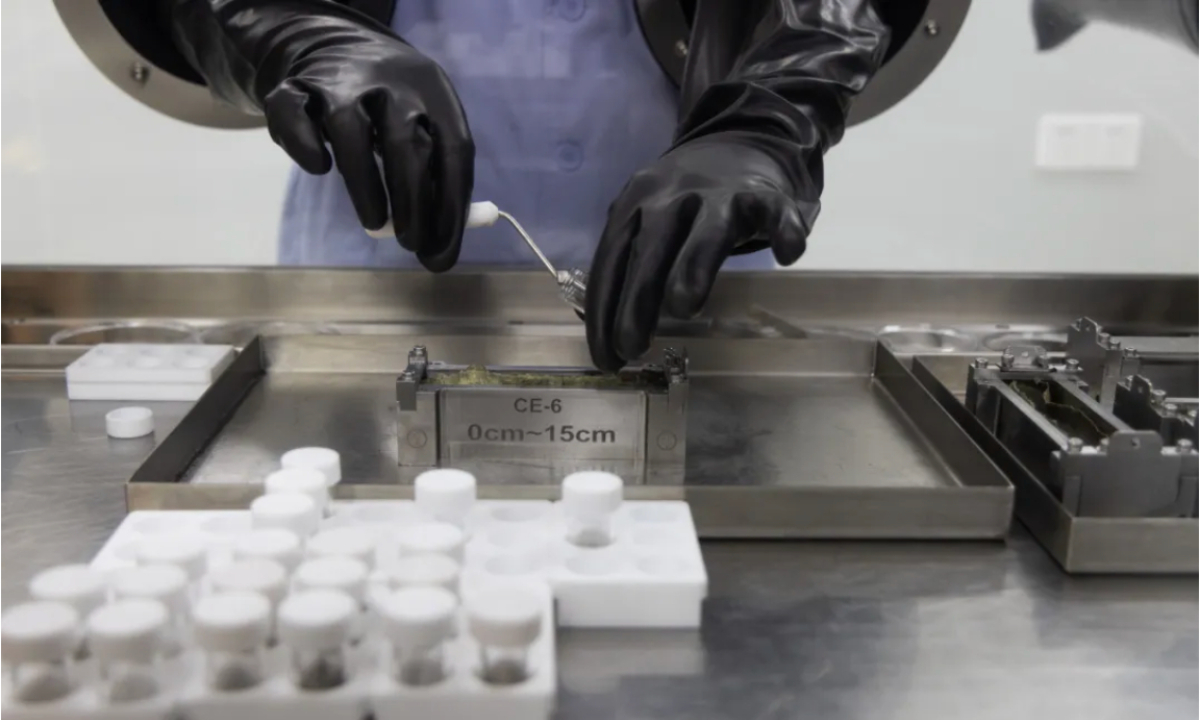
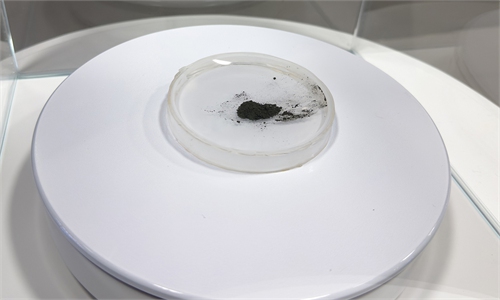
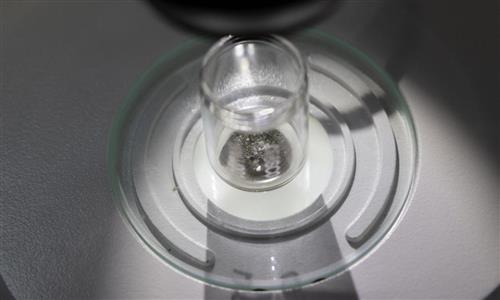
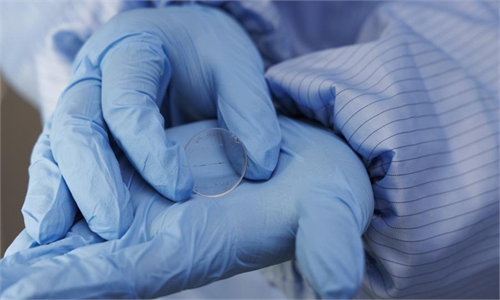
A researcher handles the Chang’e-6 lunar samples in a laboratory on September 24, 2024. Photo: Xinhua
Chinese scientists have identified impact remnants from meteorites in Chang’e-6 lunar samples, shedding light on the origin of water on the moon and offering new insights into material transfer in the solar system, Chinese Academy of Sciences (CAS) announced on Tuesday.
The study was published in the international academic journal Proceedings of the National Academy of Sciences (PNAS) at 3:00 am Beijing time on Tuesday, Xinhua News Agency reported.
Often called the “messengers” of the solar system, meteorites provide key insights into planetary formation and evolution. However, most meteorites are poorly preserved on the Earth due to Earth’s atmosphere and geological activity, especially the rare carbonaceous Ivuna-like (CI) carbonaceous chondrites, which account for less than 1 percent of meteorites found on the Earth. In contrast, the moon, lacking both an atmosphere and geological activity, serves as a “natural archive” preserving traces of meteorite impacts, according to a statement released by the CAS.
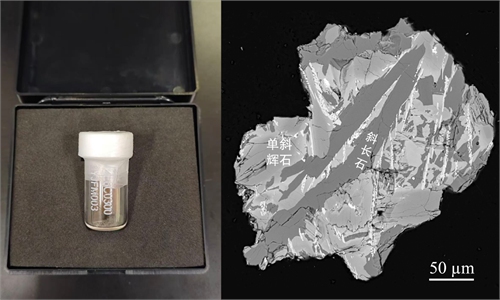
A research team led by Xu Yigang, an academician from the Guangzhou Institute of Geochemistry under the CAS, identified impact remnants originating from the CI carbonaceous chondrites through systematic petrographic analyses and by examining the trace elements and oxygen isotope compositions of olivine-bearing fragments in the two-gram lunar samples collected by Chang’e-6 mission, Xinhua reported on Tuesday.
According to researchers, the fragments formed when the parent body of the CI carbonaceous chondrites struck the lunar surface, melted upon impact and then rapidly cooled and crystallized.
The study established a systematic method for identifying meteoritic material in extraterrestrial samples, researchers said.
According to Xu, previous lunar studies have primarily concentrated on the moon’s formation and evolution, including the eruption ages of mare basalts, the composition of the lunar mantle, variations in the moon’s magnetic field, and the impact ages of surface craters. In contrast, this study focuses on the types and proportions of exogenous (non-lunar) materials in the lunar soil samples, placing the moon within the broader context of the Earth-moon system and even the solar system, thus expanding the scale of the research, Xu told the Global Times on Tuesday.
The parent asteroids of CI carbonaceous chondrites are mainly located in the outer solar system and are rich in life-essential substances, such as water and organic matter. Thus, the researchers suggested that this discovery indicates that material from the outer solar system can migrate into the inner solar system, updating the understanding of the mechanisms of material migration inward the inner solar system.
This discovery also has important implications for explaining the moon’s water origin. According to the researchers, the water previously detected in lunar samples, characterized by positive oxygen isotopes, may have originated from impacts by such meteorites from the outer solar system.
The study has achieved two major breakthroughs. Technically, it developed an integrated method to identify exogenous materials in lunar soil. Scientifically, it found that the CI carbonaceous chondrites account for about 30 percent of the lunar meteorite – far exceeding their proportion in the Earth’s meteorite record of less than 1 percent – indicating that the Earth-moon system has experienced more impacts and material contributions from carbonaceous chondrites, Xu said.
In 2024, Chang’e-6 brought 1,935.3 grams of lunar far-side samples back to Earth. These samples were collected from the South Pole-Aitken Basin, the largest, deepest and oldest basin on the moon, Xinhua reported.
After Xu’s team received the Chang’e-6 lunar samples on August 24, 2024, they spent nearly five months conducting comprehensive analyses and submitted the paper on January 22, 2025.
RELATED ARTICLES