NASA reportedly may sideline SpaceX for moon mission over lagging schedule; expert says tying project to space race with China adds unnecessary risks
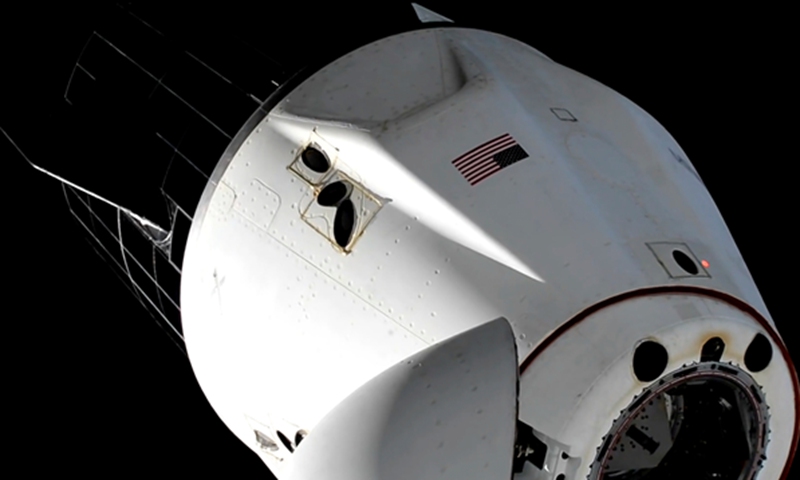
This image taken from NASA video shows the SpaceX capsule carrying NASA astronauts Suni Williams, Butch Wilmore and Nick Hague, and Russian astronaut Alexander Gorbunov, undocking from the International Space Station on Tuesday, March 18, 2025. (NASA)
NASA may sideline SpaceX and select a different company to land its astronauts on the moon, which the agency is planning for later this decade, acting space agency chief Sean Duffy suggested during TV appearances on Monday, according to CNN. SpaceX is lagging behind schedule, potentially thwarting NASA's efforts to return humans to the moon before China amid a new space race, Duffy was quoted as saying.It represents a major shift in NASA's lunar strategy, starting a new competitive juncture in the program for a crewed moon lander just two years before the scheduled landing date. Blue Origin is widely expected to compete for the mission, while Lockheed Martin has indicated it would convene an industry team to heed NASA's call, Reuters reported.
A Chinese aerospace expert on Tuesday described NASA's 2027 lunar landing goal as "overly ambitious," saying that temporarily switching to another company could make achieving the goal even more difficult. He added that tying major project development to competition with China's space program introduces unnecessary technical and safety risks, while unfinished critical validation work further heightens the challenges.
"They (SpaceX) do remarkable things, but they're behind schedule," Duffy said in an interview with Fox News, the Xinhua News Agency reported.
Musk wrote in a social media post that "SpaceX is moving like lightning compared to the rest of the space industry," the SpaceX CEO wrote on X, replying to a user on Monday. "Moreover, Starship will end up doing the whole Moon mission. Mark my words."
Starship, picked by NASA in 2021 under a contract now worth $4.4 billion, faces a 2027 moon landing deadline that agency advisers estimate could slip years behind schedule, citing competing priorities. Musk sees Starship as crucial to launching larger batches of Starlink satellites to space and eventually ferrying humans to Mars, among other missions, the Reuters reported Monday.
If NASA were to cancel or amend its contract with SpaceX, it could signal a remarkable reversal of a plan the space agency has had in place since 2021. That's when NASA chose Starship, which is still in the early stages of development and has racked up three in-flight failures and a couple successful suborbital test flights so far in 2025, to serve as the lunar lander during the historic moon landing mission, called Artemis III, CNN noted.
Wang Yanan, chief editor of Aerospace Knowledge magazine, told the Global Times on Tuesday that although SpaceX has made some progress, such as recently launching its 11th Starship rocket from Texas and safely landing it in the Indian Ocean, the schedule for NASA's 2027 crewed lunar landing goal still faces significant gaps.
"SpaceX will need to overcome several critical milestones. First, achieving full orbital flight, which has not yet been accomplished and second, conducting a circumlunar flight and executing a crewed mission. Additionally, an uncrewed lunar landing is essential to validate the lander's ability to touch down safely on the moon's surface. Without overcoming these hurdles, NASA's Artemis program cannot be realized," Wang said.
According to the CNN, in a statement, NASA press secretary Bethany Stevens said that the space agency gave SpaceX and Blue Origin until October 29 to present "acceleration approaches" for lunar lander development.
"NASA is also going to request plans from the entire commercial space industry - through an RFI (or Request for Information) - for how NASA can increase the cadence of our mission to the Moon," the statement reads.
However, CNN cited space industry experts' concerns about the timelines for both SpaceX's Starship and Blue Origin's Blue Moon, noting that the vehicles are complex and may need to be refueled in orbit. In-orbit refueling has never been attempted, the experts noted, and lunar landers requiring such a step could require prohibitively long development timelines.
Wang noted that replacing SpaceX with another provider would require the new company to demonstrate a higher level of technical maturity. However, there is no evidence that Blue Origin or other companies have advanced faster than SpaceX in the short term, and proving their technical readiness would itself be time-consuming.
"Certain US politicians have been stoking anxiety over a new space race by setting an overly ambitious 2027 lunar landing target that ignores the current state of technological development," Wang said, noting that this paranoia introduces unnecessary risks to major projects, with unfinished critical validation work further raising the stakes.
RELATED ARTICLES