Elon Musk acknowledges Chinese space enterprises’ marked progress in reusable rockets
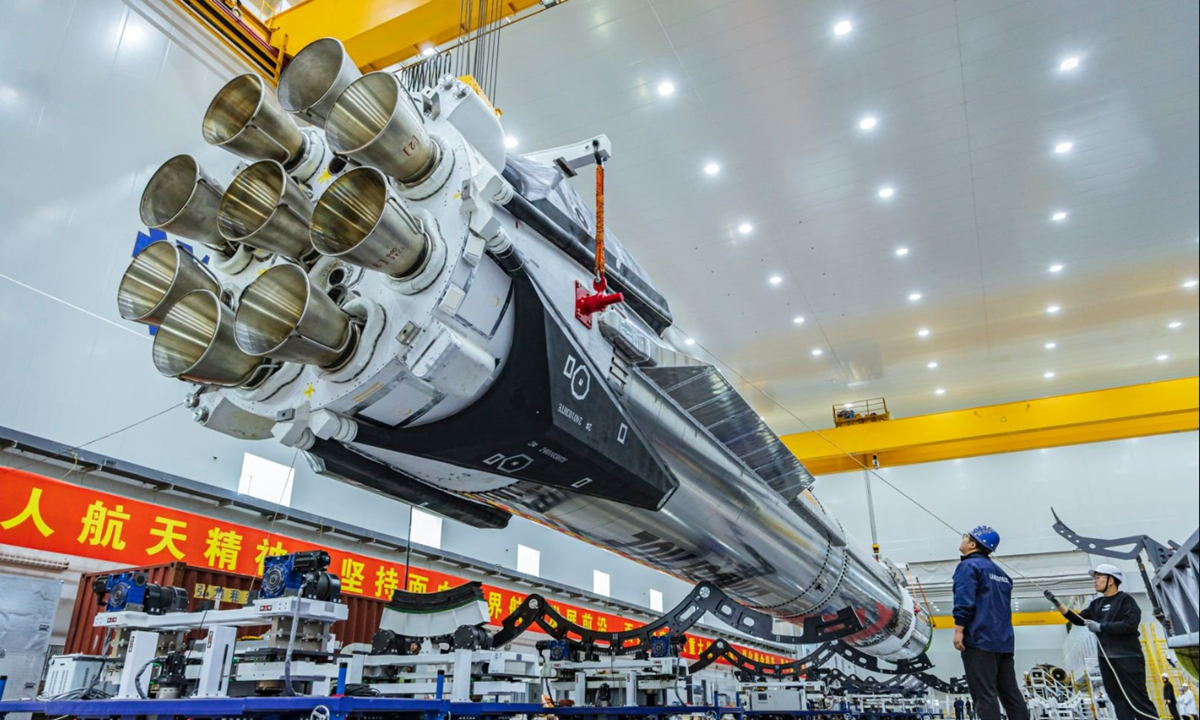
Chinese commercial space firm LandSpace's Zhuque-3 rocket Photo: Courtesy of LandSpace
Elon Musk, CEO of US private space firm SpaceX, said on Thursday that several Chinese reusable carrier rockets have added aspects of Starship and to a Falcon 9 architecture, allowing it to beat SpaceX's Falcon 9 rocket.
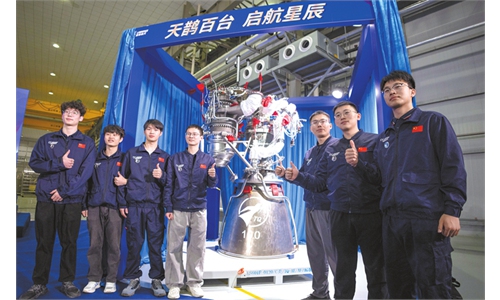
Musk made the comment in another social media post containing a video clip, which showed the fueling rehearsal and static ignition test of Chinese private space firm LandSpace's Zhuque-3 reusable rocket conducted from October 18 to 20 at the Dongfeng Commercial Aerospace Innovation Test Zone.
The post on which Musk commented also mentioned two other Chinese reusable carrier rockets: the CZ-12A developed by CASC and Tianlong-3 developed by Space Pioneer, adding that "20+more rocket companies are building launch sites!"
"They have added aspects of Starship, such as use of stainless steel and methalox, to a Falcon 9 architecture, which would enable it to beat Falcon 9," Musk commented, while noting that the Starship is in "another league."
Wang Yanan, chief editor of Aerospace Knowledge magazine, told Global Times on Friday that Musk's assessment is generally objective. Chinese commercial space companies have indeed adopted some of SpaceX's successful approaches, such as stainless steel structures, liquid methane-oxygen fuel systems, and reusable technologies.
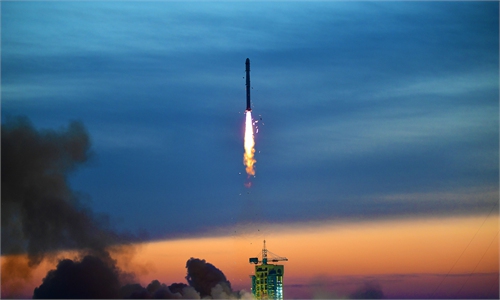
Shortly after lift-off from SpaceX's Starbase facility in the southern US state of Texas at 6:23 pm on October 13 (2323 GMT), Starship's upper stage separated from its Super Heavy booster and continued its flight into space. The spacecraft successfully deployed eight Starlink simulator satellites, performed a dynamic banking maneuver to simulate the return trajectory for future missions to Starbase, and completed a flip and landing burn for a soft water landing just over an hour after lift-off, the Xinhua News Agency reported.
Although Musk acknowledged "a gap" with Starship, Wang said that China's commercial space sector has displayed strong development prospects, with multiple companies exploring and fostering innovation in a competitive, efficiency-driven environment.
"In the future, we could well exceed Musk's expectations in certain areas and even achieve new technological breakthroughs," Wang noted.
RELATED ARTICLES