Canada needs to show more sincerity to build stable, predictable relations with China: expert
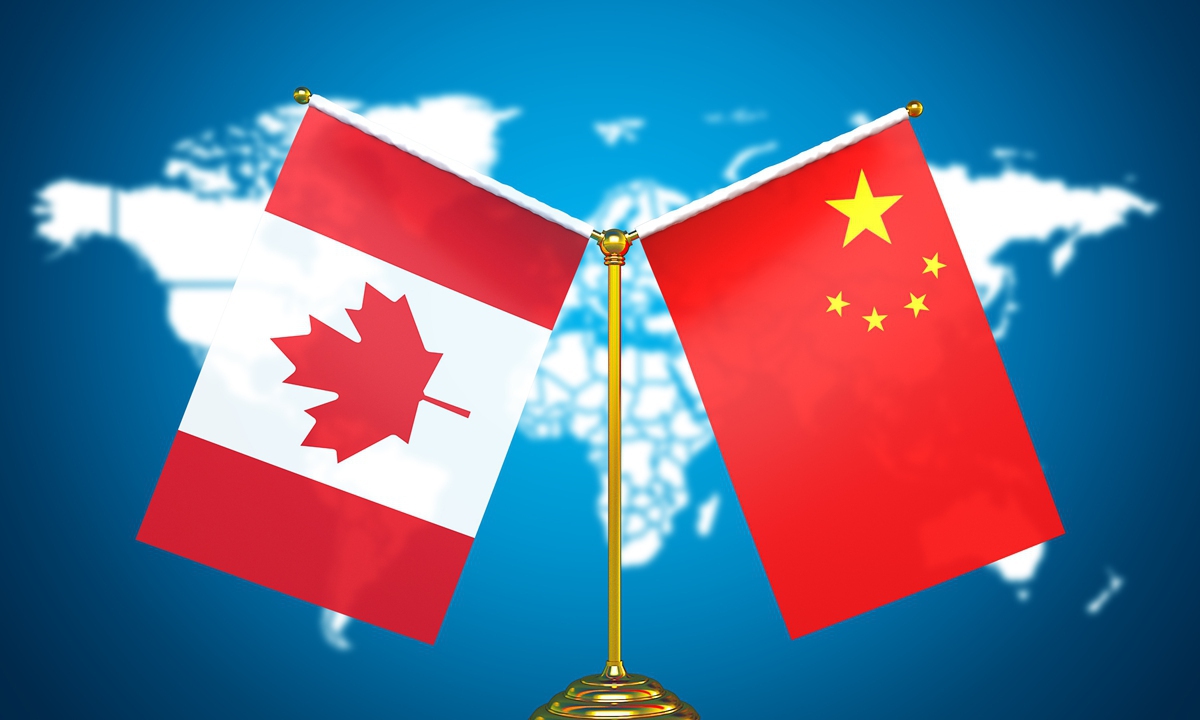
China and Canada Photo: VCG
Canadian Prime Minister Mark Carney will depart on his first visit to Asia since taking office, with stops in Malaysia, Singapore and South Korea, according to the Canadian Press News.
Carney is pursuing a "strategic relationship" with China, Bloomberg reported, citing a Canadian government official who told reporters in a background briefing on Thursday. The official also claimed that Carney is pursuing a meeting with the Chinese leader on the sidelines of the Asia-Pacific Economic Cooperation summit in Gyeongju, South Korea, from October 31 to November 1, but nothing has been confirmed, according to the report.
A Chinese expert said that building an equal, stable, and predictable relationship with China, a major trading partner, is vital for Canada; however, it is important for the Canadian side to show sincerity and respect rather than follow the US in imposing unilateral trade pressure, which is not the right way to get along with China.
According to Bloomberg report, Carney hopes to meet Chinese leader next week as he tries to offset US tariffs by easing trade tensions with the world's second-largest economy.
Meanwhile, Carney's government is reviewing its tariffs on Chinese electric vehicles, and he sees opportunities to expand energy and agricultural trade with China, Bloomberg reported.
Last year, the Canadian government followed the US in imposing a 100 percent tariff on Chinese electric vehicles and a 25 percent tariff on steel and aluminum. In response, China has taken countermeasures, including a 100 percent tariff rate on rapeseed oil, oilcake and peas from Canada.
In August, China imposed a 75.8 percent anti-dumping deposit on Canadian canola. China is the largest export market for Canadian canola seed, representing 67 percent of total canola seed exports and totaling 5.9 million tonnes in 2024, worth around $4 billion, according to the report published on the official website of the Canadian government.
Chris Davison, president of the Canola Council of Canada, said China is a market that was valued at just under $5 billion, Canadian media outlet Global News reported.
"The absence of that demand signal (from China) can be expected to have significant impacts for the industry moving forward," said Davison, according to the report.
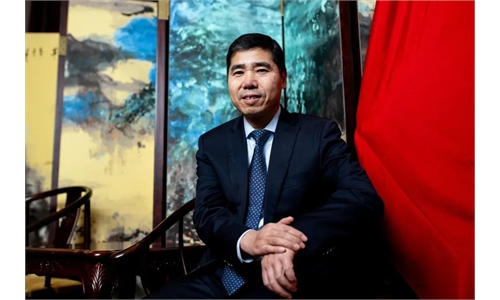
Canada needs to understand that facts repeatedly show unilateral tariffs and trade pressure ultimately harm both itself and the stability of trade relations with its major trading partner China, He Weiwen, a senior fellow at the Center for China and Globalization, told the Global Times on Friday.
On October 17, Chinese Foreign Minister Wang Yi held talks with his Canadian counterpart, Anita Anand, in Beijing, with both sides pledging to improve bilateral ties, Xinhua News Agency reported.
Wang, who is also a member of the Political Bureau of the Communist Party of China Central Committee, said that this year marks the 55th anniversary of the establishment of diplomatic relations between China and Canada. Wang called on both sides to work together to uphold multilateralism, safeguard the international economic and trade order, and steer China-Canada relations onto a track of healthy, stable, sustainable development at an early date.
Anand said that Canada is ready to make good use of dialogue and consultation mechanisms in areas such as diplomacy, the economy and trade, and to promote cooperation in fields including trade, agriculture, tourism, energy, and people-to-people and cultural exchange, Xinhua reported.
"Establishing a relationship with China that is equal, stable, and predictable is of significant importance to Canada and is, in itself, a win-win choice," He said. At the same time, it is important for Canada to demonstrate sincerity and get along with China on the basis of equality, mutual respect, and pragmatism, rather than blindly following the US footstep in exerting unilateral trade pressure, which is not the proper way to get along with China, said the expert.
Global Times
RELATED ARTICLES