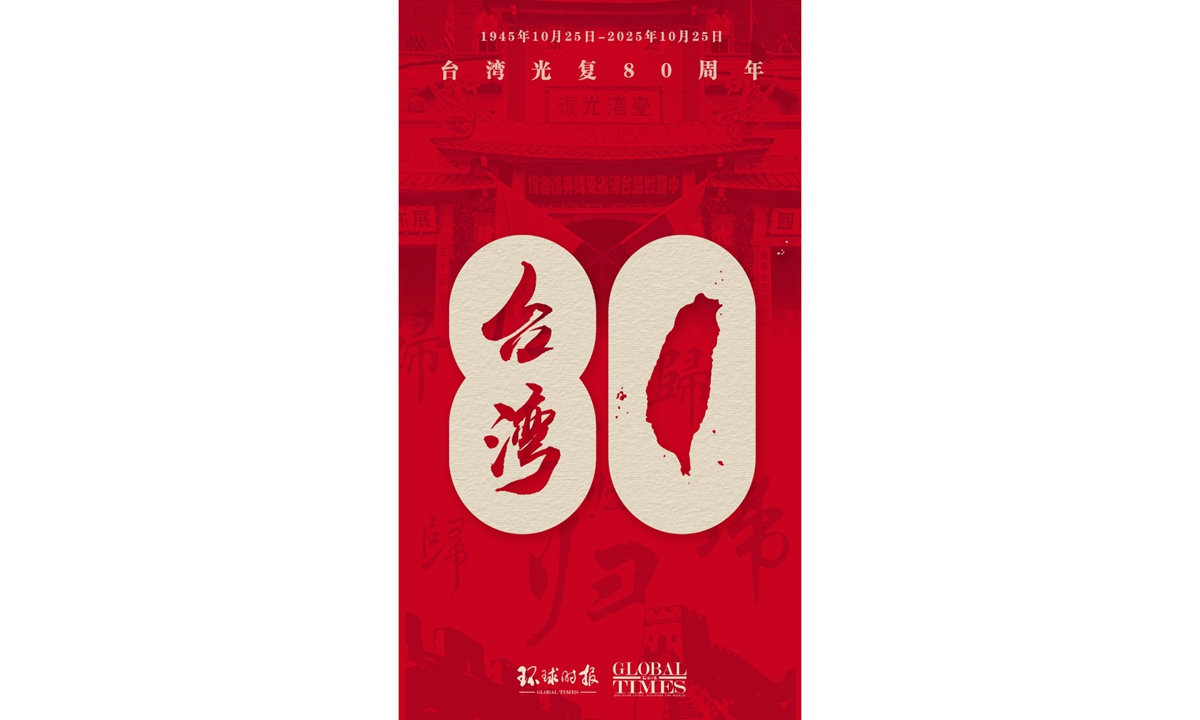
Commemoration Day of Taiwan's Restoration
On Friday, the 18th session of the Standing Committee of the 14th National People's Congress (NPC) voted to establish Commemoration Day of Taiwan's Restoration. Following the victory in the Chinese People's War of Resistance against Japanese Aggression and the World Anti-Fascist War, on October 25, 1945, Taiwan and the Penghu Islands, which had been illegally occupied by Japan, were restored to China's sovereign administration. The restoration and return of Taiwan to the motherland not only marked the victory of the Chinese nation's 14-year-long War of Resistance, but also represented the triumph of the Taiwan compatriots' 50-year struggle against Japan's occupation and colonial rule. Taiwan's restoration stands as a solemn moment when, after half a century of struggle, the Chinese government recovered its lost territory and resumed the exercise of sovereignty over the island. Establishing Commemoration Day of Taiwan's Restoration in the form of law and stipulating that the state shall hold commemorative activities in various forms carry profound historical value, institutional significance and practical strategic implications.
The restoration of Taiwan symbolizes the Chinese nation's great triumph over foreign aggression and the realization of national unity, embodying multiple significant aspects including national resistance, popular struggle and historical justice. Making it a national commemorative day helps forge broad societal consensus to remember and value this historic event. It is not only an extension of the commemoration on the victory of the War of Resistance, but also a solemn confirmation of the historical logic that "Taiwan has been part of China since ancient times, was illegally seized by Japan, and was returned to China after Japan's defeat." Through national commemorative activities, the state's sovereignty over Taiwan is transformed from a political declaration into a concrete, visible, participatory and inheritable public ritual. Citizens can continually strengthen their understanding of national sovereignty and territorial integrity through patriotic education related to Taiwan island, thereby building a solid foundation for unity on legal, emotional and institutional levels.
Commemorative days are one of the core carriers of national narratives and serve as institutional bonds connecting the nation with its people. Establishing the Commemoration Day of Taiwan's Restoration helps unify the historical narrative and value orientation regarding Taiwan at the national level, forming a clear, positive and unified axis of national, ethnic and territorial identity. The national commemorative day will also drive a series of activities to hold, from academic seminars and historical exhibitions to artistic performances and universal education programs, various forms of commemorative activities will undoubtedly help promote cross-Straits participation in the construction of the memory of Taiwan's restoration and further strengthen a strong sense of community for the Chinese nation. This commemorative day belongs to all Chinese people — it links history, consolidates emotions and shapes direction.
Setting Commemoration Day of Taiwan's Restoration is both a great tribute to past victories and a persistent pursuit for future reunification. At the institutional level, it demonstrates the country's firm resolve in advancing the cause of national reunification and provides a more stable and profound social support for Taiwan-related work in the new era. The establishment of such a commemoration day can inspire the whole of society to pay attention to and participate in the work arrangements on Taiwan question, making the realization of complete reunification a joint and conscious action of the entire society. Especially as the new generation grows, commemorative events, educational programs and cultural outreach centered on the commemoration of Taiwan's Restoration can systematically shape their correct understanding and firm stance on the Taiwan question. In doing so, the belief that "reunification is the trend of the times, a matter of national righteousness, and the inevitability of history" will gradually take root as a shared value of citizens in the new era.
At the same time, the national will and ethnic sentiment embodied in this commemorative day will serve as a powerful cultural tool to counter external interference and advance the international fair and justice. It clearly conveys to the international community China's unwavering stance on reunification, underscores the historical and legal basis for Taiwan being a part of China, and directly counters erroneous claims such as the "undetermined status of Taiwan," enhancing China's narrative authority related to Taiwan in international public opinion.
Recently, the TV drama Silent Honor sparks heated discussion across the Straits vividly demonstrated how Taiwan's destiny is inextricably linked to the mainland and how the hearts of compatriots on both sides are deeply connected. It shows that the value of pursuing reunification and opposing division is deeply rooted in our cultural DNA. The unwavering belief in national reunification and the patriotic spirit that transcends personal life and death have always been the spiritual bond uniting compatriots on both sides of the Straits. The reunification embodies both the unfinished mission of our forebears and the present reality we are actively advancing toward. Establishing Commemoration Day of Taiwan's Restoration in the name of the state is timely and of profound significance.