ARTS / CULTURE & LEISURE
Exhibition on Taiwan compatriots’ resistance against Japanese aggression opens
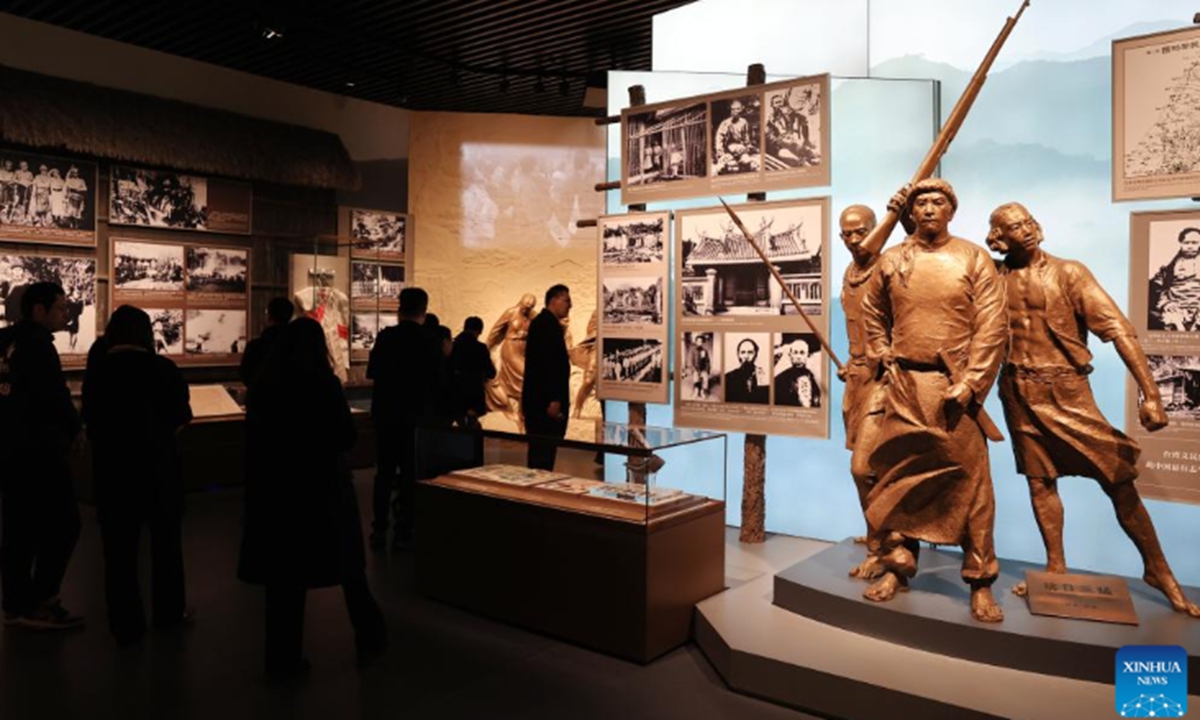
People visit "Unyielding Treasure Island: Loyal to the Motherland," an exhibition on the history of Taiwan compatriots' resistance against Japanese aggression, at the Museum of the War of Chinese People's Resistance Against Japanese Aggression in Beijing, capital of China, Oct. 25, 2025. Photo: Xinhua
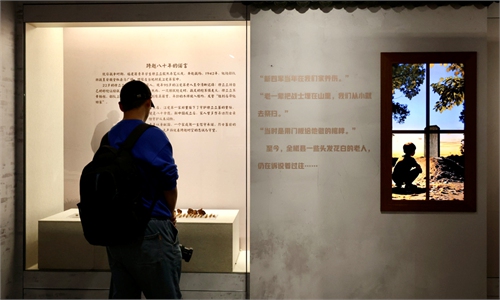
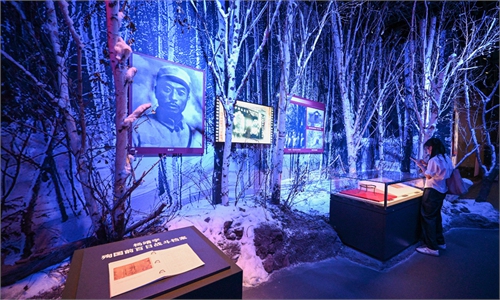
An exhibition commemorating the history of Taiwan compatriots' resistance against Japanese aggression opened on Saturday at the Museum of the War of Chinese People's Resistance Against Japanese Aggression in Beijing.The exhibition, to commemorate the 80th anniversary of Taiwan's restoration to China, features 387 historical photographs and 453 artifacts, offering a panoramic view of the half-century-long resistance of the people on Taiwan island against Japanese colonial rule, introduced Luo Chunkang, curator of the museum.
"By organizing this special exhibition on the first Commemoration Day of Taiwan's Restoration, we aim to remember history and pay tribute to the martyrs," Li Zhidong, the museum's deputy curator, said at the opening ceremony. "People on both sides of the Taiwan Straits share the same breath and destiny, and together we will create a brighter future."
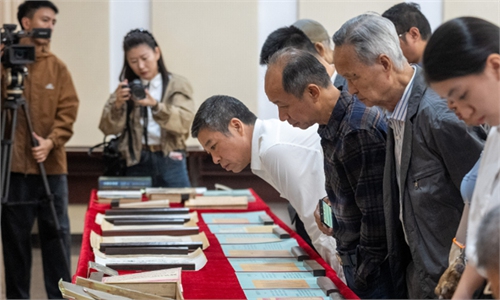
According to Li, many Taiwan compatriots and cross-Straits organizations have donated valuable historical items to the exhibition. Among them is a 16-panel screen inscribed by renowned scholar Qiu Fengjia, reflecting the deep patriotic sentiments of Taiwan compatriots during the colonial period.
In front of the oil painting depicting the 1895 Battle of Baguashan, many visitors stopped to take a closer look. The work depicts one of the largest and most significant battles in Taiwan's anti-Japanese aggression history. The painter, Yang Binghui, was a descendant of an anti-Japanese fighter. Despite battling severe illness in 2015, Yang continued painting for six months at the museum, completing the work shortly before his passing.
For many young visitors from Taiwan island, the exhibition was both emotional and enlightening.
For Taiwan compatriot Tang Wenyu, the visit was a reaffirmation of shared identity. "We must make this part of history known and accessible, especially to young people in Taiwan," Tang told the Global Times after touring the exhibition. "People on both sides of the Straits are one family, and that's a consensus we must hold onto. With mutual love, respect, and communication, cross-Straits relations will grow stronger. I hope young people in Taiwan will read more about history and visit this exhibition to understand how we became one family."
Lin Yanchen, a Taiwan youth as well as a PhD candidate at Peking University, told the Global Times on Sunday that the experience strengthened his belief in the importance of cross-Straits exchange and reunification.
"Seeing the rapid development of the Chinese mainland, I strongly encourage young people from Taiwan island to come and see it for themselves," Lin said.
"There are so many opportunities here, and the atmosphere is full of vitality."
Citing Peking University's archaeology department as an example, Lin noted that many young people on Taiwan island are interested in archaeology but lack sufficient development opportunities. "In the mainland, archaeology is highly valued, and we have the Sanxingdui culture. I hope Taiwan youth can step out, learn, and explore," he said.
It's worth noting that a screen inside the exhibition hall plays a documentary about several women from Taiwan island who were deceived by Japanese occupiers into becoming "comfort women" in Southeast Asia during the war. The film reveals the trauma and suffering inflicted by colonial aggression.
After watching the documentary, Taiwan youth Qiu Bingru admitted that he was deeply moved. "On Taiwan island, the history of the anti-Japanese struggle and the restoration of Taiwan is almost marginalized in education," he said in an interview with the China News Service.
"Taiwan island is not lacking in historical materials, it lacks the sincerity to face history," Qiu continued.
The exhibition also embraces interactive technology. A digital installation allows visitors to explore anti-Japanese heritage sites on Taiwan island, such as the former battlefield of the 1915 Xilaian Incident, with QR codes that link to archival photos. Another AI-powered device enables visitors to "travel back in time" and take commemorative photos marking the day of Taiwan's restoration.
RELATED ARTICLES