Illustration: Liu Rui/GT
When China's leadership gathered for the recently concluded fourth plenary session of the 20th Central Committee of the Communist Party of China, the guiding message was clear: The country's next stage of development will hinge not merely on how fast it grows, but on how fully it sustains and circulates well-being. The statement that China "should work harder to ensure and improve public well-being and promote common prosperity for all" signals a decisive focus on a public goods paradigm that fuses economic dynamism with social inclusion and ecological balance.The priorities outlined - inclusive public services, unimpeded social mobility, improved living standards, full employment, equitable income distribution, and high-quality real estate and healthcare - reflect a holistic conception of national progress. In this vision, the economy is not a self-contained system of profit and production, but a web of interdependent flows linking households, enterprises and the state through shared infrastructures of life.
For four decades, China's growth has been investment-led - first through infrastructure and industrial expansion, later through urbanization and technology upgrading. This model generated immense productive capacity, lifted hundreds of millions from poverty, and created a vast middle class. As China's economy matures, the question is no longer how to add more volume of output, but how to improve the quality of circulation - the efficiency, inclusivity and sustainability of the flows that link production, distribution and consumption.
Investments in health, education, social security and green infrastructure are not merely welfare outlays; they are productive commitments that increase the resilience and adaptability of the economy. They expand the "effective demand" base of household consumption and reduce systemic risks. This approach can be described in terms of a "foundational economy" logic; that is, the idea that sectors sustaining daily life (such as care, housing, energy, transport and digital connectivity) form the bedrock of both social cohesion and long-term productivity. By investing in these foundations, the state counteracts the entropic tendencies of market systems, which, if left unchecked, tend toward concentration, exclusion and ecological degradation.
Here, the concept of negentropy - the maintenance of order and life within complex systems - provides a useful metaphor. A market economy, left to its own devices, trends toward disorder: speculative bubbles, regional disparities, social stratification and ecological exhaustion. Public goods act as negentropic forces: They stabilize flows, reduce uncertainty and sustain the conditions for continued renewal.
China's new focus on "inclusive, essential, and equitable" public services can thus be seen as an investment in the country's negentropic capacity. Universal access to healthcare and education, equitable housing and a robust social safety net generate what we might call structural well-being: a distributed capacity for individuals and communities to thrive amid transformation.
This orientation echoes China's philosophical traditions as well. In Confucian and Daoist thought, good governance is not about control but about the cultivation of harmony within a living system. Public goods are the modern institutional form of that harmony; they are the channels through which the state, as a great enabling actor, keeps social and economic circulation balanced and just.
The plenum's call to "keep channels of social mobility unimpeded" strikes at the heart of China's middle-income transition. The stability of a complex society depends on people's belief that effort and learning can still yield advancement. Social immobility - whether due to unequal education, unaffordable housing or urban-rural divides - corrodes that belief.
China's approach to this challenge involves both horizontal equity (ensuring equal access to public services across regions) and vertical mobility (enabling citizens to move up the income and opportunity ladder). To keep these channels open, continued investment in vocational and lifelong learning, digital inclusion and rural-urban integration is essential.
Here, again, public goods are the key mechanism. A strong public education system reduces inherited disadvantage. A fair housing system converts urbanization into mobility rather than exclusion. A modernized healthcare system reduces the fear of illness that suppresses household consumption. And social security expansion ensures that citizens can participate confidently in a dynamic, innovative economy.
China's model of publicly led financing - through policy banks, state-owned enterprises and local government platforms - has been a critical driver of infrastructure and industrial capacity. The next step is to direct this powerful instrument toward the social and foundational domains of development.
The state's investment logic is being refined. In a maturing economy, new multiplier effects come from strengthening human and social capital - the connective tissue of the economy - rather than simply focusing on the building of more physical capital, though there remains much work to be done in this domain as well. Public investment in care systems, digital education platforms and community infrastructure will yield returns in productivity, innovation and stability.
China's financial system, uniquely positioned under state guidance, can channel long-term credit toward these negentropic sectors in ways that market-based finance in the West cannot easily replicate. In this sense, China's developmental state remains a living laboratory for post-neoliberal economics - one where finance serves the public good rather than the other way around.
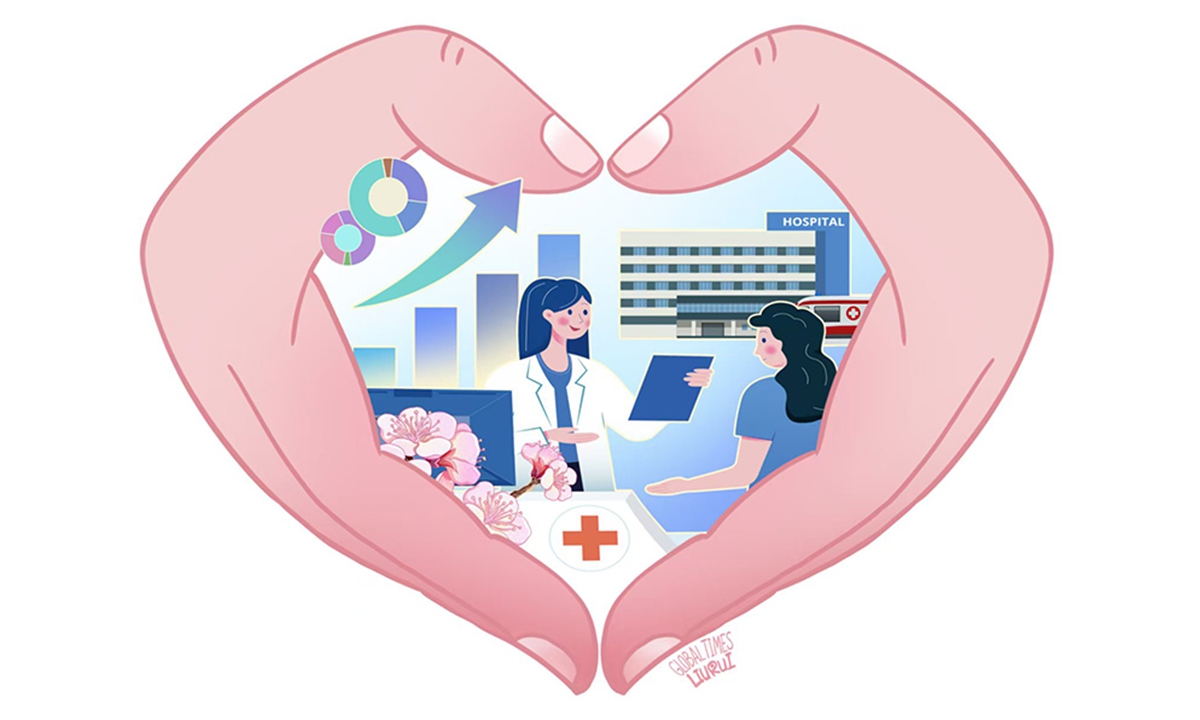
The plenum's reference to the Healthy China Initiative and "high-quality population development" underscores the demographic dimension of this shift. A society that invests in health, eldercare and reproductive well-being generates not just compassion but economic efficiency. The health economy - preventive medicine, active aging, medical technologies and wellness services - will be a major frontier of growth. A healthier, more secure population is also more innovative and adaptive, sustaining the human basis of development.
The broader significance of this turn toward public goods is that China is articulating a new development logic for the 21st century, which transcends the false dichotomy between growth and welfare.
In the coming years, as China deepens its technological capabilities and integrates digital intelligence into governance and industry, the challenge will be to ensure that these tools serve public purposes - enhancing access, transparency and inclusivity - rather than concentrating advantage. The public digital infrastructure of the next decade may well be as important as the highways and power grids of the past.
China's 15th Five-Year Plan will likely mark the consolidation of a public goods-driven development era. By fusing economic vitality with social equity and ecological stability, China is redefining prosperity not as accumulation, but as the sustained flourishing of the whole. The measure of success will not simply be GDP growth, but the degree to which every citizen feels that the pathways of life remain open, the burdens of insecurity lightened and the promise of renewal shared by all.
The author is an adjunct professor at the Queensland University of Technology, a senior fellow at Taihe Institute and a former advisor to Kevin Rudd, former Australian prime minister. opinion@globaltimes.com.cn
RELATED ARTICLES