A view of the Taiwan Straits is seen from Xiamen port in East China's Fujian Province. File photo: IC
On Thursday, President Xi Jinping met with US President Donald Trump in Busan, South Korea - a major event that has drawn global attention. This marks President Xi's first overseas visit after the successful conclusion of the fourth plenary session of the 20th Central Committee of the Communist Party of China and his first meeting with President Trump in six years. This important meeting has released a series of rich, positive and constructive signals, steering China-US relations toward stability and providing new certainty to an international landscape full of changes and challenges as well as global governance. It is believed that this meeting also carries broad and significant implications for all sectors of society on the island of Taiwan.
Six years ago, on June 29, 2019, President Xi met President Trump in Osaka, Japan, where he elaborated on the Chinese government's principled position on the Taiwan question. At that time, Trump said that "I attach importance to the Chinese side's concerns on the Taiwan question and the US side will continue to adhere to the one-China policy.''
In November 2022, President Xi emphasized that the Taiwan question is at the very core of China's core interests, the bedrock of the political foundation of China-US relations, and the first red line that must not be crossed in China-US relations.
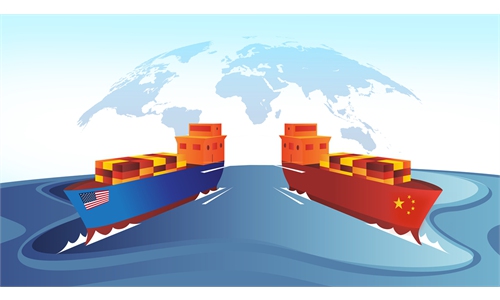
In the press release of the Busan meeting, the Taiwan question was not mentioned. However, the constructive and forward-looking remarks made by the two leaders offer much room for reflection. President Xi told Trump, "You and I are at the helm of China-US relations." "In the face of winds, waves and challenges, we should stay the right course, navigate through the complex landscape, and ensure the steady sailing forward of the giant ship of China-US relations."
Every word in this statement is significant. To ensure that the "giant ship" of China-US relations stays on course and sails steadily and far, a key prerequisite is that the US correctly understands and handles the Taiwan question. Whether it's beneficial or harmful to both sides depends on whether the US clearly recognizes that the Taiwan question is at the very core of China's core interests.
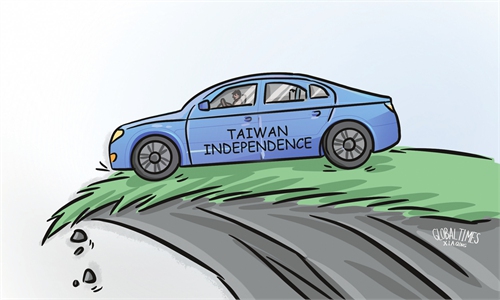
Only when Washington aligns its words and actions, faithfully adheres to the one-China principle, honors the three China-US joint communiqués and firmly maintains its stance of not supporting "Taiwan independence" and not interfering in China's internal affairs, can it lay a solid foundation for stable China-US relations and avoid allowing a small number of "Taiwan independence" separatists to drag both countries into the perilous abyss of confrontation.
During the Busan meeting, President Xi stressed that China's development and revitalization goes hand in hand with President Trump's vision to "Make America Great Again," adding that the two countries are fully able to help each other succeed and prosper together.
Over the years, China and the US have formed a deeply complementary economic and trade relationship. China's vast market provides immense opportunities for American enterprises, while the US' advanced technology and management expertise inject momentum into China's industrial upgrading. For instance, in emerging sectors, such as new energy and artificial intelligence, cooperation between companies from both sides has not only driven industrial development in both countries, but also contributed to global progress in these fields.
Likewise, the great cause of China's complete national reunification, which is integral to the great rejuvenation of the Chinese nation, is not in conflict with the goal of "Making America Great Again." In fact, it can complement it. China's reunification will bring a more stable and prosperous development environment to the Asia-Pacific region, and such stability will, in turn, provide the US with crucial conditions to conduct economic and trade activities and ensure energy security in the region - thereby offering greater and lasting certainty for protecting US economic interests in the Asia-Pacific.
China's complete reunification is China's own affair and a dream and pursuit that the Chinese nation is determined to achieve. This process will undoubtedly contribute Chinese wisdom and solutions to global governance. It will also create favorable conditions for China and the US to jointly participate in the governance of global affairs, strengthening global development expectations and anticipation of countries around the world in the stable and positive development of China-US relations. In short, China's advancement of national reunification is beneficial to Taiwan region, to the US and to the world.
From the current situation, the historical trend of China's complete reunification has become unstoppable. The great cause of national reunification is embarking on a new journey and entering a new stage. During the 14th Five-Year Plan period (2021-25), when China's GDP successively crossed the thresholds of 110 trillion yuan ($15.43 trillion), 120 trillion yuan and 130 trillion yuan. It is expected to reach around 140 trillion yuan in 2025, with an increase of over 35 trillion yuan over five years. Its average contribution to global economic growth has remained at around 30 percent, making it an "oasis of certainty." In terms of economic strength, scientific and technological capability and national defense, the Chinese mainland has entered a new stage of development. It possesses the confidence and capacity to safeguard national sovereignty, unity and territorial integrity, as well as the sincerity and wisdom to promote the peaceful development of cross-Straits relations and advance the great cause of national reunification.
At the same time, mainstream public opinion on the island of Taiwan is quietly shifting in a positive direction under the tide of history. From the Kuomintang (KMT) leadership candidate declaring, "I am a Taiwan resident, but I am also Chinese," to Taiwan netizens posting "I am a Taiwan resident, and even more so Chinese"; from the Democratic Progressive Party (DPP) authorities' complete defeat in their recall campaign against 24 KMT legislators to the island's widespread aversion to and rejection of Lai Ching-te's "resisting China and seeking independence" line - all these facts indicate that the Chinese identity of the Taiwan compatriots is awakening. The DPP's lie that Taiwan people are "naturally pro-independence" is being exposed, while its manipulation of "manufactured pro-independence tendency" is losing effectiveness. "Taiwan independence" only creates trouble, danger and war.
It is an indisputable fact that the one-China principle has long been a universal consensus in the international community. A total of 183 countries have established diplomatic relations with China, all explicitly recognizing that there is only one China in the world and that Taiwan is an inalienable part of China's territory. The United Nations and many other international organizations have always adhered to the one-China principle. The "Taiwan independence" separatist forces have now become "rats crossing the street," detested by all and driven into a dead end. All these facts fully demonstrate that the great cause of China's reunification is just, certain to triumph and irreversible.
Some mainstream media in Taiwan paid close attention to whether the Taiwan question was mentioned during this meeting. In my view, the fact that the Taiwan question was not mentioned in this meeting is, in fact, "a thunder heard in silence" - sometimes silence speaks louder than words. As President Xi Jinping pointed out at the meeting, "the world today is confronted with many tough problems. China and the US can jointly shoulder our responsibility as major countries, and work together to accomplish more great and concrete things for the good of our two countries and the whole world." Preventing Taiwan from becoming the world's "most dangerous flashpoint" and properly resolving the Taiwan question is precisely a great and concrete thing to be accomplished for the good of our two countries and the whole world.
On September 19, the heads of state of China and the US had an important phone conversation, and the press release also did not directly mention the Taiwan question. On September 20, I pointed out in my article "The historical trend of national reunification is unstoppable" that the pragmatic, positive and constructive tone of the China-US conversation marked by phrases such as "meeting each other halfway" and "a great relationship," had driven Lai Ching-te into panic. The article was reprinted by Taiwan's United Daily News on September 21 under the title "The omission of the Taiwan question in the China-US call has already driven Lai Ching-te crazy."
During this Busan meeting, President Trump stated, "The US and China have always had a fantastic relationship, and it will be even better. We will make both China and the US even better." He expressed his expectation to visit China early next year and invited President Xi to visit the US. According to reports from Reuters, Bloomberg and the BBC, Trump described the meeting as "a great success" when interviewed aboard Air Force One after leaving South Korea. These important messages are rich in significance, clearly indicating that China-US relations will see a definite positive momentum of improvement in the near future. We believe that Taiwan society can understand this important information, and the likes of Lai Ching-te will certainly get it too - they will only become more on tenterhooks and lose sleep and appetite.
The meeting between the Chinese and US presidents in Busan on Thursday will, in hindsight, prove to be of even greater historical significance in years to come. The course of history points to national rejuvenation, and the light of the times illuminates the strength of the motherland. Taiwan will return to the motherland, and reunification will surely come. It is believed that our Taiwan compatriots will grasp the signals released by this important meeting, see clearly the irresistible trend of national reunification, and on this basis, with renewed spirit as Chinese people, jointly march toward the bright future of the motherland's reunification.
The author is a commentator on international affairs. opinion@globaltimes.com.cn
RELATED ARTICLES