2025 China ‘Digital Village’ Innovation Contest showcases how digital technology aids Chinese farmers
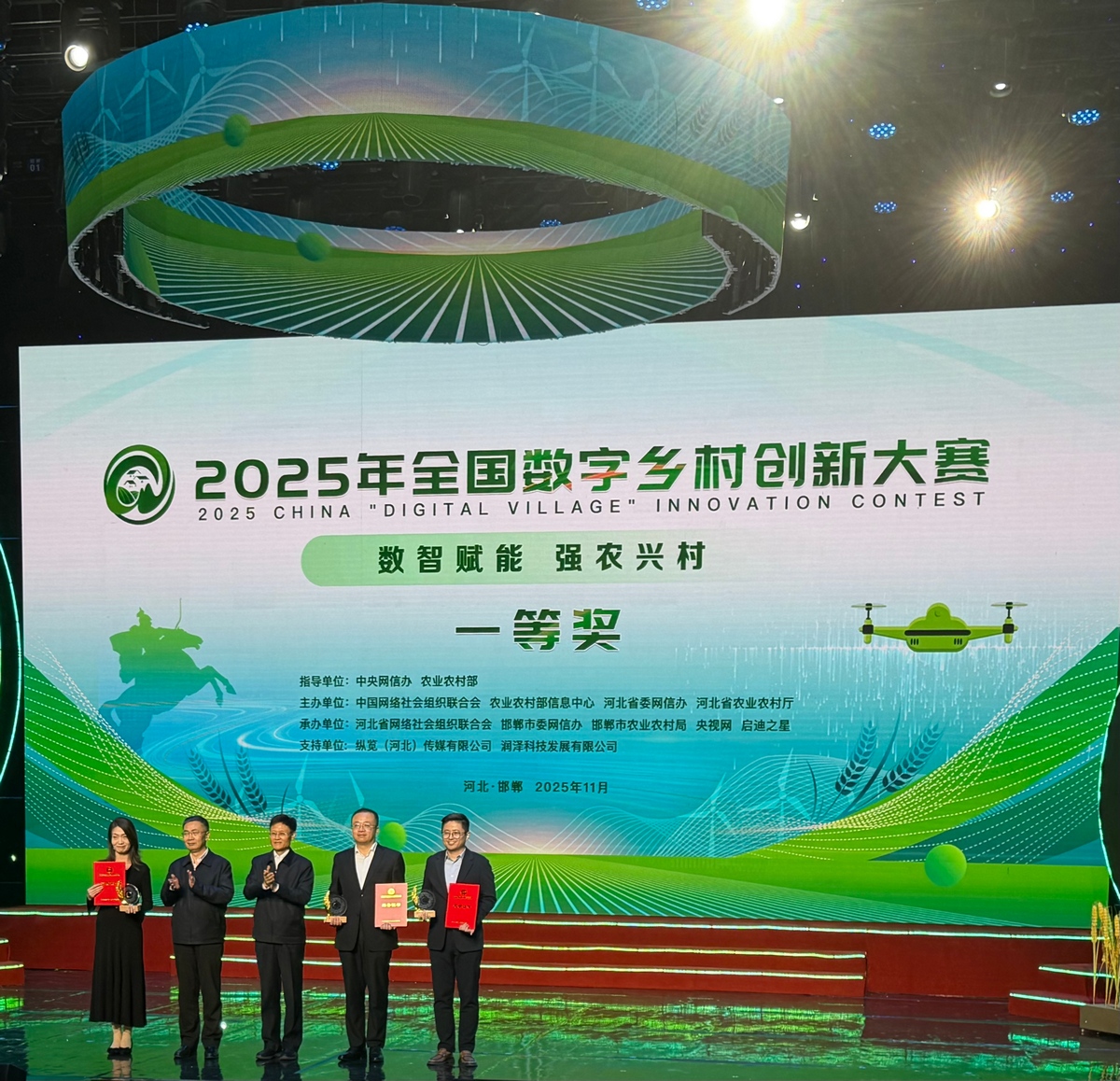
The 2025 China "Digital Village" Innovation Contest was held in Handan city, North Hebei Province, from October 31 to November 1, 2025. Photo: Zhang Weilan/GT
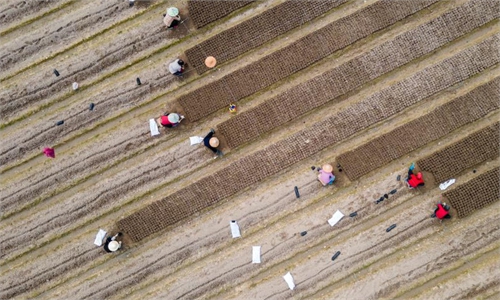
The 2025 China "Digital Village" Innovation Contest was held in Handan, North China's Hebei Province, from October 31 to November 1, showcasing how digital technology is used to boost agricultural productivity and rural incomes. From drone-assisted farming to rural e‑commerce, digital villages are revolutionizing farming production, reforming lifestyles, and reshaping how people grow food and participate in the economy, the Global Times has learned.
Under the theme "Digital Intelligence Empowering Agriculture and Rural Revitalization," the contest focused on digital applications in agricultural development. Key aspects of rural development, including rural digital prosperity industries, rural digital governance, and smart and beautiful villages were included in the event, according to the organizers.
Twenty-one finalist cases, selected from 1,661 entries nationwide, presented innovations ranging from e‑commerce platforms and smart farming to unmanned aquaculture projects.
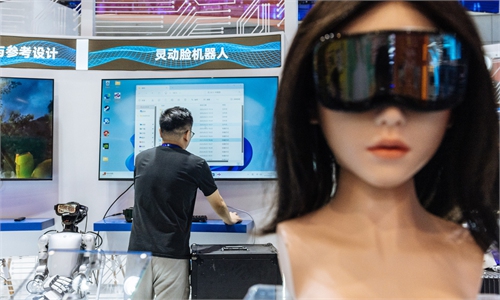
The competition highlighted the integration of new technology such as artificial intelligence (AI). Solutions on display at the event included a county-level live-streaming e commerce platform, integrated services for large-scale operations and farmer cooperatives, a "use-a-phone-to-manage-a-field" smart farm solution, and an unmanned smart fish farm management system.
Organizers said these projects are aimed at increasing agricultural yields and farmer incomes while promoting innovative digital rural ecosystems.
For example, the "One Product One Broadcast" e commerce platform adopted by Daming County in Handan was highlighted as a successful local application. Xu Zhaohui, general manager of Daming Caigen Industrial Operation Co, said the platform embeds technology modules across five operational links — livestreaming technology, product services, supply chain, logistics and warehousing, and management operations — to upgrade efficiency and business models.
"This platform has helped drive rapid growth in the county's online retail sales, which have reached 810 million yuan ($1.1 million) so far this year, a year on year increase of 16.9 percent," Xu said.
A wind fish integration agricultural project developed by participants from South China's Guangdong Province demonstrated an offshore ocean farm model that combines jacket type wind turbines with net cages for deep sea aquaculture.
Project leader Zhai Yuxiang said sensors integrated with the wind turbines transmit environmental data such as temperature and current speed to an onshore control center, enabling remote monitoring of fish growth. The smart aquaculture project can culture multiple species — including pomfret and grouper — producing about 150,000 jin (75 tons) annually and generating roughly 3-4 million yuan in output value per year.
Liu Xiaoshan, a competition judge, told the Global Times that this year's entries covered areas such as rural industry, rural construction and rural governance, reflecting systemic thinking about digital villages. "The 21 finalist cases tackle real problems emerging in digital rural development with system designs and solutions. They will be an excellent driver of construction of digital villages, smart agriculture and AI driven rural revitalization and county economies," he said.
Representatives from leading agricultural and IT organizations emphasized the need for applied deployments. Lan Tianyi, chairman of Beidahuang Information Co said that digital industry and digital agriculture are the tasks of a new generation of farmers and that the key to solving low yields and stagnant incomes lies in boosting agricultural productivity through innovation.
"The answer we've found lies in real-world application—only through real-world application can genuine, dynamic data be generated, agricultural big data accumulated, and new quality productive forces in agriculture unleashed, allowing new agricultural production models to truly address rural and agricultural problems," he said.
A participant surnamed Wang from Jiangxi Province noted the event's focus on user friendly solutions. Wang told the Global Times that he noticed various practical, easily deployed digital products at the contest that translate complex technologies into tools farmers can understand and use, tightly linking data technologies with agricultural services to advance national goals of enriching and strengthening rural areas.
Alongside the finals, an investment and project-matchmaking fair connected winning teams and promising projects with promotion channels and financing, to move digital technologies from the competition stage to agricultural fields nationwide. Organizers said the initiative aims to sustain and scale the digital empowerment of rural areas, accelerate technology adoption at county-level, and deliver measurable benefits for farmers.
China has mapped out key tasks in digitalizing rural areas. Chinese authorities in May this year have jointly released guidelines outlining 26 key tasks for building digital villages in 2025.
By the end of 2025, the country will have basically completed the advancement of digital villages during the 14th Five-Year Plan (2021-2025), ensuring that digital technologies play a more visible role in safeguarding national food security and preventing a large-scale return to poverty, according to the guidelines.
More than 90 percent of the nation's administrative villages will have 5G coverage; internet penetration in rural areas will continue to rise; the share of farming activities under digital management will further increase; online retail sales of farm products will keep growing; digital governance and information service capacity in villages will be continuously ramped up, and digital technology will have accelerated the narrowing of urban-rural gaps and the integrated development of cities and villages, the guidelines said.
RELATED ARTICLES