Illustration: Liu Rui/GT
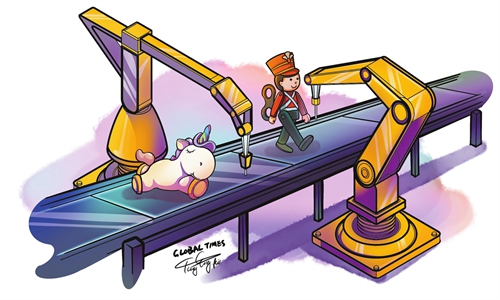
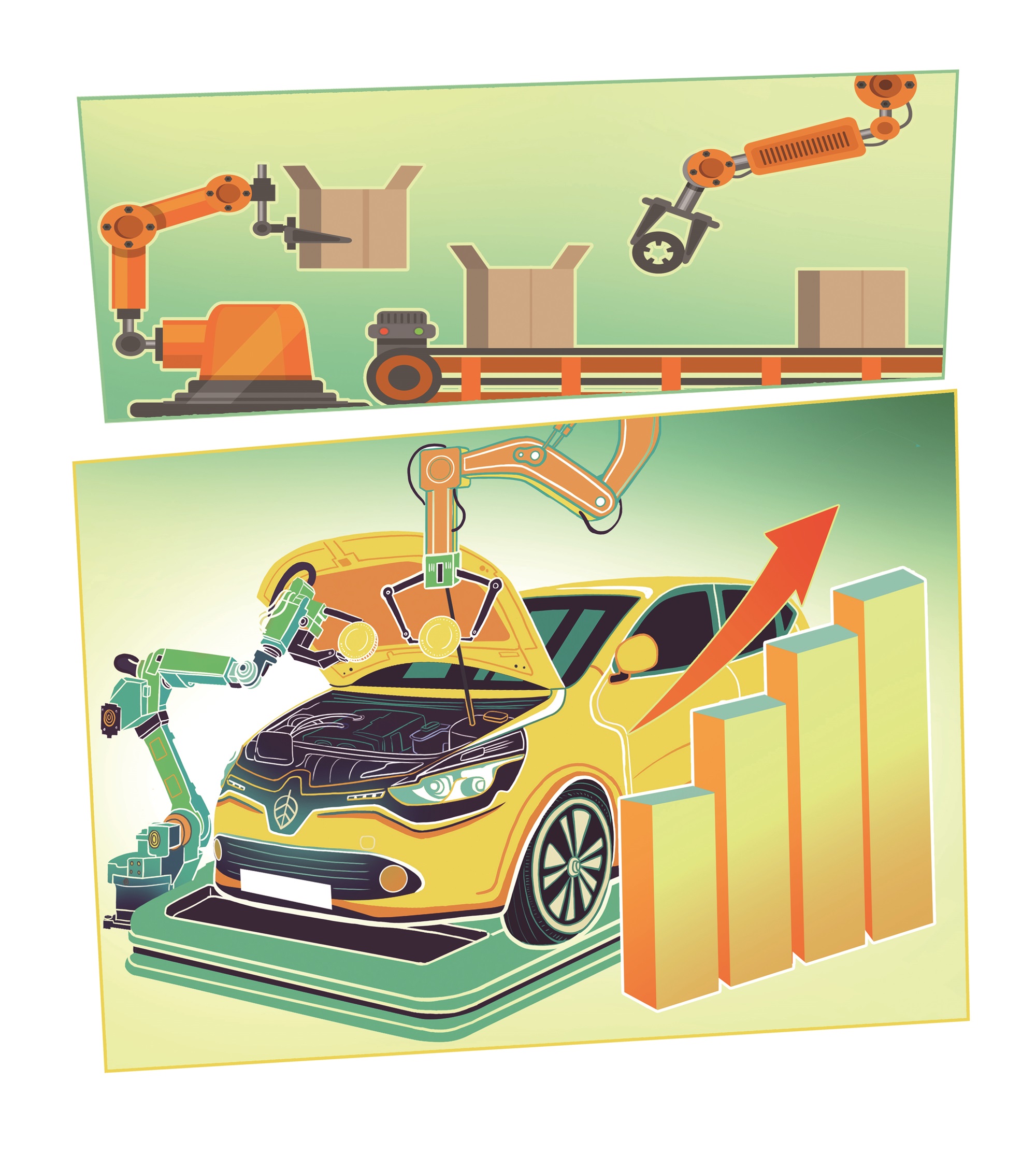
In the first three quarters of this year, China's high-tech manufacturing sector saw a striking surge in industrial robot production. According to a Sunday report by CCTV News, from January to September, China produced 595,000 industrial robots - surpassing the total output for all of last year. Beneath these numbers lies a broader transformation in Chinese manufacturing, driven by the accelerating adoption of automation and advanced machinery. As competition intensifies and production standards rise globally, factories in China are turning to robotics to enhance efficiency, improve precision, and strengthen their resilience in an increasingly demanding market.
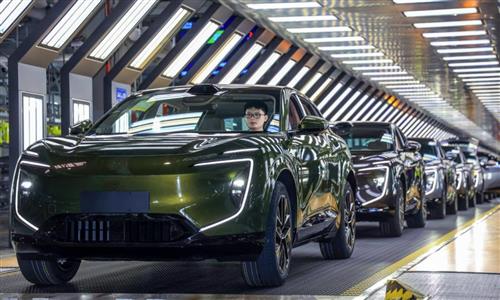
As technological barriers continue to fall, production costs decline and application scenarios expand, China's industrial robot market is entering a stage of broader adoption and integration. According to the People's Daily on September 20, China's manufacturing robot density has reached 470 units per 10,000 workers - well above the global average. Industries such as photovoltaics, power batteries, and new-energy vehicles are seeing progress in smart manufacturing, reflecting how automation technologies are steadily extending their reach beyond specialized high-end producers to a wider spectrum of industrial sectors.
Media reports have indicated that China is both the world's largest producer and the largest market for industrial robots. The sector's growth is supporting broader development in manufacturing by boosting productivity, improving process stability, and encouraging a shift toward higher value-added production. As automation spreads across industries, it is helping manufacturers achieve greater efficiency and consistency, while gradually strengthening technological capabilities within China's industrial base.
For years, perceptions of Chinese manufacturing have often focused on cost advantages. While these sectors continue to develop, technological advances are opening a new dimension of growth, part of which may be seen as a nascent "robot dividend." This emerging advantage is still taking shape, but it is already providing a tangible boost to productivity and efficiency, giving Chinese manufacturers additional momentum as they operate in increasingly complex and competitive global markets.
This emerging "robot dividend" deserves attention for several reasons. First, it is developing atop a solid manufacturing foundation. That strong industrial base has supported the growth of the robotics sector, helping to lower costs and expand adoption across a wider range of applications. As robot deployment increases, the rising manufacturing robot density reinforces productivity gains within factories - creating a self-reinforcing cycle between industrial capacity and automation.
Second, China's evolving labor landscape is adding another dimension to this transformation. While the traditional demographic dividend continues to play a role, a new trend is emerging. With a more educated workforce, an "engineer dividend" is taking shape alongside the developing "robot dividend." Though the paces of their evolutionary paths may differ, together they are providing complementary sources of support for the manufacturing sector, enhancing innovation.
Third, as some economies - particularly Western countries seeking to expand their manufacturing bases - navigate the complex interplay of rising labor costs, aging populations, and the ongoing development of robotics technologies alongside the integration of artificial intelligence (AI) into production, China's gradual emergence of a "robot dividend" offers a practical point of reference. It demonstrates how automation can help sustain industrial productivity and efficiency, while providing insights into the ways robotics may be leveraged to support balanced, technology-driven growth in other industrial contexts.
In the current era of rapid technological advancement, the development of AI and robotics in manufacturing remains at an early stage. China's experience, while already supporting improvements in productivity and operational efficiency, also highlights a more gradual phenomenon: the emergence of a "robot dividend." This process is still unfolding, offering an opportunity to observe how automation can complement human labor, improve production consistency, and interact with broader industrial systems. Its gradual emergence encourages the careful consideration of both the opportunities and the limitations of robotics as an integral part of modern manufacturing.
Equally important, China's ongoing experimentation with robotics and AI provides a reference point for other economies navigating their own industrial transitions. Beyond immediate productivity gains, it encourages industrialists to reflect on the potential role of automation in future manufacturing, how it may work alongside workforce capabilities, and the ways it could contribute to efficiency, innovation, and competitiveness over the medium and longer term.
The author is a reporter with the Global Times. bizopinion@globaltimes.com.cn
RELATED ARTICLES