ARTS / CULTURE & LEISURE
SCO chief calls for cross-cultural cooperation through initiatives
Goodwill Ambassadors of Shanghai Cooperation Organisation set to strengthen ties among civilizations
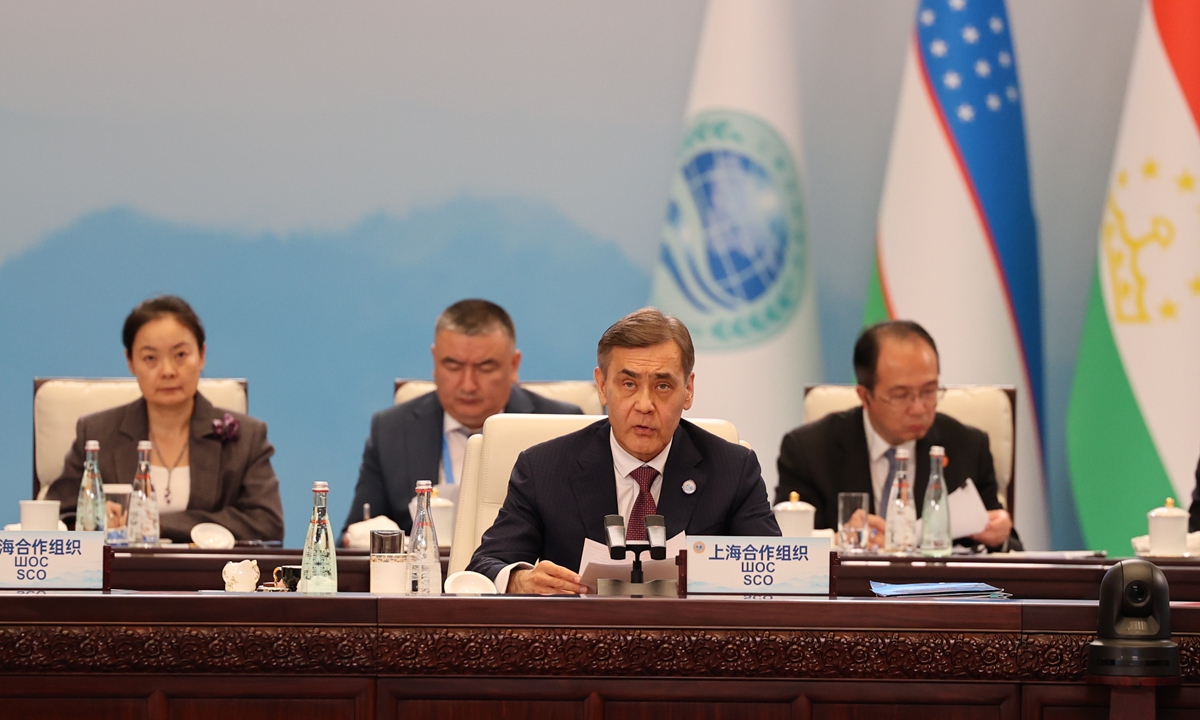
Nurlan Yermekbayev (center), secretary general of the Shanghai Cooperation Organisation, at the Shanghai Cooperation Organisation (SCO) Summit 2025 in Tianjin, North China, in August 2025. Photo: Courtesy of the Shanghai Cooperation Organization Secretariat
Nurlan Yermekbayev, secretary-general of the Shanghai Cooperation Organisation (SCO), delivered a video address to the delegates of the DISCOVER ATOM International Forum of Science and Tourism (Moscow) on November 1, 2025.In his address, Yermekbayev noted that the SCO offered tremendous opportunities for implementing joint innovative and educational projects. He highlighted the relevance and potential of creating the Association of Science and Technology Museums, which would "unite our countries' efforts to promote scientific research and popularize cultural heritage."
Yermekbayev has stated the importance of preserving cultural heritage on various occasions. In a recent exclusive written interview, Yermekbayev told the Global Times that he was impressed by the session to experience China's intangible cultural heritage items before a welcoming banquet at the Shanghai Cooperation Organisation (SCO) Summit 2025 in Tianjin, North China, in August.
"China's exposition presented on the sidelines of the Tianjin summit of the Shanghai Cooperation Organisation left a deep impression and created a festive atmosphere ahead of this serious event. It allowed visitors to enjoy the country's rich intangible legacy, which has shaped its unique cultural image over centuries," Yermekbayev stated.
He also noted his favorite parts. "I was particularly impressed by such elements of Chinese culture and crafts as Jingtailan (cloisonne), the traditional Dougong architectural method of interlocking wooden brackets built without nails, the famous and surprisingly lifelike Zhang clay figurines from the Tianjin Municipality, as well as the Nianhua (New Year Paintings) colored woodblock prints," Yermekbayev added.
These exhibits are integral elements of the centuries-long history reflecting the distinctive identity and spiritual wealth of the Chinese people.
The SCO unites nations with diverse civilizations. In Yermekbayev's opinion, cultural diversity is significant in today's global landscape.
"Every nation and state possesses its own distinctive characteristics. Mutual respect for each other's culture forms the cornerstone of interstate relations and interpersonal ties. Nations with different cultural codes can undoubtedly coexist in peace and harmony - a vivid example of which is the SCO," he noted.
The territories of the SCO member states are the cradle of great civilizations and world religions, the birthplace of eminent thinkers, philosophers, scientists, and craftsmen.
"Here, traditions emerged that shaped the future trajectory of human civilization - from ancient spiritual practices and religious teachings to scientific discoveries and cultural achievements that have influenced the entire world," said Yermekbayev.
Today, as tensions escalate in international relations and a trust deficit becomes increasingly evident, strengthening inter-civilizational ties and dialogue is more pertinent than ever. Such an approach fosters mutual enrichment, learning, and the exchange of experience, laying a solid foundation for trust and collaboration, he stressed.
The principles of the Shanghai Spirit find practical expression in the work of people-to-people diplomacy institutions operating across the SCO space.
"The SCO Goodwill Ambassadors mechanism, established within our organization, is poised to make a significant contribution to this process. Its ranks include prominent public figures, artists, athletes, writers, and scientists who, through their authority and personal example, promote the values of friendship, good-neighborliness, and mutual respect," Yermekbayev introduced.
In the Tianjin Declaration, the SCO member states committed to facilitating dialogue between civilizations, enhancing mutual understanding, and expanding cooperation in education, science and culture, while ensuring the protection and promotion of rich tangible and intangible cultural heritage. Yermekbayev shared specific steps the SCO will prioritize to transform these commitments into actions.
"The Tianjin Declaration has become an important reference point for further efforts to implement multifaceted cooperation within the SCO framework. It records commitments to facilitate dialogue among civilizations, enhance mutual understanding, and expand cooperation in education, science, and culture of rich tangible and intangible cultural heritage," he said.
Meanwhile, 2025 marks the 80th anniversary of Victory in World War II and the establishment of the United Nations Organization. The Tianjin summit concluded with the adoption of the Statement of the Council of the SCO Heads of State on the 80th Anniversary of the End of World War II and the Establishment of the United Nations, in which they called for preserving the memory of the heroism of our nations and firmly upholding the inviolability of the results of World War II.
As one of the distinguished guests to observe the military parade held on the 80th anniversary of Victory over Japanese militarism and the end of World War II, Secretary General Yermekbayev shared his opinion on the landmark events.
"The victory of the Chinese people in the war against Japanese militarism was a crucial part of our common victory over fascism. China made huge sacrifices and an invaluable contribution to the restoration and defence of global peace," he said.
"I had the privilege of attending the military parade in Beijing's Tiananmen Square marking the 80th anniversary of Victory, and I was hugely impressed. The solemn event was held under the banner of remembering history, honoring fallen heroes, cherishing peace, and creating a better future. It was a great success and extremely well organized," affirmed.
Our common responsibility to the past and the future is to save succeeding generations from the scourge of war, and to do everything in our power to prevent a repetition of past tragedies.
It is for this purpose that the SCO heads of state, who met in Tianjin, called on the international community to create a representative, democratic and just multipolar world based on the universally recognized principles of international law, cultural and civilizational diversity, and mutually beneficial and equal cooperation, with the central coordinating role of the UN.
This is the earnest of preventing new wars and strengthening peace, security and cooperation, noted.
RELATED ARTICLES