Solving China-US ‘existing issues’ with mindset of creating ‘additional gains’: Global Times editorial
China US
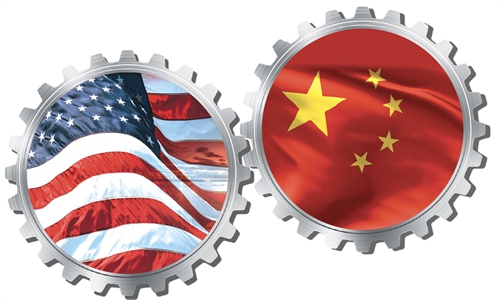
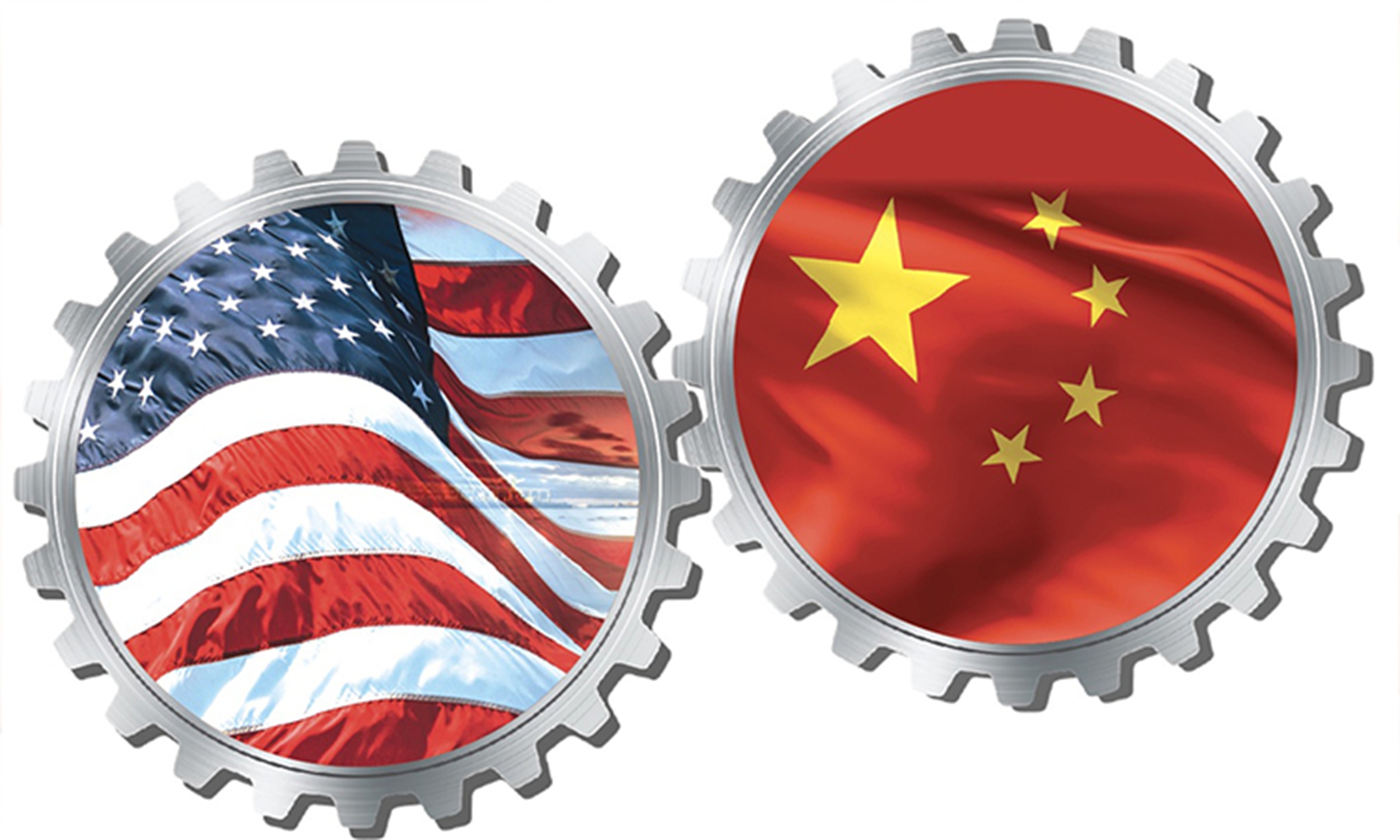
In recent days, China and the US have successively issued announcements, stating that based on the consensus reached during economic, trade talks in Kuala Lumpur, Malaysia, both will adjust relevant economic and trade measures. Over the past more than nine months, China-US relations have experienced ups and downs, prompting many to consider whether the two countries can move beyond the technical back-and-forth of "you yield a step, I retreat a step," shift from "consumptive competition" to "cooperative growth," and turn their attention from rivalry over existing resources to creating additional gains. Clearly, the answer is yes. China's development and revitalization are fully compatible with "making America great again," and the two countries can indeed achieve mutual success and shared prosperity.
For economic powers of the scale of China and the US, it is difficult to secure one's own security by weakening the other, and impossible to gain lasting advantage by arbitrarily fragmenting markets. International trade theory shows that deep division of labor and complementarities between major powers are key to enhancing global welfare and improving economic efficiency. Currently, China-US bilateral trade volume accounts for about one-fifth of global trade. When bilateral trade has reached such an enormous scale, simply discussing adjustments to existing stocks is clearly insufficient to sustain the future development of the relationship.
Creating additional gains, exploring new areas of cooperation, innovating cooperation models, and expanding the overall "cake" are the indispensable paths for steady and long-term development of China-US economic and trade relations.
China has a complete manufacturing system, a rapidly growing middle-income population, a super-sized market, and abundant talent resources, and is committed to developing new quality productive forces. During the 15th Five-Year Plan period (2026-2030), strategic emerging industry clusters such as new energy, new materials, aerospace, and the low-altitude economy are expected to generate markets worth trillions of yuan or even more. The US, meanwhile, possesses strong technological innovation capabilities, a world-class consumer market, and a leading digital technology ecosystem, offering immense complementary potential with China in cutting-edge fields such as artificial intelligence and the digital economy. If viewing the China-US industrial chain relationship from a collaborative perspective focused on improving efficiency across the entire chain, instead of from the competitive perspective of "who replaces whom," it is entirely possible to create space for incremental cooperation in many more areas.
China is comprehensively advancing high-standard opening-up, aligning with international high-standard economic and trade rules, expanding space for two-way investment cooperation, and further upgrading and expanding its free trade zone network, providing broader opportunities for US companies. The US should also uphold the principle of reciprocal openness and create a fair, just, and non-discriminatory business environment for Chinese enterprises, which is equally in America's long-term interest. In this process, constructive dialogue between China and the US on issues such as intellectual property protection, coordination of technical standards, and cross-border data flows will further remove barriers to cooperation.
Solving existing issues with mindset of creating additional gains not only marks a shift from "competing for the existing world" to a mindset of "jointly creating a new world," but also a transformation from a power-oriented view to a responsibility-oriented one. Competition centered on existing resources focuses on who dominates and who suppresses, with a logic based on power distribution and control. This is essentially a zero-sum game, which will inevitably result to a lose-lose situation and ultimately be unsustainable. In contrast, relations centered on incremental growth emphasize who solves more problems and who offers more solutions, guided by a logic of shared responsibility and the provision of global public goods. Such a relationship not only will benefit both sides, but is also sustainable.
This shift in thinking will fundamentally change the fate of major countries rising and falling, which has long been seen as inevitably bound to conflict and war. It opens a new path for major countries to coexist based on win-win growth.
The world economy stands at a critical moment of difficult recovery. If nations remain fixated on zero-sum "competition on existing resources" of who gaining more, vying for a slightly larger market share or industrial layout as a zero-sum game of "your gain is my loss", the fragile recovery will only be impacted by repeated policy shocks. From AI, quantum information, and deep-sea and deep-space exploration to climate change, biosecurity, and aging governance, these frontier fields that concern humanity's future all share characteristics of high investment, high risk, and long cycles. To promote its development, no single country can bear the cost or build sufficiently broad applications and shared rules on its own. Research institutions, universities, and enterprises from China and the US can, within safe boundaries, establish more joint laboratories and R&D centers to jointly tackle major scientific challenges that humanity faces, transforming growth drivers from traditional factor inputs toward "intangible capital" centered on knowledge and innovation, and jointly exploring these "infinite frontiers."
Over the past half century, despite ups and downs, China-US relations have continued to overcome difficulties and move forward, demonstrating their resilience and internal momentum. Looking ahead, only by viewing each other with a broader perspective, handling differences with greater maturity, and planning cooperation with a longer-term vision can the two countries get rid of "mutual depletion" and move toward "shared growth," delivering tangible new gains for both their peoples and the world economy.
RELATED ARTICLES