Photo: VCG
Editor's Note:
In the details of everyday life lies the true reflection of a country. The "Everyday China" series invites foreign experts and scholars who have lived in China for several years to share their personal experiences and reflections on seemingly ordinary moments. Through their unique perspectives, the series reveals a more authentic, multidimensional and relatable portrait of China. This is the second installment in the series.
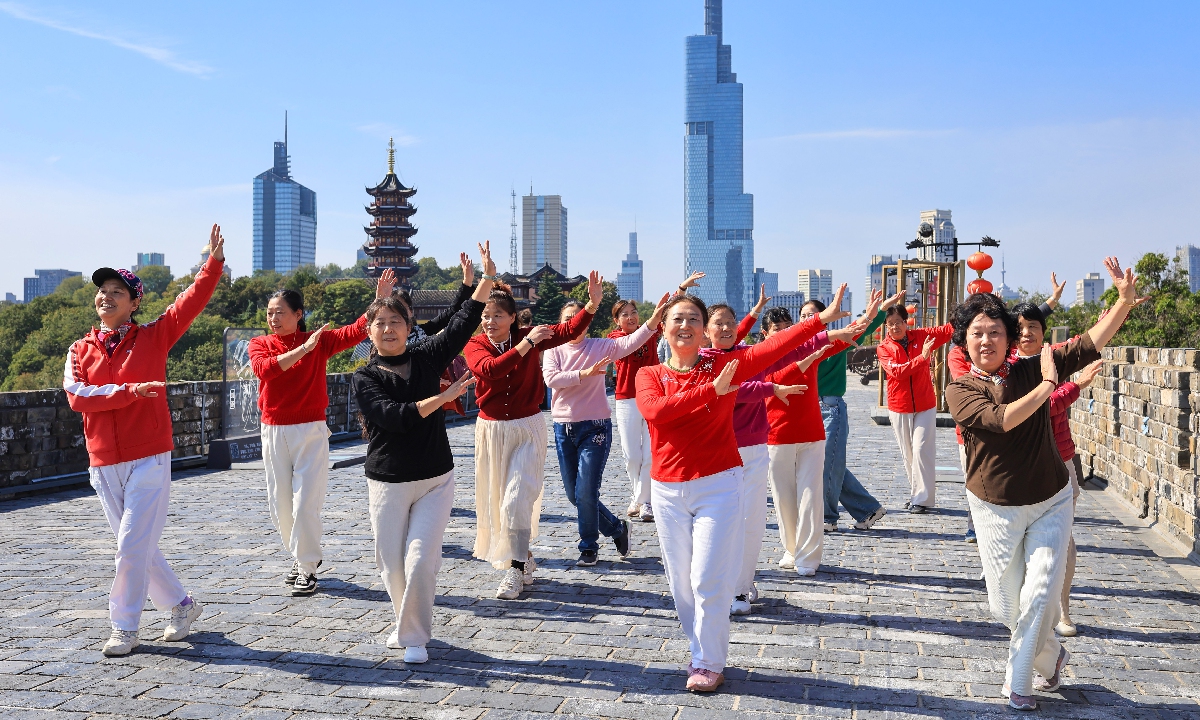
Square dancing is something you cannot miss in China. During my three visits to the country, I've seen it in Beijing, Guilin, Changsha, Zhuzhou, and even joined in myself in Liangping, a district of Chongqing. Each city brings its own unique flavor - some groups dance to traditional folk melodies, while others groove to pop hits or even upbeat DJ mixes. It's a beautiful example of China's diversity within unity.
My story with Chinese square dancing began one evening after dinner. I went for a walk and unexpectedly came across a group of people dancing to music. The scene immediately captivated me with a vibrant, joyful atmosphere imbued with warmth. A Chinese friend encouraged me to join in, so I decided to give it a try. To my surprise, I quickly adapted to the group. The movements were simple, and everyone wore a smile. I realized that square dancing is not merely a form of physical exercise, but also a reflection of a philosophical approach to life in China - happiness does not require much; it depends on a willingness to share time and rhythm with others.
This experience reminded me of a passage from the Book of Rites: "When the Great Way prevails, the world is for everyone." In the dancing crowd, I felt the essence of "one world, one family" - an expression in China that envisions a world in which everyone has a place, and joy is collectively shared. "Home" in Chinese culture is not merely a physical dwelling, but also a profound sense of belonging and shared emotional warmth among people. The concept of home extends from the individual to the collective - the harmony within families serves as the foundation for social cohesion.
Square dancing in China, predominantly practiced by middle-aged and elderly individuals, reflects a proactive transformation in Chinese society's approach to ageing, embodying seniors' renewed pursuit of personal fulfilment and lifestyle choices. It's a remarkable social trend, through which many Chinese seniors maintain physical activity and emotional well-being. Public squares are transformed into vibrant stages for self-expression and community engagement, where I gained a profound insight into the Chinese people's pursuit of belonging and their interpretation of joy.
It's interesting to observe differences between China and France. In my hometown, interpersonal interactions often involve a certain degree of social distance; seniors typically prefer quieter and more solitary activities, such as reading magazines, playing word games or engaging in pétanque in parks. Whereas in China, public spaces naturally evolve into venues for social connection. It's not institutionally organized, but rather emerges naturally and authentically. Something else I observed was a distinct phenomenon: a collective expression of youthfulness and vitality among elderly Chinese individuals. It's precisely these everyday differences that make cultural exchange meaningful. I realized that they don't contradict but rather complement each other. Chinese people express warmth through togetherness, while French people express respect through distance. Behind those differences is a shared desire for connection.
As I continued my exploration, I gained a deeper understanding of Chinese culture. What impresses me the most is the capacity of Chinese culture to be both simple and profound. It discovers beauty in everyday life and wisdom in interpersonal connection. This harmonious blend of depth and warmth is what truly fascinates me.
Square dancing was a small beginning, enabling me to experience the sincerity, openness and inclusiveness of Chinese culture. What impressed me even more was that this openness extends from culture to policy. For example, visa-free entry is now available for French citizens traveling to China, a welcoming gesture allowing more people to gain firsthand experiences in China rather than imagine it from afar. Such policies build a tangible bridge between our two countries. I also hope to contribute my part - through communication, finance or cultural cooperation - to help strengthen this connection.
The author is a postgraduate student at ESCP Business School, France. opinion@globaltimes.com.cn
RELATED ARTICLES