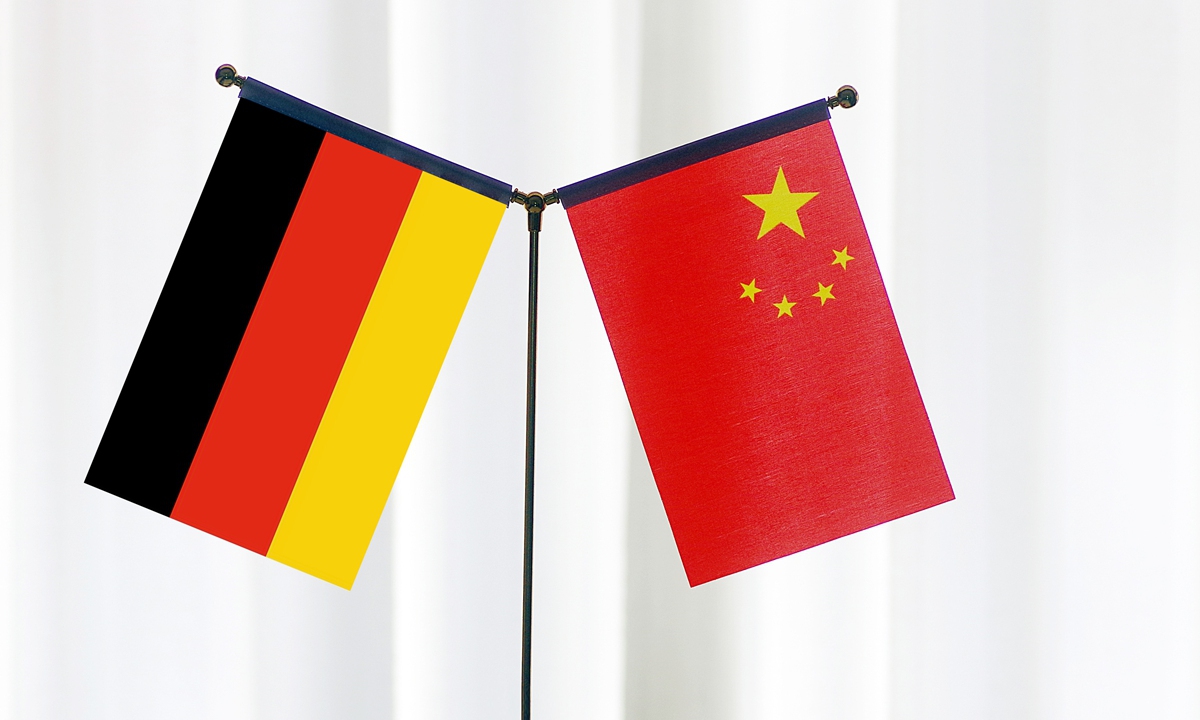
China Germany Photo:VCG
For China and Germany, globalization has been a very big advantage, and open markets and a free market economy all over the world are the best guarantees for global growth, for the worldwide fight against hunger, and for a better life for people everywhere, Hans-Peter Friedrich, former vice-president of the German Bundestag and chairman of the Germany-China Parliamentary Group, told the Global Times in an exclusive interview.
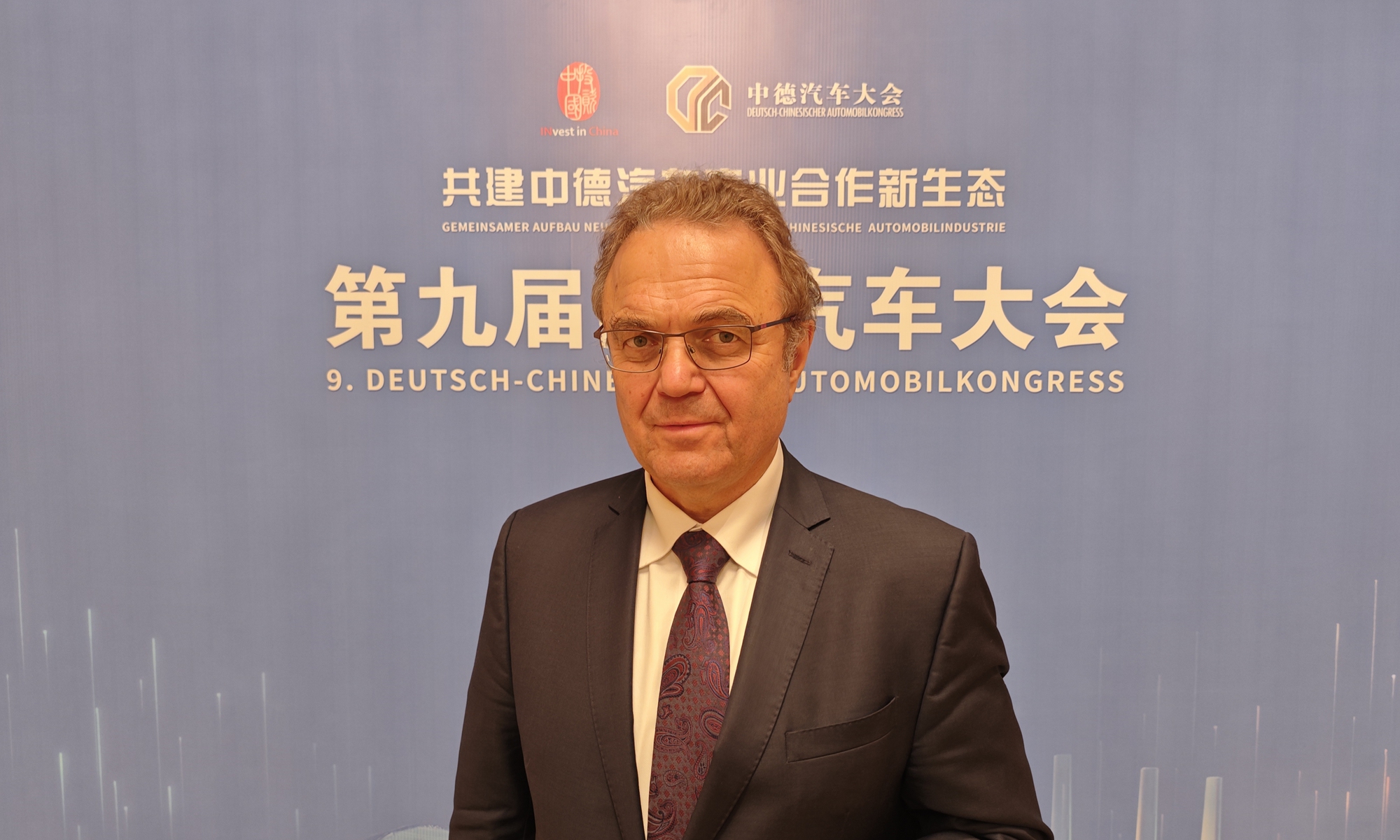
Hans-Peter Friedrich, former vice president of the German Bundestag and chairman of the Germany-China Parliamentary Group Photo: Yin Yeping/GT
The comments were made during the 9th China-Germany Automotive Conference held in Changchun, Northeast China's Jilin Province, a major automotive manufacturing hub, where representatives from both countries emphasized the value of collaboration in technology and supply chains, while opposing protectionism.
Commenting on the rising trends of unilateralism and protectionism, Friedrich said that "we reject all kinds of protectionism because we, as Germany, are convinced that being in worldwide competition is a guarantee for maintaining our own competitiveness and technological progress."
On a further note, the former German official said that "if you build walls made of tariffs and other protectionist measures, you will make a big mistake because you are losing competitiveness... Tariffs are the wrong way to deal with economic questions."
Friedrich's remarks came as the China Chamber of Commerce to the EU released a report on the business environment for Chinese companies in the EU on Wednesday.
According to the report, about 90 percent of the Chinese firms that were surveyed said "de-risking" and "economic security" policies have negatively affected their operations in the bloc, mainly through stricter investment screening, market-access barriers, and greater policy uncertainty.
Sharing similar beliefs regarding protectionism in the EU, including the EU's additional tariffs on China's new-energy vehicles (NEVs), which have sparked much opposition even within the bloc, Friedrich said that "I think we have to make it clear to the policymakers in Brussels that the needs and necessities of the economy are much more important than they realize at the moment... We have to align the necessities of the economy with the actions of politics. At the moment, it's a little bit separated — You can see a gap between policymaking and economic development, and this is not very good."
"We have to make it clear that you can only have strong politics when you have a strong economy. If you are not successful in the economy, you cannot have a strong international policy," he added.
Friedrich also welcomed market competition and encouraged the EU to approach it with confidence.
"If you are weak, you need walls and you need tariffs. When you are strong, you can engage in competition. And I hope that Europe can see its own strengths and will go into international competition with self-confidence," he said.
He cited the US tariff policy as a negative example, noting "What do we see in America when you have tariffs? The ordinary people suffer because they have to pay more for goods, and you have high inflation."
Friedrich praised China's NEVs for their cost-effectiveness and contribution to the energy transition. "If you really want to have new products—for example, for purposes like environmental protection or climate protection— you need to make them affordable for people," he said, mentioning the effectiveness of Chinese cars, which has made them more accessible to people.
"We need open borders because only effective competition between companies, engineers, and researchers drives the wheel of progress in the world," he said, noting that this is what they want to achieve by taking part in the industry conference in Changchun. "The people in my delegation, for example, who came here to Changchun, also believe that we must now make it clear in the political discussions in Germany that cooperation with China is an advantage for everyone," he said.
China-Germany economic and trade ties have been on a rising trend. China overtook the US as Germany's largest trading partner in the first eight months of 2025, regaining the top spot as higher tariffs weighed on German exports to the US, Reuters reported, citing preliminary data from the German statistics office.
A small delegation of representatives of German banks and insurance companies will travel to China next week with Finance Minister Lars Klingbeil, Reuters reported on Wednesday, citing a source familiar with the matter. If this report is true, Klingbeil would be the first minister of the new coalition in Berlin to visit China.
Amid current global headwinds, Friedrich emphasized the importance of joint efforts to secure and stabilize supply chains between China and the EU, adding that China's Belt and Road Initiative (BRI) can make a valuable contribution in this regard.
"I support everything that brings people together, that brings economies together, and that brings countries together, and the BRI shows many positive aspects because it brings connectivity," he said, giving example of the China-Europe freight train (Yuxin'ou) service, from Chongqing to Duisburg in Germany, which shortens supply times, accelerates supply chains, and stabilizes cooperation among China, Central Asia, and the EU.
RELATED ARTICLES