No external forces will ever be allowed to interfere in the Taiwan question: Bei Pingfeng
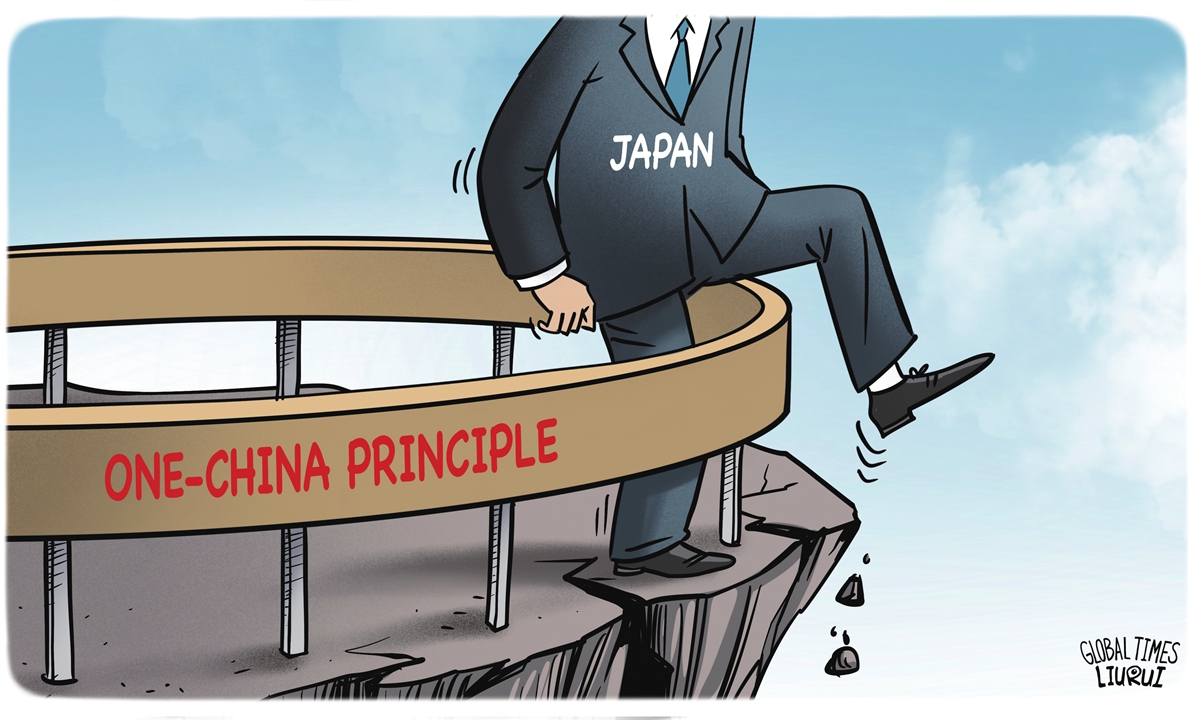
Illustration: Liu Rui/GT
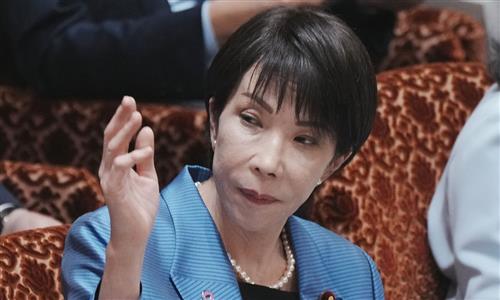
On November 7, Japanese Prime Minister Sanae Takaichi blatantly made erroneous remarks regarding the Taiwan question during a Diet debate, claiming that if warships were used or other armed actions are involved in the Taiwan Straits, such developments could constitute a "survival-threatening situation" for Japan, implying that the Japanese Self-Defense Forces could use this pretext to exercise the right of collective self-defense. Chinese Foreign Ministry spokesperson Lin Jian responded sternly at a regular press conference on Monday: "What signal is the Japanese leader trying to send to 'Taiwan independence' separatist forces? Is Japan up to challenge China's core interests and stop its reunification? Where exactly does Japan want to take its relations with China?" This string of pointed questions struck directly at the core issue, voicing China's strong dissatisfaction and firm opposition, while lodging serious démarches and protests with Japan.Responding to these dangerous remarks that grossly interfere in China's internal affairs, former Japanese prime minister Yukio Hatoyama said on Saturday that Japan should not interfere in China's internal affairs. Another former Japanese prime minister, Yoshihiko Noda, the current leader of the Constitutional Democratic Party of Japan, said he was "deeply shocked" by Takaichi's comments, adding, "I sensed the danger of her acting rashly on her own."
Taiwan is an inalienable part of China - this is a fact recognized by the international community. Resolving the Taiwan question and achieving complete national reunification is purely China's internal affair; no foreign countries or forces have the right to interfere. As the Japanese prime minister, Takaichi's reckless comments on Taiwan in an official setting essentially constitute a crude interference in China's internal affairs. How China advances the process of reunification and what approach it adopts to resolve the Taiwan question are entirely matters for the Chinese people themselves; external forces have no right to make irresponsible remarks or interfere.
Takaichi's erroneous statements seriously violate the one-China principle and the spirit of the four political documents between China and Japan and run counter to the political commitments previously made by the Japanese government. The nature is vile, and the impact is extremely harmful. The one-China principle is the political foundation of China-Japan relations, and the four political documents between China and Japan clearly stipulate the basic guidelines for handling Taiwan-related issues. This is the precondition and guarantee for the healthy and stable development of bilateral relations. Japan has repeatedly pledged to adhere to the one-China principle and not support "Taiwan independence" separatist forces. Now, Takaichi's blatant challenge to this bottom line constitutes a severe undermining of China-Japan relations.
The position of the Chinese government and the Chinese people on the Taiwan question has been consistent and unwavering. Any act that violates the one-China principle or interferes in China's internal affairs will be firmly opposed by all Chinese people.
Takaichi's reckless remarks send a gravely wrong signal to the "Taiwan independence" separatist forces and are highly likely to intensify tensions in the Taiwan Straits. The "Taiwan independence" separatist forces and their activities are the greatest threat to peace and stability across the Straits, and the indulgence and support of external forces are an important reason why these separatist forces dare to take reckless actions. Takaichi's remarks essentially serve as an endorsement of the "Taiwan independence" forces, which will undoubtedly lead them to misjudge the situation and take further risks and provocations, seriously damaging the fundamental interests of compatriots on both sides of the Taiwan Straits.
This year marks the 80th anniversary of the victory of the Chinese People's War of Resistance against Japanese Aggression and the World Anti-Fascist War, as well as the 80th anniversary of Taiwan's restoration. Eighty years ago, after an arduous struggle, the Chinese people won the great victory of the War of Resistance, and Taiwan returned to the embrace of the motherland. This history clearly shows that China's national sovereignty, unity, and territorial integrity must not be violated, and that any attempt at national division will inevitably be condemned by history. Takaichi ought to draw lessons from history, deeply reflect on herself, and squarely face Japan's historical responsibilities, rather than forget history and repeat past mistakes.
Compatriots on both sides of the Straits are connected by blood and share a common destiny. The mainland has always worked to improve people's livelihoods, deepen integrated development, and advance the process of reunification. The firm determination and strong capability of the more than 1.4 billion Chinese people to safeguard national sovereignty, unity, and territorial integrity cannot be challenged. No external forces will ever be allowed to interfere in China's internal affairs.
Anyone attempting to manipulate the Taiwan question is standing against all Chinese people, including Taiwan compatriots. There is only one outcome waiting for them, that is reaping what they sow and being condemned for generations.
The author is a commentator on international affairs. opinion@globaltimes.com.cn
RELATED ARTICLES