Reader's Reflections: Concept of ‘jointly building a community of shared future in cyberspace’ offers a constructive solution for resolving obstacles to global cooperation: French scholar

David Gosset Photo: Courtesy of David Gosset
Editor's Note:
In 2015, at the opening of the second World Internet Conference (WIC), Chinese President Xi Jinping creatively put forward the significant concept of "jointly building a community of shared future in cyberspace," offering a direction for global internet development and governance.
A part of his speech is included in Volume II of the book series Xi Jinping: The Governance of China, where the Chinese president pointed out that, "Cyberspace is a common space for human activities. The future of cyberspace should be in the hands of all countries. Countries should step up communication, broaden consensus, and extend cooperation to jointly build a community of shared future in cyberspace."
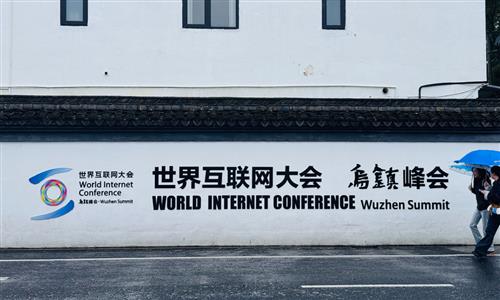
The 2025 WIC Wuzhen Summit was held on the occasion of the 10th anniversary of the proposal of this concept. Under the theme "Forging an Open, Cooperative, Secure, and Inclusive Future of Digital Intelligence - Jointly Building a Shared Future in Cyberspace," the summit drew strong, enthusiastic responses from international delegates and civil society.
Over the past decade, adhering to the concept of "jointly building a community of shared future in cyberspace," China has deepened international cooperation in cyberspace, jointly fostered new drivers of innovative development, opened up new prospects for digital cooperation, and contributed Chinese wisdom and solutions to advancing the transformation of the global cyberspace development and governance systems.
In the 16th installment of the special series "Decoding the Book of Xi Jinping: The Governance of China," the Global Times (GT), along with the People's Daily Overseas Edition, continues to invite Chinese and foreign scholars, translators of Xi's works, practitioners with firsthand experience, and international readers to discuss the theme of "jointly building a community of shared future in cyberspace," exploring the important practical significance and value of this concept.
In the 16th article of the "Readers' Reflections" column, Global Times reporter Ma Jingjing talked to David Gosset, chairman of DG2CI and founder of the China-Europe-America Global Initiative, who shared his insight into the concept of "jointly building a community of shared future in cyberspace" and the implications of this concept for and China's contributions to global cyberspace governance.
GT: Volume II of "Xi Jinping: The Governance of China" includes part of speech by President Xi Jinping at the opening ceremony of the Second World Internet Conference in 2015. He pointed out that "Cyberspace is a common space for human activities. The future of cyberspace should be in the hands of all countries. Countries should step up communication, broaden consensus, and extend cooperation to jointly build a community of shared future in cyberspace." Based on your own experience and international practices, can you share your understanding of the concept of "jointly building a community of shared future in cyberspace"?
Gosset: The concept of "jointly building a community of shared future in cyberspace" proposed by President Xi reflects a deep understanding of the global developmental trends and the tides of the information age. Unveiling the principle of a shared future in cyberspace, the concept examines internet development and governance from the perspective of the future of humanity and provides guidance for advancing global cybersecurity, stability and prosperity. It constitutes a concrete manifestation of the broader vision of building a community of shared future for mankind in the sphere of cyberspace, while fostering greater consensus and cooperation for achieving the broader goal.
The concept focuses on cooperation, mutual trust, and shared responsibility in the digital era. Cyberspace transcends national borders; challenges such as data security, privacy protection, and digital inequality concern all of humanity. From my experience in international collaboration, I have witnessed that openness, transparent governance, and technological exchange are essential to ensuring that digital progress benefits everyone.
This vision highlights that no country can address the complexities of cyberspace alone. Building a community of shared future in cyberspace means balancing digital sovereignty with inclusiveness, ensuring that innovation fosters mutual understanding and peace. In this sense, China's approach demonstrates that it is not a passive observer but an active participant in shaping global digital governance - a nation deeply engaged in defining the ethical, technical, and developmental standards of the connected world.
GT: In today's world undergoing major changes and transformations, how to address the development deficit, resolve security dilemmas, and enhance mutual learning among civilizations has become shared challenges for all countries. In your view, what are the major obstacles hindering international cooperation in cyberspace? What insights does the concept of "jointly building a community of shared future in cyberspace" offer for the current global governance of cyberspace?
Gosset: The greatest obstacle to global cooperation in cyberspace is the lack of mutual trust. Differences in political systems, levels of technological advancement, and security priorities often generate competition instead of collaboration. The growing digital divide between developed and developing countries, combined with the absence of shared standards for cybersecurity and data governance, further fragments the international community.
The idea of "jointly building a community of shared future in cyberspace" offers a constructive solution. It calls for dialogue rather than confrontation, respect for each nation's digital sovereignty, and a balance between innovation and security. This inclusive and cooperative model encourages joint efforts to establish fair rules, promote technological exchanges, and ensure that science and technology serve all of humanity. It is a vision in which China's leadership underscores the country's role as a proactive force in globalization and as a science and technology power shaping a safer, fairer, and more interconnected world.
The concept has gradually evolved from a theory into concrete actions and from a grand vision into tangible reality, emerging as a guiding framework for global internet development and governance.
GT: The just-concluded 2025 World Internet Conference Wuzhen Summit features the theme of "Forging an Open, Cooperative, Secure and Inclusive Future of Digital Intelligence - Jointly Building a Community with a Shared Future in Cyberspace." How do you view China's contributions to global cyberspace governance over the past decade?
Gosset: Over the past decade, China has become a driving force in global cyberspace governance. Through platforms such as the World Internet Conference, China has fostered dialogue among governments, businesses, and experts from around the world. It has championed principles of mutual respect, digital sovereignty, and shared responsibility while advancing cooperation in artificial intelligence, data security, and digital infrastructure.
China has put forward the Global Development Initiative, the Global Security Initiative, the Global Civilization Initiative, and the Global Governance Initiative (GGI). Meanwhile, China has launched the Global Initiative on Data Security, the Global AI Governance Initiative, and the Global Cross-Border Data Flow Cooperation Initiative, actively engaging in and leading global digital governance. China's commitment to aligning its actions with its words and with systematic planning contributes to the formation of a new cyberspace governance pattern featuring multilateral governance and win-win cooperation, while providing a critical pathway to bridge the global digital divide and promote inclusive digital growth.
As far as I know, China has actively promoted "silk road e-commerce" international cooperation. Official data show that by the end of 2024, the country had established bilateral e-commerce cooperation mechanisms with 33 countries, including Tajikistan and Bahrain, working with partners to jointly enhance digital development capabilities and share digital development opportunities.
China's initiatives to reduce the digital divide and promote inclusive growth demonstrate its commitment to a global digital ecosystem that benefits all nations. These actions confirm China's position as an active architect of globalization, not a bystander - one that combines technological strength with a vision of shared prosperity and peace.
GT: In November 2024, President Xi extended congratulations via video to the 2024 World Internet Conference Wuzhen Summit. Noting that a new wave of technological revolution and industrial transformation is rapidly advancing, Xi urged efforts to embrace the digital, internet-based and smart development trends. He called for accelerating innovative, safe and inclusive growth in cyberspace, and jointly striving for a brighter "digital future." From a global perspective, what's the significance of promoting a more inclusive and prosperous cyberspace, especially for developing countries?
Gosset: A more inclusive and prosperous cyberspace is essential for reducing inequality and empowering developing nations. Access to digital technologies enables innovation, education, and entrepreneurship, giving countries the tools to accelerate their development. For many, this represents a chance to leapfrog traditional barriers and participate meaningfully in the global economy.
China's advocacy for inclusive digital growth highlights its recognition that technology must serve humanity as a whole. By promoting global connectivity and technological sharing, China is helping to create a digital future characterized by cooperation, opportunity, and shared advancement - once again affirming its status as a technological leader and an active contributor to global progress.
As a Chinese saying goes, "To get rich, build roads." Today they say, "To get rich, get connected to the internet."
According to a white paper titled "Jointly Build a Community with a Shared Future in Cyberspace" issued by China's State Council Information Office in November 2022, while using the internet to eliminate its own poverty, China has used technology to help developing countries improve broadband access in the poorest areas and areas with low population density. It has worked to provide universal and affordable internet access in the least developed countries, in order to eliminate poverty caused by lack of network facilities. In June 2021, China hosted an APEC workshop on inclusive digital society, making its contributions to poverty alleviation in the Asia-Pacific region. China has also provided financing support for IT projects in African countries, modernized their IT services, and helped alleviate local poverty.
RELATED ARTICLES