Illustration: Liu Rui/GT
According to a recent Politico report, the US government "has a new European target in its crosshairs: China's state ownership of Piraeus port in Greece."
The report cited remarks made by the US ambassador to Greece, who said, "It is unfortunate, but I think there's ways around it, that something could be worked out, whether you pursue a path of enhancing output in other areas or perhaps that Piraeus could be for sale… I think it's very important to have American infrastructure here to help support the region. To perhaps, in fact, enhance output from other ports and areas to balance against the Chinese influence with the port of Piraeus."
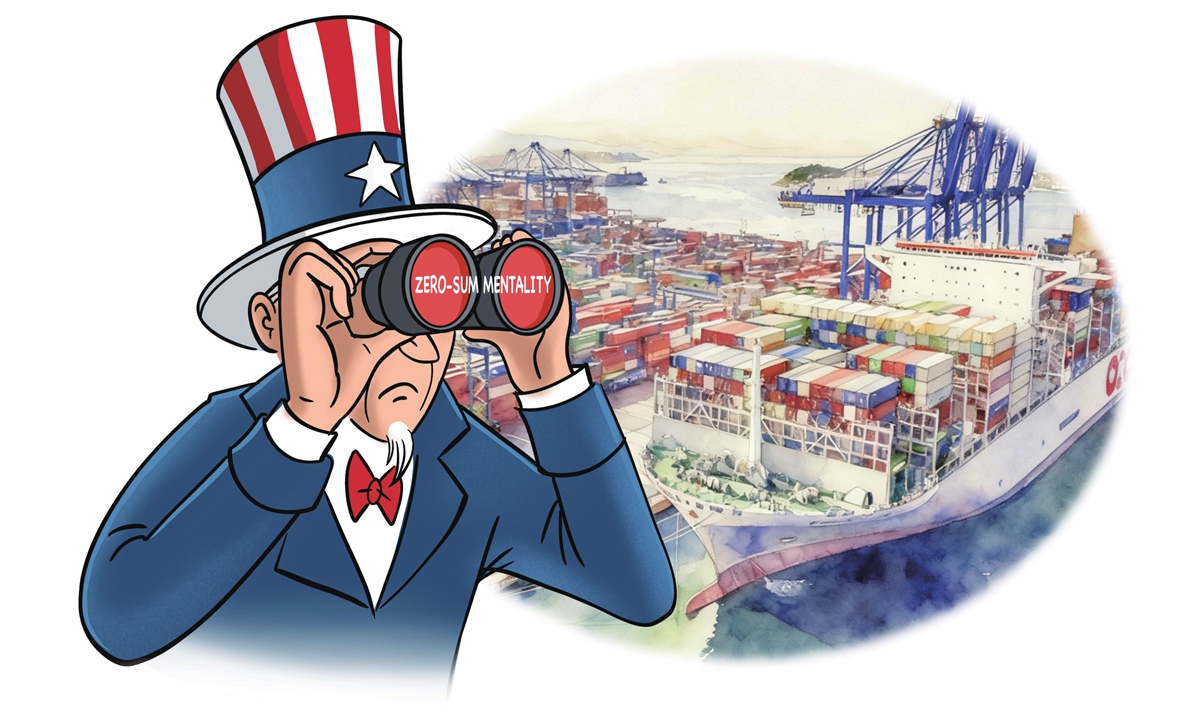
Although framed as concern for Greece's economic security and regional strategic interests, the ambassador's comments reveal something at the heart of US strategy toward China: treating other countries - and even European allies - as tools for geopolitical hedging rather than as independent economic actors.
Washington's goal is not to promote Greece's prosperity but to squeeze out China by "replacing" Chinese investment and forcing countries into a binary choice.
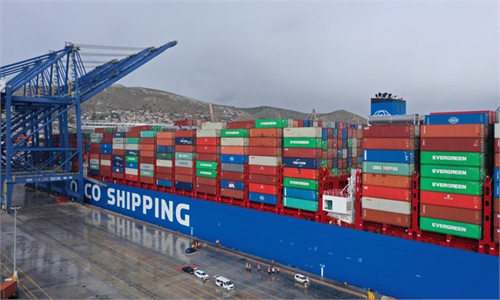
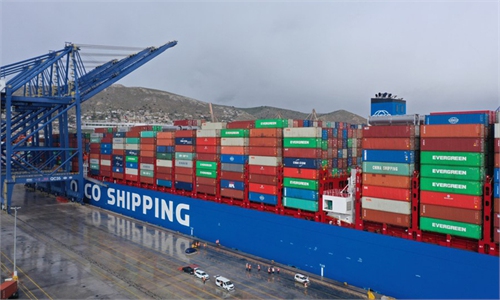
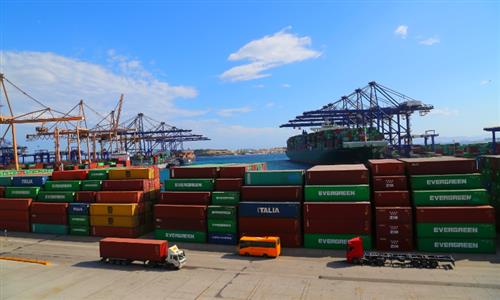
The story of Piraeus could have been a textbook example of successful international cooperation. When Greece was mired in a severe debt crisis and desperately needed foreign capital, China's shipping giant COSCO invested in and acquired operating rights at the port. Since then, throughput and revenue have risen sharply, and Piraeus has become a key European hub under the China-proposed Belt and Road Initiative.
For Greece, Chinese investment upgraded infrastructure, created jobs and tax income, and reshaped logistics networks. While the cooperation is not perfect, it has undeniably improved Greece's economic standing and regional role.
Now, a US diplomatic envoy is seeking to undermine this cooperation and replace Chinese investment with American capital. That logic runs counter to Greece's interests in maintaining diversified and open investment, and it deviates from the principle of mutual benefit that global economic integration should uphold.
US policy toward China is increasingly driven by an urge for "exclusive competition." From technology to supply chains, and from finance to infrastructure, Washington treats China as its top strategic rival and attempts to engineer "de-China-ization" around the world.
The problem is that the global economy does not operate as a zero-sum game. Increased investment and trade flows can lift local economies and expand markets - they do not inherently harm another country's interests.
If the US genuinely wants to expand its economic footprint globally, it needs to compete with China in ways that are cooperative and mutually beneficial, rather than through suppression or replacement. Efforts to push China out rarely make the US stronger.
Greece sits at a strategic crossroads between Europe and Asia, serving as a key hub for Mediterranean shipping, energy transit and trade. Its national interests do not lie in choosing sides between China and the US, but in maximizing diversified investment and balancing external players to advance its own development. If Washington truly wants to help Greece revitalize its infrastructure, it should do so within an open and collaborative framework - not by making the reduction of Chinese influence a precondition.
The US ambassador's remarks are a troubling signal: They reveal a deeply rooted "replacement mind-set" within the American strategic community - treating global development as a scramble for resources instead of a platform for cooperation. Such thinking may provide short-term political mobilization, but in the long term it will erode the US' appeal in emerging markets. The US cannot - and need not - cover every domain. In certain strategic sectors, however, it cannot match China's investment scale or replicate the sustained, operations-based approach of Chinese enterprises. Instead of trying to "push China out," a smarter approach would be to "make cooperation more efficient and more transparent," competing through governance and institutional advantages, not exclusion.
The ambassador's remarks are wrong not only because they breach diplomatic tact, but also because they reflect an outdated worldview. In an interdependent 21st century, true leadership is not about exclusive dominance - it is about inclusive creation.
For future international relations to achieve stability and prosperity, the world must move beyond zero-sum thinking and toward a model of co-building and co-sharing. This is not only a more balanced way to view Chinese investment - it is a deeper understanding of globalization itself: Competition within cooperation is the kind of competition that truly aligns with the spirit of the times.
RELATED ARTICLES