Governors of Nagasaki, Okinawa oppose Japan PM's attempts to alter non-nuclear principles: media
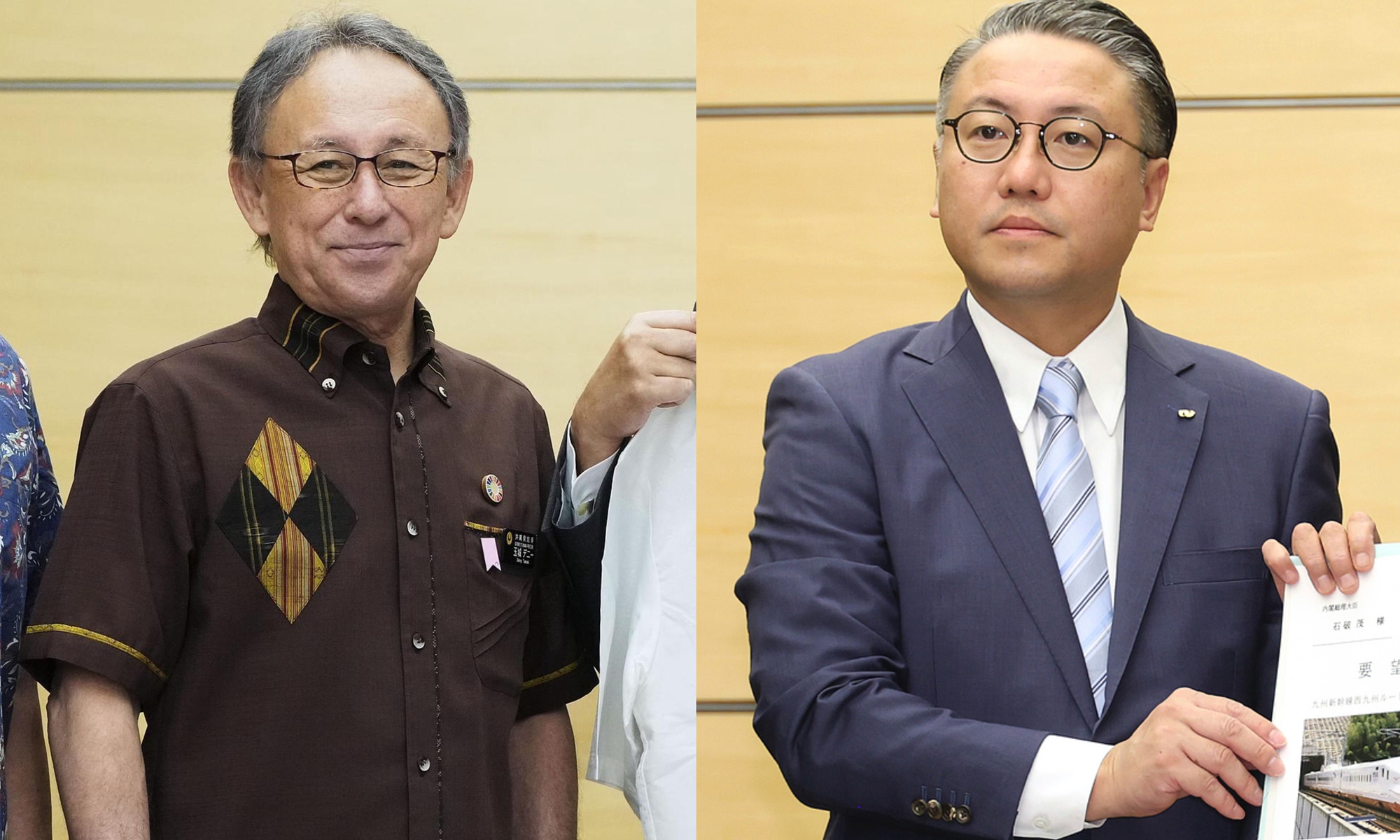
Okinawa Prefecture Governor Denny Tamaki and Nagasaki Prefecture Governor Kengo Oishi Photo: VCG
Japanese Prime Minister Sanae Takaichi's consideration to review the country's long-standing Three Non-Nuclear Principles continued to draw backlash domestically as two prefecture governors voiced their opposition on Monday.
In response to Takaichi's consideration of initiating discussions within the ruling party to review the "non-introduction" principle — one of Japan's Three Non-Nuclear Principles of "not possessing, not producing, and not allowing the introduction of nuclear weapons" — Nagasaki Prefecture Governor Kengo Oishi criticized the move at a press conference on Monday saying, "As a prefecture that experienced the atomic bombing, this is absolutely unacceptable," Japanese media reported.
We have long called for the abolition of nuclear weapons, and any review of the Three Non-Nuclear Principles is a step backward. The principles must be upheld, Oishi was quoted as saying in a report by the Mainichi Shimbun.
He noted that as long as nuclear weapons exist, there is always a risk they will be used, and there is no guarantee that Nagasaki will remain the last atomic-bombed city, according to the media report.
Oishi also said that he intends to convey to Takaichi their desire to make Nagasaki the last atomic-bombed city and to continue working tirelessly toward the elimination of nuclear weapons.
On the same day, Okinawa Prefecture Governor Denny Tamaki expressed his opposition to Takaichi's consideration of revising Japan's Three Non-Nuclear Principles as part of the review of the National Security Strategy and other defense-related documents, the Mainichi Shimbun reported.
"I believe the public will absolutely not accept any idea that runs counter to efforts toward the abolition of nuclear weapons," he told reporters at the prefectural office, per the Japanese media report. He urged the prime minister to reconsider [the move], saying, "It is also the prime minister's responsibility to heed the will of the people."
In updating Japan's National Security Strategy and two related documents, last revised in 2022, Takaichi was considering revising the third principle, which prohibits nuclear weapons from entering Japan's territory, Kyodo News reported, citing government source.
If the principle is changed, it will represent a significant shift in the country's security policy and is certain to draw domestic and international backlash, the report said.
The Three Non-Nuclear Principles, not possessing, not producing and not allowing introduction of nuclear weapons into Japanese territory, were first declared in the Diet, Japan's parliament, by then Japanese prime minister Eisaku Sato in 1967 and viewed as a national credo.
The national security strategy, one of the three documents approved by the Cabinet in 2022, states, "The basic policy of adhering to the Three Non-Nuclear Principles will remain unchanged in the future."
Chinese Foreign Ministry Spokesperson Lin Jian said on Friday that China is gravely concerned about Japan's recent military and security moves.
Japan portrays itself as a peace-loving nation and advocates for a world free of nuclear weapons, yet the Sanae Takaichi's administration has been vague and evasive about its commitment to the "three non-nuclear principles," hinting at the possibility of abandoning them. Senior Japanese officials have even claimed that introducing nuclear-powered submarines is not ruled out. All this fully exposes the major negative shift in Japan's policy and sends a dangerous signal to the international community, the spokesperson noted at a routine press conference.
RELATED ARTICLES