‘China plays a pivotal role in shaping a fairer global order’: Sherpa of B20 South Africa
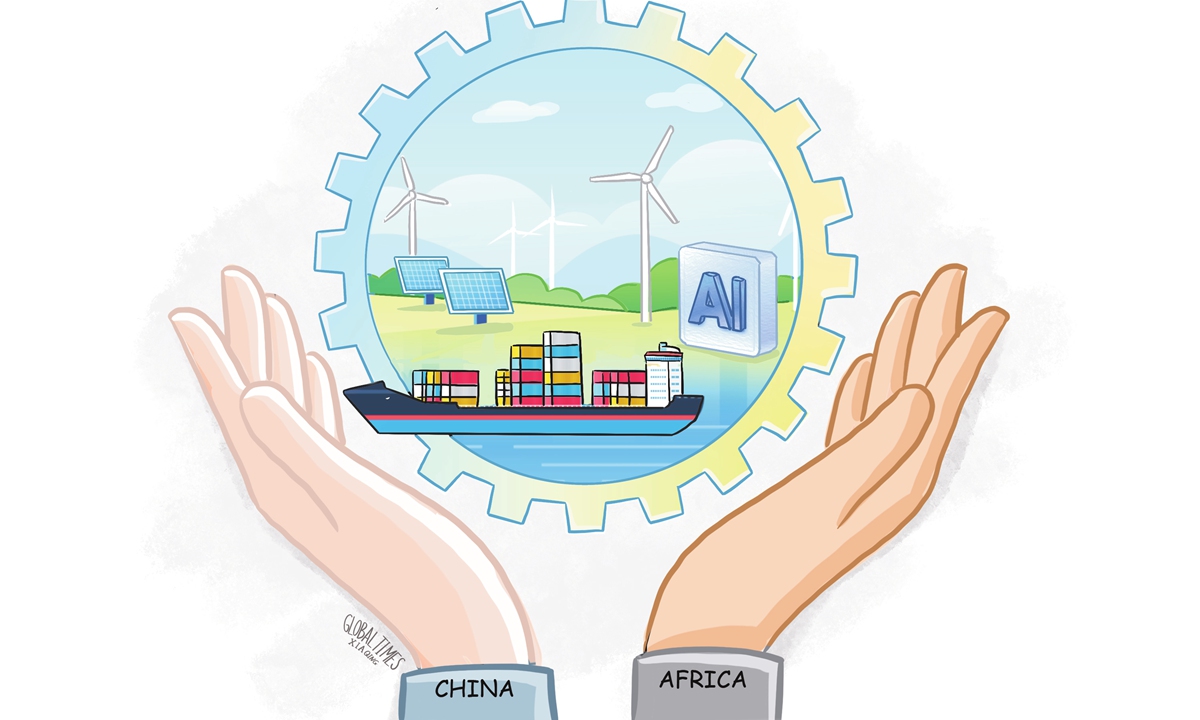
Illustration: Xia Qing/GT
Editor's Note:
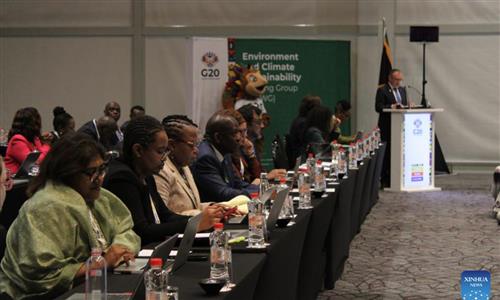
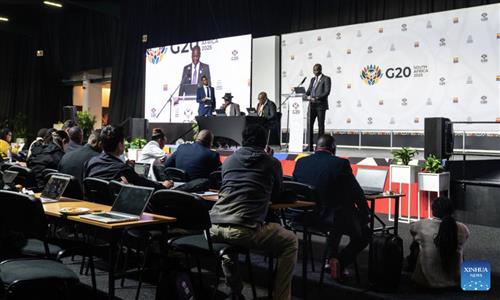
The 2025 G20 Summit is set to convene in Johannesburg, South Africa, on November 22 to 23, marking a milestone as the first-ever edition of the summit staged on the African continent. In an interview with the Global Times (GT) reporter Zhang Ao, Cas Coovadia (Coovadia), the Sherpa of B20 South Africa, shared his view of the global significance of this event and how the China-Africa partnership stands as an illustration of how strategic collaborations can drive systemic transformation. "China can help shape a global order that is not only more sustainable but also more just - an order where prosperity is shared across North and South," Coovadia said.
GT: The forthcoming G20 Summit will mark the first time it takes place on African soil, an event you have described as "Africa's global moment." What are your expectations for this summit, and what significance will it hold for Africa?
Coovadia: Hosting the G20 Summit in Africa is more than symbolic; it signals a rebalancing of the global equation. We expect this summit to affirm Africa's role as a driver of solutions, not just a recipient of them. It will showcase Africa's integration through the African Continental Free Trade Area (AfCFTA), highlight our innovation capacity and position the continent as a partner shaping global prosperity. This is Africa stepping onto the world stage as a co-creator of the future.
For decades, Africa has been spoken about as a frontier of opportunity. Today, the continent is stepping forward as a co-architect of global prosperity. The significance lies in three dimensions: integration, innovation and partnership. The AfCFTA is advancing, and the G20 spotlight will accelerate its implementation, embedding Africa more firmly in global trade systems. Africa's youthful population and entrepreneurial energy are unmatched, with fintech, renewable energy and digital platforms already reshaping the future. Africa is not seeking charity, but rather proposing mutually beneficial collaboration. The continent's prosperity is inherently linked to global prosperity.
GT: Under the 2025 G20 Summit theme of "solidarity, equality, sustainability," what practical outcomes have been delivered to date across trade and investment, energy transition, digital transformation and inclusive development to advance Africa's pursuit of Agenda 2063?
Coovadia: We have moved from dialogue to action, achieving tangible outcomes in trade, energy, digital empowerment and inclusive development. Frameworks for fair trade aligned with the AfCFTA are in place to facilitate seamless cross-border trade for African businesses. Pilot projects on renewable energy and green hydrogen are advancing, positioning Africa as a hub for the global energy transition. Importantly, our inclusive development pilots, from financial inclusion to health equity, are designed for scalable implementation across Africa.
GT: In your view, how can long-standing China-Africa cooperation contribute to advancing the G20's development agenda? Could this partnership serve as a model for Global South cooperation in global economic governance?
Coovadia: China's partnership with Africa has always been anchored in infrastructure development, industrialization and skills transfer - areas that are critical to Africa's long-term growth. The strength of this collaboration lies in mutual reinforcement: China contributes technological expertise and investment capacity, while Africa provides resources, a young and dynamic workforce, and a growing market. Together, we create ecosystems of sustainable impact.
This partnership is built on mutual benefit rather than dependency. It exemplifies how international cooperation can be rooted in co-creation, shared leadership, mutual accountability and equitable participation in global governance. Furthermore, it represents a practical, equitable and forward-looking model of South-South cooperation. As the G20 focuses on solidarity and sustainability, the China-Africa story illustrates how strategic partnerships can deliver systemic transformation - from railways and ports to digital platforms and renewable energy infrastructure.
GT: South Africa is China's comprehensive strategic partner. How can the two countries further synergize their strengths under the G20 framework to accelerate Africa's industrialization and unlock Africa's economic potential?
Coovadia: South Africa and China can deepen collaboration in critical minerals, renewable energy and advanced manufacturing.
This collaboration is essential to aligning South Africa's mineral resources with China's manufacturing capacity to drive value-added industries rather than reliance on raw material exports; to promote joint investment in solar, wind and green hydrogen to accelerate Africa's energy transition while creating jobs; and to combine China's technological expertise with South Africa's regional leadership to build advanced manufacturing ecosystems serving the continent.
By leveraging China's investment capacity with South Africa's regional leadership, we can accelerate industrialization across the continent. Under the G20 framework, this synergy is not just bilateral but also continental. It will become a catalyst for Africa's integration into global value chains - unlocking jobs, innovation and inclusive growth at scale, positioning Africa to integrate into global value chains, unlock its economic potential and contribute meaningfully to global prosperity.
GT: The world is currently facing multiple challenges. In which areas do you believe the "China solution" can contribute to a fairer and more equitable global order?
Coovadia: China has a pivotal role to play in shaping a fairer global order. The "China solution" can have a decisive impact on three key areas: advancing green energy transitions to combat climate change; scaling up digital infrastructure for inclusion to bridge divides and expand opportunities; and reforming multilateral institutions to reflect today's realities.
By championing fair trade, responsible technology and equitable financing, China can help shape a global order that is not only more sustainable but also more just - an order where prosperity is shared across North and South.
RELATED ARTICLES