Lessons from the Nexperia case for the Netherlands: avoid strategic misjudgments

A logo of Nexperia Photo: VCG
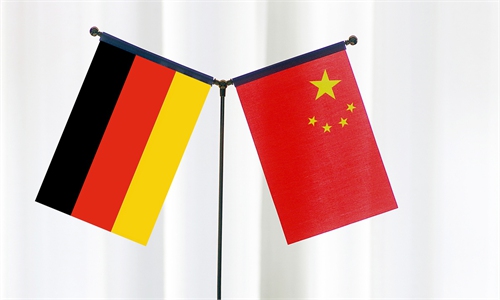
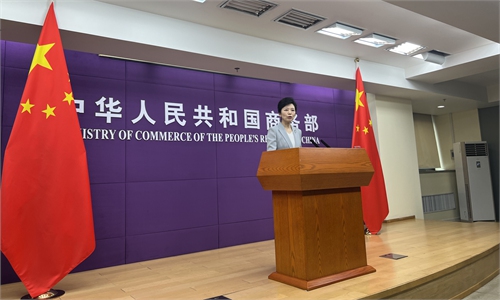
The Dutch government said on Wednesday it was suspending its intervention at computer chip maker Nexperia following "constructive talks" with Beijing. The Chinese Ministry of Commerce on the same day said China welcomes the Dutch side's suspension of administrative order regarding intervention over China-owned chipmaker Nexperia, but said the suspension still falls short of addressing the root cause of the turmoil caused to the global semiconductor industry and supply chain, urging the Dutch side to demonstrate a genuine willingness to cooperate and put forward a truly constructive solution.
Nexperia has been pushed into the center of a diplomatic confrontation ever since the Dutch government invoked the never-before-used 1952 Goods Availability Act and froze the company's global operations under the banner of so-called "economic security" to the Netherlands and Europe. The move not only triggered a sharp escalation in tensions with China, but also left the EU car industry scrambling for chips - an outcome that directly undercuts the very rationale used to justify the intervention.
The Dutch decision was prompted by a political desire to unwind Wingtech's 2018 acquisition of the company. Under mounting geopolitical pressure, Nexperia's CEO and Wingtech founder Zhang Xuezheng was suspended and the company's shares were placed in custodianship by the Dutch court. Ironically, the Dutch government ended up creating precisely the emergency situation it claimed to be preventing, with European automakers seeing their chip supply dwindle.
The background to the Dutch government's behavior is inseparable from pressure from Washington. The US has maintained an Entity List of companies seen as a threat to US national security since 1997. The number of Chinese companies skyrocketed in 2019 with the inclusion of Huawei and many of its subsidiaries, and this continued under former US president Joe Biden.
According to media reports in October, disclosed court documents showed that US officials told their Dutch counterparts that the Chinese CEO of Nexperia "will have to be replaced" for the company to be exempt from Washington's entity list. Then, the Netherlands followed US directives and restricted its own high-tech industry in the process. This intervention closely mirrors how Washington earlier forced the Dutch government to ban ASML's exports of advanced chipmaking machines to China.
In the changed geopolitical climate of 2025, with rising rivalry between the US and China, European states are caught between contradictory dependencies. Financially, technologically, politically and militarily, Europe is deeply dependent on the US, and European governments are anxious not to antagonize the US. But Europe is increasingly dependent on China as a supplier of critical materials for its economy and as a source of foreign investment.
Some European policymakers have come to believe that these two imperatives - alignment with US pressure and hedging against China - are not mutually exclusive. For them, US pressure can also be instrumentalized by European interests to address the "Chinese challenge" more effectively. However, in reality, this approach only leaves Europe caught in the crossfire, boxed into an awkward position where it bears the costs without securing real gains, as seen in the Nexperia case. This logic risks reducing Europe to a mere instrument of great-power competition rather than an actor with its own strategic judgment.
Dutch Economy Minister Vincent Karremans has announced the suspension of the order issued to Nexperia under the Goods Availability Act. This marks the first step taken by the Dutch government. However, the suspension should not remain a mere gesture. It neither overturns the court's provisional ruling nor addresses the deeper political and diplomatic fallout the dispute has already triggered. Judging from the situation the Nexperia controversy has now produced, it is clear that the Netherlands' previous approach has been at odds with its own interests.
The Dutch government's earlier actions significantly escalated the situation and laid bare the deeper strategic misjudgements behind them. The Dutch government has now taken the first step to try and calm things down, but this is far from addressing the underlying issues. It needs to reflect on the Nexperia case seriously, engage with the Chinese government with sincerity to resolve the issues and secure the future of Nexperia in Europe.
The author is an emeritus professor of International Relations at Vrije Universiteit Amsterdam. opinion@globaltimes.com.cn
RELATED ARTICLES