Mercedes-Benz pushes forward at ‘unprecedented speed’ in China; CEO reportedly claims ‘tough’ competition
By Liu Yang and Published: Nov 21, 2025 04:59 PM

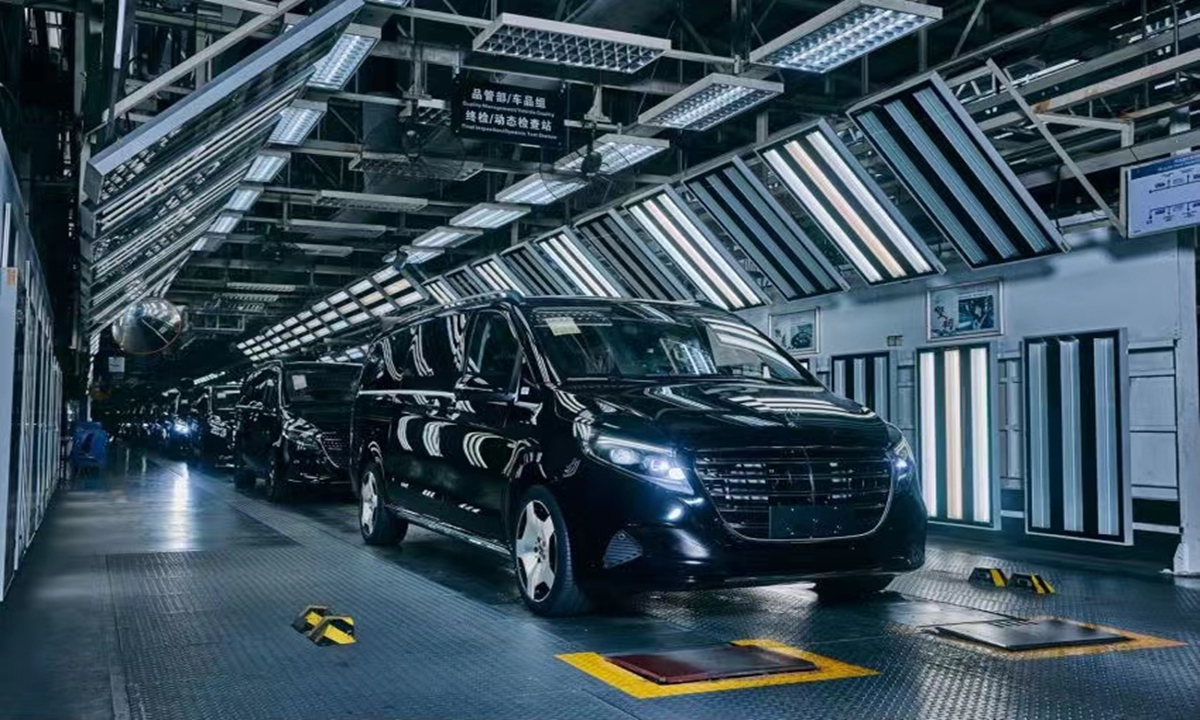
A view of a Mercedes-Benz factory in East China's Fujian Province. Photo: Courtesy of Mercedes-Benz
Mercedes-Benz CEO claimed on Thursday that the company is "not naive" in China and is battling to maintain its market share amid intense competition from local brands, Reuters reported. Also on Thursday, another senior official of the company said in his speech during a tech-related activity the firm held in Guangzhou that teams in China are working shoulder-to-shoulder, pushing forward at an unprecedented China speed. He also noted that in China, collaboration has empowered the company to lead the development of intelligent technologies, propelling it into the top tier of the intelligent mobility field, according to a statement the company shared with the Global Times on Friday.
A Chinese expert said on Friday that despite fierce competition, the German company has not given up on but still explored the Chinese market, which reflects its high regard for and strong commitment to China. The expert added that many German companies attached importance on the Chinese market, which serves as a clear reminder to the German government that "decoupling" or "de-risking" is simply not realistic, and strengthening cooperation is the broader trend.
According to Reuters, Mercedes-Benz is "not naive" in China where the German carmaker faces a tough couple of years and is battling to maintain its market share amid intense competition from local brands, CEO Ola Kaellenius said on Thursday.
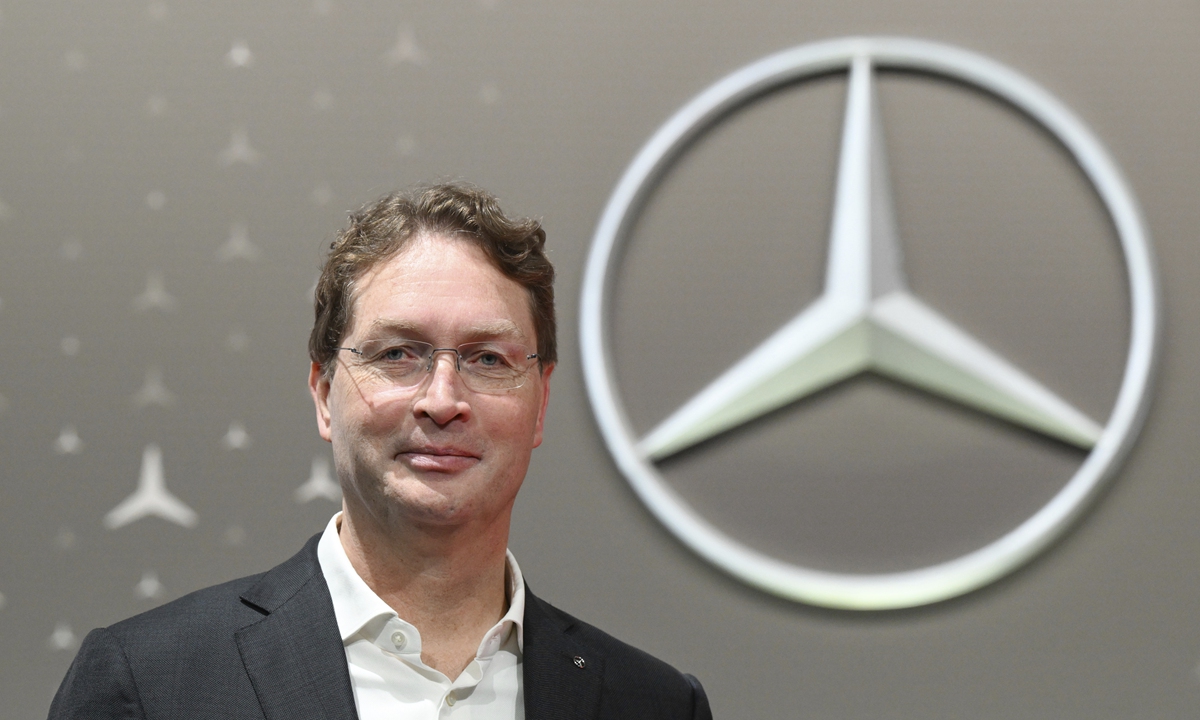
Mercedes-Benz CEO Ola Kaellenius File photo: VCG
While the executive expected consolidation in the Chinese market, where Mercedes faces competition from over 100 carmakers, he said this would take time, in a video interview at an industry conference in Berlin hosted by Automobilwoche.Mercedes saw its sales in China slump by 27 percent in the third quarter of this year, according to Reuters. However, the company is accelerating its pace to deepen cooperation with China.
When asked about its views on the Chinese market, the company said that 2025 marks the 20th anniversary of Mercedes-Benz's R&D presence in China, according to the statement shared with the Global Times on Friday.
According to the statement, Thursday marked the 2025 Mercedes-Benz XX Innovation & Technology Day. Drummond Jacoy, head of Mercedes-Benz China Research, Development and Procurement, said in his speech that in China, our teams are working shoulder-to-shoulder, pushing forward at an unprecedented China speed. The Chinese market is evolving at breakneck pace, and to stay at the forefront of the industry, we must move even faster.
Our R&D teams in Beijing and Shanghai has responded quickly and collaborated efficiently to deliver the products and experiences that Chinese customers expect, Jacoy said.
The company noted in the statement that leveraging a localized R&D ecosystem that spans intelligent connectivity, electrification, and materials science, it continues to deepen collaboration with partners including Tencent, CATL, Tsinghua University, and others.
In China, collaboration has empowered us to lead the development of intelligent technologies, propelling us into the top tier of the intelligent mobility field, Jacoy said in the statement.
"With the rise of China's automotive manufacturing industry — particularly the rapid growth of new-energy vehicles — the Chinese auto market has become intensely competitive. Kaellenius's remarks reflect a certain degree of anxiety on the part of this German automaker amid the fierce competition. Nevertheless, the company has no intention of giving up on the Chinese market, demonstrating strong commitment to China," Jian Junbo, director of the Center for China-Europe Relations at Fudan University's Institute of International Studies, told the Global Times on Friday.
Mercedes-Benz's action represents the attitude of many German companies that they want to take root in the Chinese market with deepening cooperation, instead of "decoupling" or "de-risking," Jian noted.
At the recently concluded 9th China-Germany Automotive Conference in Changchun, Northeast China's Jilin Province, German business leaders and industry representatives called for deeper cooperation with China's automotive sector, arguing for mutual engagement while voicing opposition to unilateralism and protectionist measures.
"We need open borders because only effective competition between companies, engineers, and researchers drives the wheel of progress in the world," Hans-Peter Friedrich, former vice president of the German Bundestag and chair of the Germany-China Parliamentary Group, told the Global Times during the conference.
Jian noted that based on the objective realities of the market, German business sector recognizes that "decoupling" with China is simply unrealistic. Their strong calls for deeper cooperation with China serve as a clear reminder to the German government that they should abandon entrenched prejudices against China, and strengthening cooperation is the broader trend, said the expert.
According to data released by the Federal Statistical Office (Destatis) on Wednesday, China reclaimed its position as Germany's largest trading partner in the first nine months of 2025, the Xinhua News Agency reported.
Germany's total trade with China reached 185.9 billion euros ($215.13 billion) from January to September, up 0.6 percent from the same period last year, Destatis said.
Jian noted that German should brace for closer bilateral economic relations and achieve mutually beneficial cooperation with China, which truly serves the interests of the economy and companies.
RELATED ARTICLES