Taiwan DPP authorities fully lift restrictions on food imports from Japan’s Fukushima, drawing sharp criticism from island public and KMT
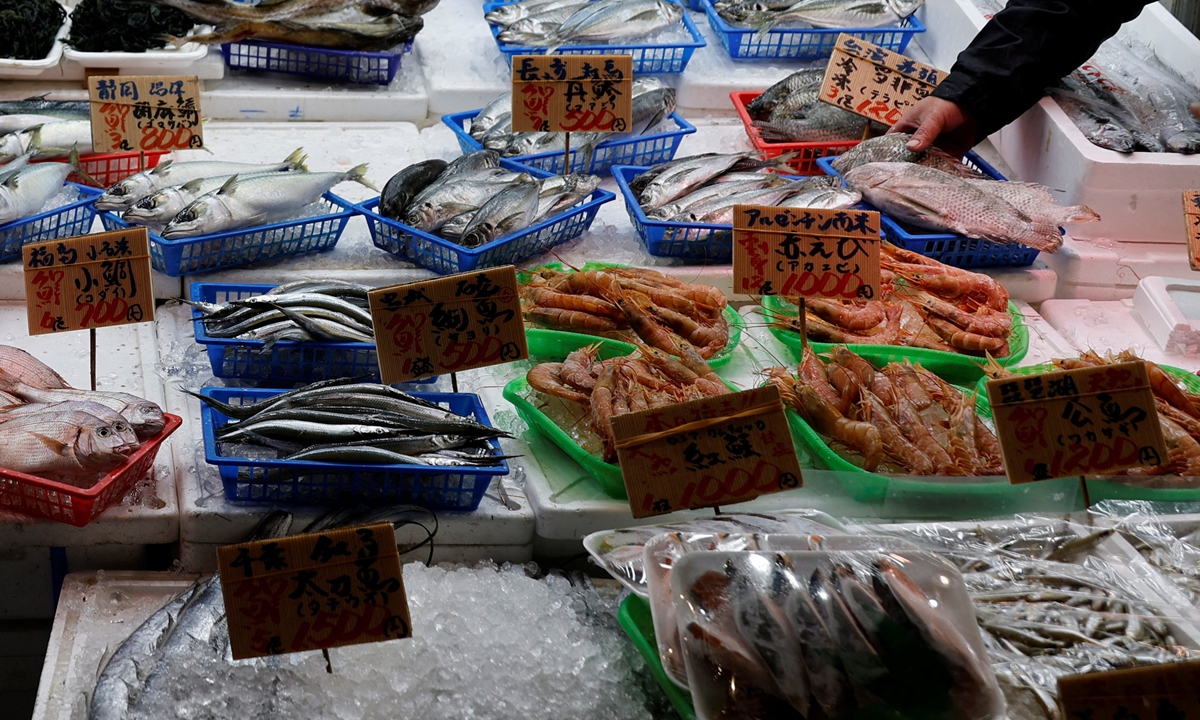
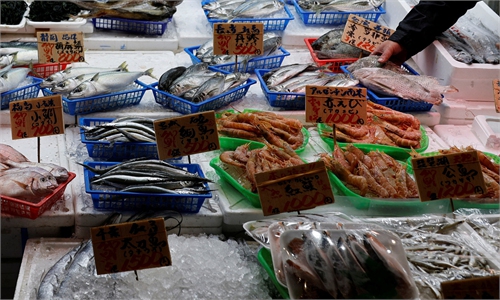
A vendor arranges seafood in his store in Tokyo, Japan on November 19, 2025. Photo: IC
The Taiwan Democratic Progressive Party (DPP) authorities' decision to fully lift the ban on food imports from Japan's nuclear disaster-hit Fukushima has drawn harsh criticism from Taiwan's main opposition party Chinese Kuomintang (KMT) legislators and has been slammed by internet users on the island as a "disgusting, egregious and erroneous" move.
The Taiwan Food and Drug Administration announced on Friday that it would end import restrictions on Fukushima products, effective immediately. The agency claimed that imported Japanese food products would be fully deregulated and subject to the same management standards as food from other countries, according to Taiwan's China Times.
When responding to questions, the agency stated that the decision was unrelated to the controversy sparked by Japanese Prime Minister Sanae Takaichi's erroneous remarks on China's Taiwan, according to udn.com.
Meanwhile, this move swiftly sparked doubts across the island, with netizens overwhelmingly criticizing the DPP authorities' action. Some people condemned it, saying that the DPP authorities are "not safeguarding public health, but serving political decisions" and calling it "political showmanship at the expense of the people's health."
Some Taiwan netizens criticized the DPP authorities for being inconsistency, saying, "They talk about nuclear safety all day, and then open the door to imports of nuclear-contaminated food - incomprehensible logic," and "an egregious and erroneous move; the products must be removed from shelves."
Other netizens said that they would "still refuse to buy" and "won't buy or won't eat" the food.
After the Fukushima Daiichi Nuclear Power Plant accident in March 2011, food from Fukushima, Ibaraki, Tochigi, Gunma and Chiba, and other areas in Japan were deemed radiation contamination and such products were labelled "radioactive food," being banned from import into Taiwan. In 2022, the regional ban was replaced by a risk assessment based on products.
Regarding the DPP authorities' recent announcement to fully lift the import ban on Fukushima food, KMT legislator Hsu Yu-chen criticized the Lai Ching-te authorities' recent policy moves as not only hasty, but also reflect systemic arrogance and overall governance failure, according to pchome.com.tw.
KMT legislator Lee Yen-hsiu questioned the decision, saying that after previously attempting to "rebrand food contaminated with nuclear radiation as 'blessed' food," Lai Ching-te authorities' lifting all restrictions on Fukushima food at a sensitive time once again placed political calculations above the public interests.
China imposed an import ban on Japanese seafood products after the Fukushima Daiichi Nuclear Power Plant began discharging nuclear-contaminated wastewater into the ocean in August 2023. In June this year, China announced that it would allow the resumption of seafood imports from 37 regions in Japan, including Hokkaido and Aomori, but agricultural and marine products from 10 prefectures, including Fukushima and Miyagi, remained banned, according to media reports.
Earlier this month, Japan had resumed exports to China of products such as scallops and sea cucumbers. However, Japanese media reported Wednesday that China would reimpose a ban on imports of Japanese seafood products as the diplomatic row over Takaichi's recent comments on Taiwan escalates.
Responding to inquiries over the suspension of import, Chinese foreign ministry spokesperson Mao Ning said that Japan had previously committed to fulfill its regulatory responsibility to guarantee the quality and safety of its aquatic products exported to China. This is a prerequisite for their entry into the Chinese market. However, Japan has so far failed to provide the required technical documents, she said.
She reiterated that Takaichi's egregious moves and erroneous remarks concerning Taiwan and other major issues have triggered strong public outrage in China. Under the current circumstances, even if Japanese aquatic products were exported to China, there would be no market for them, Mao said.
On November 20, Taiwan regional leader Lai Ching-te shared on social platform a picture of eating sushi to express his support for Japan, some island netizens lashed out, saying that instead of promoting local ingredients, Lai actively fawned over Japan and forced Taiwanese people accept contaminated food.
Some netizens on the island commented that the Lai Ching-te authorities are "selling out Taiwan" and "fawning over Japan."
In response to Lai's sushi post, Chinese Foreign Ministry spokesperson Mao Ning said last Thursday that Taiwan is China's Taiwan, and Taiwan is an inalienable part of China's territory. No matter how the Lai authorities try to put on political shows, she said, they cannot change this irrefutable fact.
Global Times
RELATED ARTICLES