Alibaba rejects allegation as ‘no basis’ amid media reports the US seeks to add it to military-linked list
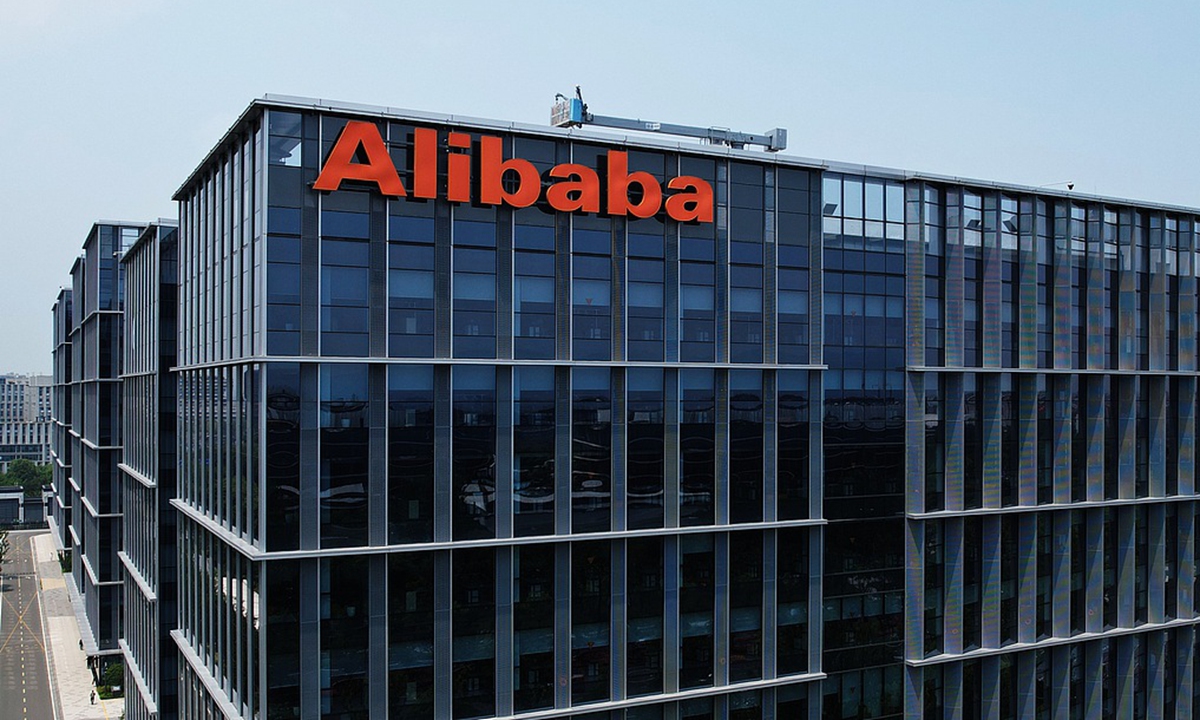
Alibaba headquarters building in Hangzhou, East China's Zhejiang Province on November 16, 2025. Photo: VCG
Alibaba Group rejected suggestions that it could be added to the Pentagon's Section 1260H List - a so-called roster alleging certain companies "assist the Chinese military" - dismissing the claim as "no basis," after media reports said US defense authorities had recommended including the company, according to a statement Alibaba sent to the Global Times on Thursday.In its statement, Alibaba said: "There's no basis to conclude that Alibaba should be placed on the Section 1260H List. Alibaba is not a Chinese military company nor part of any military-civil fusion strategy. We further note that, because Alibaba does not do business related to US military procurement, being on the Section 1260H List would not affect our ability to conduct business as usual in the United States or anywhere in the world."
The Pentagon concluded that Alibaba Group Holding Ltd., Baidu Inc. and BYD Co should be added to a list of firms said to assist the Chinese military, Bloomberg reported on Thursday.
Chinese experts said the move reflects Washington's continued politicization of economic issues, undermines WTO rules, and risks further destabilizing global supply chains.
It wasn't clear whether the companies have been formally included in the Pentagon's so-called 1260H list, which carries no direct legal repercussions but serves as a major warning to US investors, Bloomberg reported.
US Deputy Defense Secretary Stephen Feinberg informed lawmakers of the conclusion in an October 7 letter, a copy of which was seen by Bloomberg News, to the heads of the House and Senate Armed Services Committees.
Feinberg also recommended adding five other Chinese companies. All eight, he claimed, meet the threshold for being identified as Chinese military companies, according to media reports.
"In our review of the latest information available, the Department has identified eight entities that it has determined are 'Chinese military companies' in accordance with the statute that should be added to the 1260H list," Feinberg wrote in the letter.
A spokesperson for the Pentagon didn't respond to a request for comment, Bloomberg reported.
This is not the first time the US has added Chinese firms to its so-called list of entities "linked" to China's military.
The inclusion of several prominent Chinese firms on the list in January this year triggered a stock selloff that hit Tencent Holdings Ltd. and Contemporary Amperex Technology Co Ltd, which makes batteries for Elon Musk's Tesla Inc. as well as other automakers. Inclusion on the list could amount to a serious challenge for Alibaba, which is stepping up efforts to compete globally in artificial intelligence, as well as the other firms, Bloomberg reported.
Bian Yongzu, a senior researcher at the China Institutes of Contemporary International Relations, told the Global Times on Thursday that Washington's decision to again place Chinese firms on its list reflects an expanding "over-securitization" that distorts normal market competition. He argued that the US is exporting its own structural problems - such as industrial hollowing-out and inequality - by pressuring Chinese companies, a move that undermines market principles and risks misallocating global resources.
Zhou Mi, a senior researcher at the Chinese Academy of International Trade and Economic Cooperation, told the Global Times that similar moves have occurred before, with companies being placed on so-called "military-linked" or other watch lists without any factual basis. Such actions inevitably damage the reputation of the firms involved, and the impact is overwhelmingly negative. These subjective and unsubstantiated allegations only heighten market anxiety.
Bian noted that the companies targeted sit at critical nodes of global supply chains, meaning US pressure will add uncertainty across upstream and downstream sectors. As these Chinese firms operate globally and create value in many markets including the US and Europe, Bian said such measures ultimately inflict losses on all sides.
Zhou noted that many of these companies maintain extensive commercial and trade ties around the world. Arbitrarily labeling them in this way creates unnecessary concern among their partners and disrupts normal business expectations. This approach, he said, disregards basic market realities and overlooks the facts, relying instead on unilateral assumptions.
Bian warned the move will further erode the already fragile China-US trust and weigh on global economic sentiment. He said the political and short-term nature of the decision shows some US politicians do not grasp the realities of global interdependence. If this continues, he added, it will damage US interests and deepen risks for the world economy.
In response to the Pentagon proposal to add companies including Alibaba, Baidu and BYD to a list of firms allegedly supporting the Chinese military, Chinese Defense Ministry spokesperson Jiang Bin said on Thursday that the Foreign Ministry has already addressed the issue, and that China firmly opposes attempts by relevant parties to hype up so-called "China military threat."
RELATED ARTICLES