Any party or figure in power in Japan must uphold commitments in China-Japan political documents: Chinese Ambassador to Japan in People’s Daily
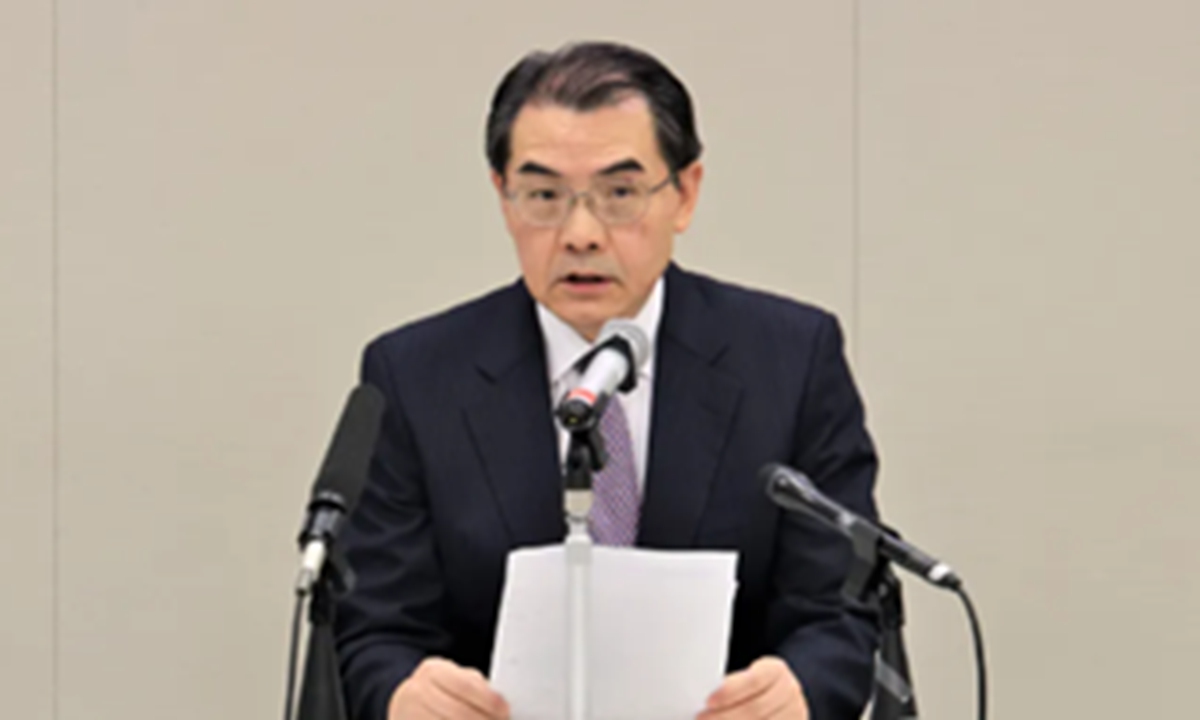
Chinese Ambassador to Japan Wu Jianghao Photo: the official WeChat accout of the Chinese Embassy in Japan
Eighty years ago, the Chinese people achieved a great victory in the War of Resistance against Japanese Aggression. Japan signed the instrument of surrender and formally accepted international legal documents such as the Cairo Declaration and the Potsdam Proclamation, which stipulated the return of Taiwan to China. After half a century of Japanese colonial rule, Taiwan was restored to the motherland, and historical justice was finally upheld, Chinese Ambassador to Japan Wu Jianghao wrote an article published on People's Daily on Sunday.
On the occasion of the 80th anniversary of the victory in the Chinese People's War of Resistance against Japanese Aggression and the World Anti-Fascist War, a serving Japanese leader has brazenly made blatant and provocative remarks concerning Taiwan question, issuing threats of force and beating the drums of war. To this day, she refuses to admit her wrongdoing or retract her statements, gravely undermining international law and the basic norms governing international relations, gravely damaging the post-war international order, and gravely eroding the political foundation of China-Japan relations, wrote Wu.
Taiwan has been an inseparable part of China's territory since ancient times. Adhering to the one-China principle is a political commitment Japan must strictly honor, as well as an international legal obligation it cannot shirk. In the 1972 Sino-Japan Joint Statement, the Japanese government explicitly recognized the Government of the People's Republic of China as the sole legitimate government of China, fully understood and respected the position of the Chinese government that Taiwan is an inalienable part of China's territory, and stated that it "adheres to the position set forth in Article 8 of the Potsdam Proclamation."
In 1978, China and Japan signed the Treaty of Peace and Friendship, which clearly stipulated that the Joint Statement "is the foundation of the peaceful and friendly relations between the two countries, and the principles set forth in the Joint Statement must be strictly observed," thereby establishing legal norms for China-Japan relations. Subsequent political documents between China and Japan have reaffirmed this series of important principles. No matter which political party or individual is in power in Japan, these commitments must be upheld, wrote Wu.
The Taiwan question is China's internal affair, and the one-China principle is a universally recognized international consensus, solemnly affirmed by United Nations General Assembly Resolution 2758, wrote Wu, noting that how the Taiwan question is resolved and how national reunification is achieved are matters for the Chinese people to decide, and brooks no interference from others. No country would tolerate its internal affairs being rudely meddled in by the leader of another country, nor would any country accept foreign leaders issuing threats of force against it.
Today's China is no longer the China of the past. The Chinese government and people possess rock-solid and unshakeable resolve and capability to safeguard national sovereignty and territorial integrity. Any attempt to turn back the wheel of history, to intervene militarily in the Taiwan Strait, or to split Taiwan from China will face a resolute, head-on blow, Wu wrote.
Wu wrote that the stable and sound development of China-Japan relations can only be built on a solid political foundation. The destructive actions unilaterally initiated by the current Japanese leader misjudge the situation, run counter to the trend of the times, and are bound to hit a dead end.
The only correct course of action for the Japanese side is to honor the political commitments it has repeatedly made over the past decades, stop undermining the post-war international order, immediately retract its erroneous and absurd remarks, and demonstrate genuine remorse and correction through concrete actions.
Any sophistry or quibbling is nothing but self-deception. Any attempt to muddle through will not succeed. Any move that compounds one mistake with another will only lead to even more serious consequences, Wu wrote.
Global Times
RELATED ARTICLES