Deepening research on Ryukyu history continues to carry significant contemporary value for China–Japan relations: Chinese scholar
By Published: Nov 18, 2025 08:52 PM

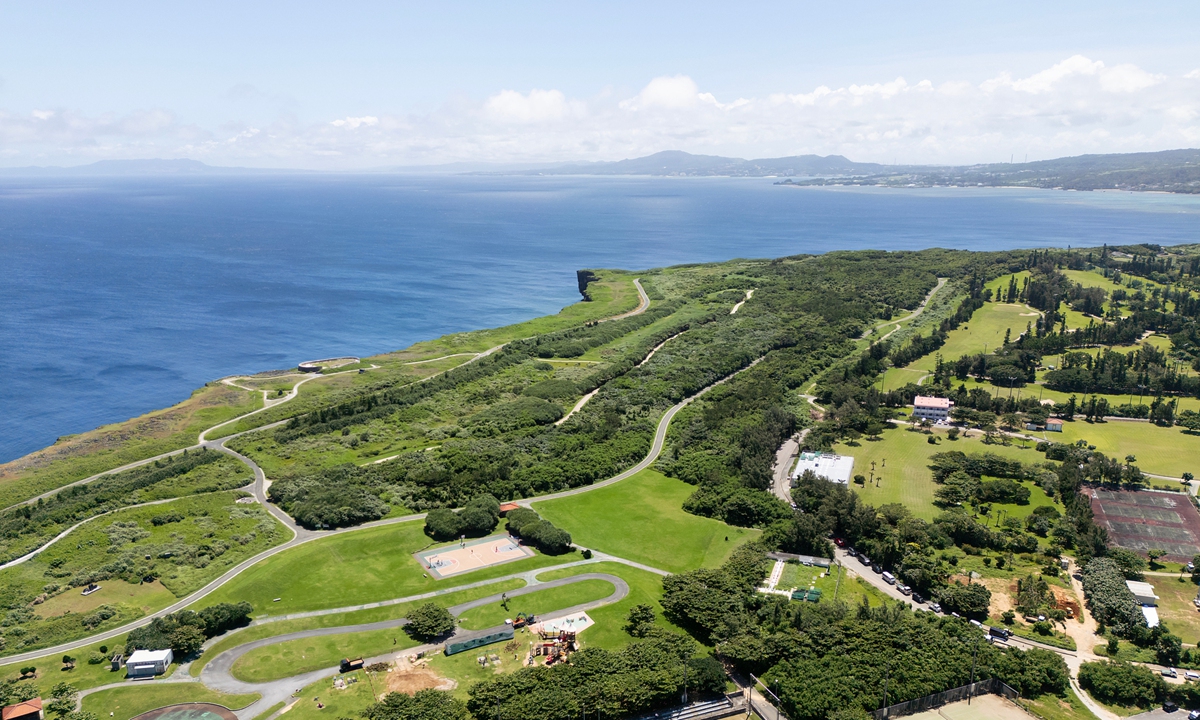
View of Okinawa Photo: VCG
An academic conference marking the 30th anniversary of the China Ryukyu research institute and advancing the development of the Ryukyu studies discipline was held over the weekend at Fujian Normal University. The Fuzhou-based university's pioneering Ryukyu studies program was newly selected for the 2025 funding cycle of the endangered disciplines support plan led by the Chinese Academy of History, one of only six projects nationwide to be chosen, and the first and only program from Fujian Province since the plan was launched.
The Global Times spoke on Tuesday with Professor Xie Bizhen, academic head of the institute, who explained why deepening research on Ryukyu history continues to carry significant contemporary value for China-Japan relations.
According to Xie, Ryukyuan historical materials are exceptionally distinctive. "In China's ancient foreign exchanges, there are very few cases like the Ryukyu Kingdom that have preserved such abundant images, documents, and physical artifacts," he said. "From my long-term work on China-Ryukyu and China-Japan relations, the uniqueness of Ryukyu sources is unmatched."
However, he noted that after the 2010 Diaoyu Dao incident, relations between China and Japan deteriorated. As Japan's hardline right-wing forces gained political influence, they became more inclined to downplay or even conceal the historical record of friendly exchanges between China and Ryukyu, Xie said.
"Many artifacts are no longer displayed as openly," Xie said. "In the past, Ryukyu islanders took pride in their ancestral ties with China. But under Japan's dominant narrative today, this history has instead become something to be avoided or not spoken about."
Xie emphasized that Japan's annexation of Ryukyu and subsequent assimilation policies, including the forced change of surnames, place names, and even rebranding the "Ryukyu Islands" as the "Southwestern Islands," were aimed at erasing historical memory. "As a result, many Okinawans today are unfamiliar with this part of their own past," he said. "This is why our research matters: to restore historical truth, preserve collective memory."
The conference also brought in several Japanese scholars. According to Xie, many expressed concern that rising tensions in China-Japan relations could hinder the development of Ryukyu Studies. "I told them clearly: state-to-state relations may fluctuate, but academic research must not be interrupted," he said. "The more solid our historical research is, the more it can contribute to improving real-world relations."
Fujian Normal University began field investigations, cultural preservation efforts, archival work and academic research on China-Ryukyu historical ties as early as the 1960s. In 1995, it established the institute of China-Ryukyu relations, which remains China's only research institution dedicated specifically to the study of China-Ryukyu relations.
At a UN meeting on October 9, China's Deputy Permanent Representative to the UN, Sun Lei, solemnly pointed out that China urges Japan to face up to the history of Japanese militarism's war of aggression and colonial rule against its Asian neighbors during WWII, which resulted in grave crimes against humanity. He called on Japan to genuinely improve the social status of women and to end prejudice and discrimination against the Okinawan people and other Indigenous groups.
RELATED ARTICLES