
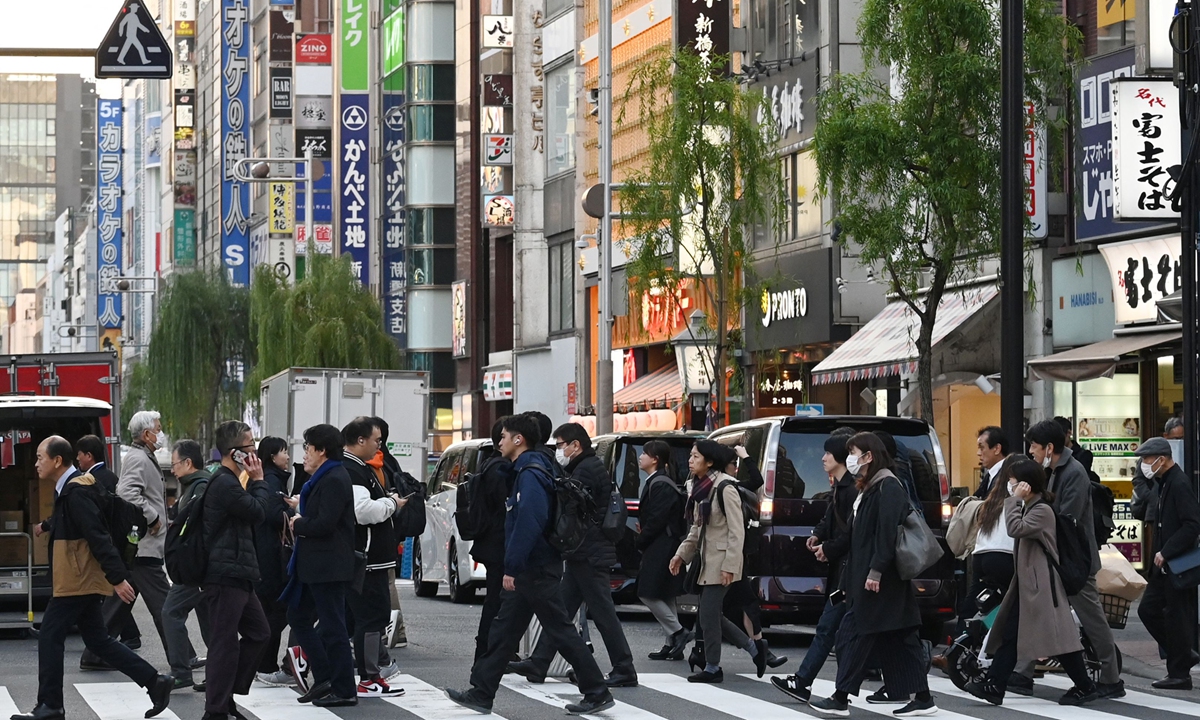
People cross a road at the Shimbashi district in Tokyo on November 20, 2025. Photo: VCG
Some people in Japan may not have expected that their new prime minister, barely weeks into office, would usher in what appears to be an almost endless string of domestic and foreign troubles. Since taking office, Sanae Takaichi's erroneous remarks have maliciously stirred up relations with neighboring countries including China, and have caused strong unease within Japan.
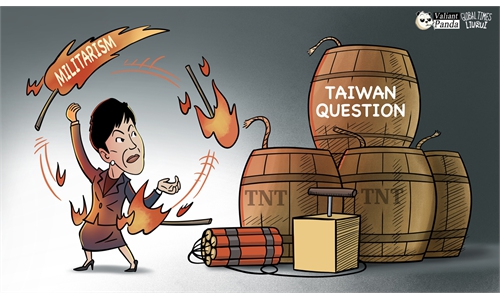
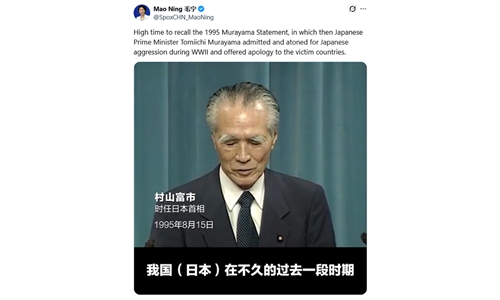
Takaichi's recent egregious remarks on the Taiwan question, a blunt interference in China's internal affairs, has drawn vehement protests and a strong counterattack from the Chinese side. "Japan needs to, first and foremost, retract the erroneous remarks and take practical steps to redress the wrongdoing," urged Chinese Foreign Ministry spokesperson Mao Ning at a regular press conference on Wednesday. "Otherwise, China will have to take further measures."
"Takaichi insists on escalating tensions in this way, making people feel that Japan is sowing the seeds of war and could even become a trigger for conflict," Hiroshi Shiratori, a political science professor at Hosei University in Tokyo, told the Global Times. Global responses across various fields have implied that, Takaichi's string of absurd, militaristic remarks has not only provoked a powerful backlash inside Japan - from the political arena to the general public - but has also left Tokyo facing an embarrassing situation of being diplomatically isolated.
As a Chinese proverb warns, "those who commit many injustices bring about their own ruin." Chinese scholars on Japanese studies reached by the Global Times have warned that, the "dangerous game" Takaichi is playing is pushing a country already in a turbulent period closer to the brink of both domestic and foreign crises.
In this third installment of the Global Times' investigative series, we examine the latest Japanese domestic and international reactions to Takaichi's hardline rhetoric, and how this far‑right, militaristic‑leaning prime minister has, to some extent, become the biggest source of unease for her own country.
'No good for the populace'
"Retract your statement and apologize!" "Takaichi, step down!" "A leader who cannot handle diplomacy is unfit to be Prime Minister!"
Over the weekend, waves of protests reportedly erupted outside the Prime Minister's Office in Tokyo, with many Japanese residents holding banners and chanting slogans to voice their dissatisfaction with the new prime minister in the most direct manner.
Recently, Takaichi openly declared in the Diet that a "Taiwan emergency" could constitute a "survival-threatening situation" for Japan, suggesting the possibility of military intervention in the Taiwan Straits. These aggressive remarks, which flagrantly interfere in China's internal affairs and exposed Japan's right-wing forces' extremely wrong and dangerous views on history, order, and strategy, have caused a global uproar and strong indignation among justice-minded individuals.
Back in Japan, many industries have already suffered from Takaichi's ill-judged remarks. "The Nikkei 225 Stock Average this week posted its steepest drop since April," reported Bloomberg on Thursday. "Takaichi is facing her first major market test."
The Japanese fishery is among the affected, as China had informed Japan that it would suspend imports of Japanese seafood, an action "amid a diplomatic row between the two countries over Prime Minister Sanae Takaichi's remarks on Taiwan," reported Kyodo News on Wednesday.
In the cultural and entertainment industry aspect, the screening of at least two Japanese films in Chinese mainland cinemas has been postponed. More Japanese celebrities, such as singer Mai Mizuhashi (also known as MARiA) and actor Koji Yano, have posted on Chinese social media to express support for one China.
The tourism and consumption industries in Japan are not spared either. A Chinese cruise ship Adora Mediterranea, which was chartered by travel agencies, has cancelled a planned stop at Miyakojima Island in Okinawa, Japan, at the request of the clients, the ship's operator Adora Cruises told the Global Times on Wednesday night.
After China issued a travel warning to tourists and students planning to visit Japan, "almost a dozen airlines offered refunds to passengers and about 500,000 people were estimated to have canceled flights," reported The Guardian on Wednesday. Earlier, shares in Japanese retail and tourism companies fell sharply on Monday.
As a front-line insider of the involving tourism industry, an operator who runs a travel agency for Chinese people in Fukuoka has felt the chill. The operator found that some bookings for December are now at risk of cancellation, as some Chinese customers are reconsidering their trips. "The tensions have already affected activities at the civilian level. It's extremely troubling, but there's nothing we can do," Mainichi Shimbun quoted the operator as saying on Monday.
Da Zhigang, director of the Institute of Northeast Asian Studies at the Heilongjiang Provincial Academy of Social Sciences, is not surprised with such a predicament among Japanese industries. The reason for China's strong reaction to Takaichi's absurd remarks lies not only in Japan's attempt to intervene in the Taiwan question, but also in the fact that 80 years after the end of World War II (WWII), Japan has signaled a renewed threat of war against China, something absolutely intolerable to China.
Da said that if China-Japan relations further deteriorate due to Japan's unilateral actions and China responds with firm countermeasures against Tokyo's provocations, Japan's tourism sector will be hit first, followed by related industries such as transportation, accommodation and dining.
Da added that Chinese citizens may also think twice about studying in Japan due to safety concerns. "In fact, many Japanese national, public and private universities, as well as language schools, rely heavily on foreign students because of the country's declining birthrate and population aging - among whom Chinese students account for a significant proportion."
Moreover, Japan remains highly dependent on China for a wide variety of goods. Should Japan refuse to retract its statements or continue to take a hardline stance, China may impose additional measures across a broader range of trade areas, Da said.
If such a situation arises, it could spark movements to boycott Japanese products or refuse to buy them. That would "certainly not be good for the populace, and the majority of citizens do not wish for this to happen," Shiratori told the Global Times.
'An unjust cause loses support'
As an old Chinese saying goes, "A just cause wins support, while an unjust one loses it." Takaichi's absurd remarks and actions, which not only blatantly trample on international justice but also severely damage China-Japan relations, have been and will continue to be met with strong opposition both within and outside Japan, leaving her administration in an increasingly isolated and untenable position, Da noted.
Numerous figures from various sectors in Japan have criticized Takaichi's erroneous remarks. Posting on social platform X on Thursday, Hatoyama wrote that "a leader's remarks, which deviated from the road that "the Taiwan question is China's internal affair," have brought Japan-China relations to the brink of a worst-case scenario.
"As the saying goes, 'one should know his mistakes and correct them.' Confucius also taught that 'Not to mend the fault one has made is to err indeed.' It is imperative that this error be rectified immediately," wrote the former Japanese prime minister.
Besides that, Mizuho Fukushima, leader of Japan's Social Democratic Party, said at a press conference on November 12 that Takaichi's remarks were unusual. Exercising "collective self-defense" and using force overseas could heighten tensions, and Japanese government should be making diplomatic efforts to prevent war, according to the Party's website.
Also, Japanese international political scholar Yoichi Masuzoe said on X on November 14 that prime ministers and cabinet ministers should not answer questions in the diet on fields they are not well-versed in based on their own whims. The ambition to speak in one's own words has led to Takaichi's major blunder this time.
Beyond professionals, the Japanese public has also voiced dissatisfaction with Takaichi.
A Japanese netizen posted on X saying that "even my middle schooler grandson is pissed off, saying that 'dangerous Takaichi,' we don't want war or anything like that, and don't destroy our future."
"Instead of getting carried away by someone trying to provoke China, we should listen to the opinions of people working in the real world and farmers. If China stops exports, Japan will run out of fertilizer, leading to food shortages, and rare earths will also be insufficient, halting the high-tech industry," another Japanese netizen posted.
Apart from floods of criticism at home, Takaichi, whose recent militaristic statements that have provoked the sensitivities of the countries involved - over the territorial claims of Dokdo (called Takeshima in Japan), Russia-related matters and interpretations of World War II (WWII) history - is also leaving her increasingly isolated in the international community.
South Korea, meanwhile, called in a Japanese diplomat on November 14 to lodge protest after Japan unveiled the extension of a museum showcasing its claims to the Dokdo islets, Yonhap reported.
North Korea held a forum on November 12 condemning Japan's colonial-era atrocities, signaling continued hostility as it ignores Tokyo's request to hold a bilateral summit, according to Korea JoongAng Daily.
Russia has also weighed in critically. On November 13, Sergei Shoigu, Secretary of the Russian Security Council, told RIA Novosti that Takaichi pursues historical revisionist policies, and Tokyo's extensive anti-Russian rhetoric contradicts its claimed intention to normalize relations with Russia.
Even the US, Japan's ally, did not show support to her. In a Monday night interview on Fox News — described by the Daily Mail as Trump appearing to "defend China" - host Laura Ingraham raised Takaichi's recent claims about potential Japanese interference in a Taiwan Straits conflict and asked whether China was "not our friend." US President Donald Trump pushed back, saying "A lot of our allies are not friends either."
"Takaichi's very existence as prime minister is a survival-threatening situation for Japan," criticized a recent editorial published by the Japanese newspaper Shakai Shimpo. The editorial commented that Takaichi's policy intentions have become increasingly clear: She disregards people's livelihoods, follows the footsteps of the US blindly, and attempts to vigorously boost military expansion.

A view of a seafood store in Tokyo, Japan, on November 19, 2025 Photo: IC
Why such behaviors?
As a leading representative of Japan's right-wing conservative camp, Takaichi has repeatedly visited the notorious Yasukuni Shrine and made extremely erroneous statements that deny and glorify Japan's wars of aggression against China. She has vigorously advocated that Japan cast off its historical burden, thereby clearing ideological obstacles for building a powerful military, breaking free from the post-war regime, and putting an end to "apology diplomacy."
In the military and security sphere, Takaichi has zealously pushed for constitutional revision to transform the Self-Defense Forces into a full-fledged "national defense army," to grant Japan so-called "collective self-defense rights," and to relentlessly amplify the so-called "China threat" narrative, according to media reports.
Yet it is rare even in Japanese politics for such a radical right-wing politician, shortly after taking office, to so frivolously and recklessly provoke neighboring countries in this manner, said some observers on China-Japan relationship reached by the Global Times.
Then, why would Takaichi act like this?
Zhou Yongsheng, a professor at China Foreign Affairs University, analyzed that the intensity of Takaichi's rhetoric is driven largely by domestic considerations. She seeks to appeal to Japan's right-wing forces, as she has long relied on hardline nationalist statements to advance her political career. "Now that she has risen to the position of prime minister, she feels an even greater need to show her supporters that her stance remains unchanged, " Zhou told the Global Times.
"This time, by infringing upon the core of China's core interests - hurting the feelings of Chinese people and crossing China's red lines on issues of sovereignty and national reunification - Takaichi has, in my view, demonstrated a lack of political maturity in many respects," Zhou added.
Besides that, one external motivation is her intention to draw the US further into the Taiwan question. Another is her attempt to project a "tough posture" toward China in the hope of achieving a so-called "deterrent effect." These actions reveal a notable disregard for international norms and a lack of the restraint and respect such rules require, Zhou said.
Yet so far, despite her strenuous efforts and aggressive posturing, Chinese experts believe that Takaichi has not achieved the outcome she or her administration may have hoped for. "Her remarks on the island of Taiwan have, in fact, harmed Japan's own national interests," Da told the Global Times.
"In making these words, Takaichi underestimated China's resolve to defend its territorial integrity on the Taiwan question, while overestimating the level of support she could expect from her allies," Da noted, saying that this is another manifestation of Takaichi's political immaturity.
Takaichi appears to have adopted an overly optimistic view after the Japan-US summit meeting on October 28, believing she had won US's favor, said Da. "This left her somewhat intoxicated by what it perceived as a renewed sense of personal trust in Japan-US relations."
"But in reality, after Takaichi made these claims, the US did not offer any explicit rhetorical support for her position. Meanwhile, the strong backlash from neighboring countries - as well as criticism from within the island of Taiwan - has been unmistakable," Da said.
Chinese experts on Japan studies also noted that, Takaichi and her administration's manoeuvre can never change the fact that Japan's public and the international community are averse to radical right-wing forces and militarism. "They expect applause, but may be with slaps in the face."