China’s visa-free policy is gaining more global resonance: Global Times editorial
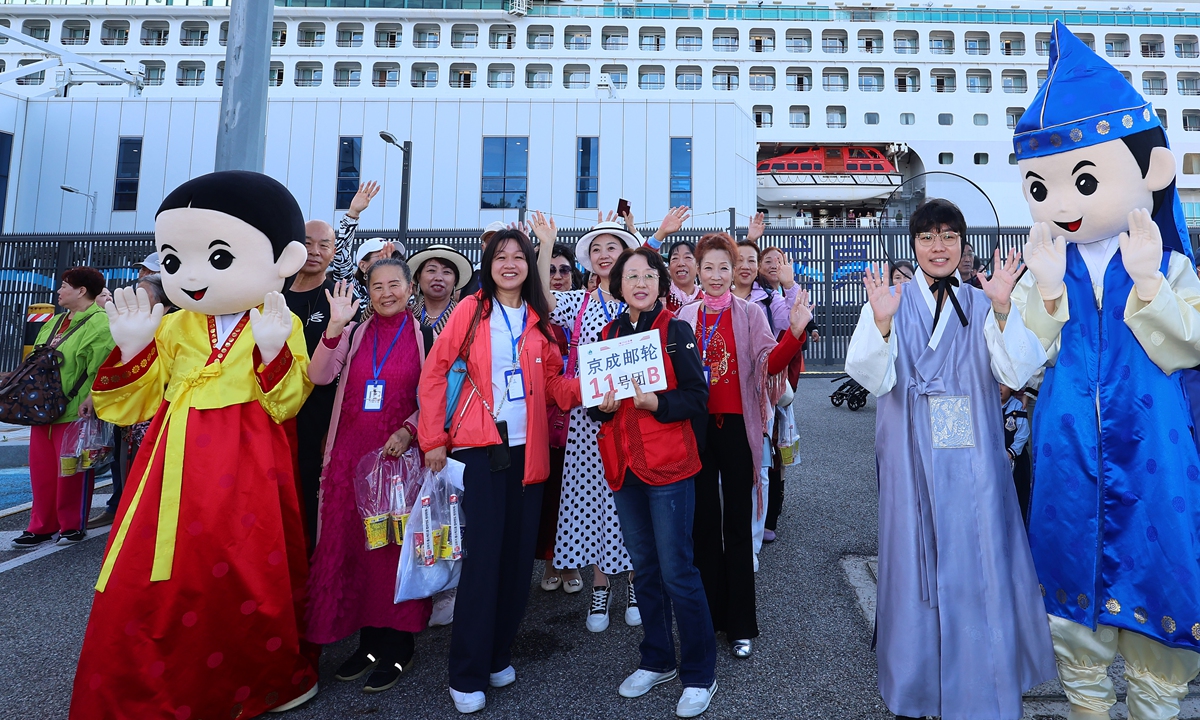
Chinese tourists arrive by a cruise ship on the first day of South Korea's visa-free entry for Chinese group tourists at the port of Incheon in South Korea on September 29, 2025. Photo: VCG
Recently, the South Korean tourism industry has suggested to the government that the visa-free policy for Chinese group tourists be extended. This joint appeal from South Korean airlines, hotels, tourism, culture, and food companies and group representatives confirms an important trend: China's unilateral visa-free policy, implemented with an open attitude, is creating a "ripple effect," inspiring more and more countries to respond with concrete actions and promoting a new visa-free pattern of "two-way travel" and "multi-directional openness."Say's law in economics states that supply creates its own demand. The visa-free policy has created an "institutional supply" model: By reducing transaction costs across borders, it fosters expectations of convenience, stimulates potential tourism demand, and benefits both China and the world. Since South Korea implemented its visa-free policy for Chinese group tourists from September 29 this year to June 30 next year, this has created a positive interaction with China's visa-free policy for South Korea. South Korean media reports indicate that within one month of the policy's implementation, the number of Chinese visitors to the Shinsegae Duty Free Shop in Myeongdong increased by 90 percent compared to the same period last year, with sales increasing by 40 percent. The South Korean tourism industry's request to extend the visa-free period reflects a respect for economic principles and a commitment to promoting development.
The significance of the mutual visa-free policy between China and South Korea extends far beyond the economic sphere. From January to October this year, the number of tourists from both sides reached over 7 million, exceeding the total for last year. The increased convenience for people-to-people exchanges has built a bridge between China and South Korea. As tourists stroll through the streets and alleys, taste local delicacies, and interact with local residents, every encounter dissolves barriers, and every exchange builds mutual trust. This kind of people-to-people interaction touches the hearts of the people and cultivates a deep social foundation for bilateral relations, deepening mutual understanding and relations between the two nations. The goodwill shown by the Chinese and South Korean governments in granting mutual visa-free access sends a positive signal to the people of both countries.
Those benefiting from China's visa-free "circle of friends" are not just South Korea. Currently, the country grants either unilateral visa exemption or mutual visa-free entry to more than 70 countries. Moreover, the number of countries eligible for visa-free transit to China has increased to 55, while the number of entry ports has expanded to 60 across 24 provincial-level jurisdictions, and the maximum permitted stay has been uniformly extended to 240 hours.
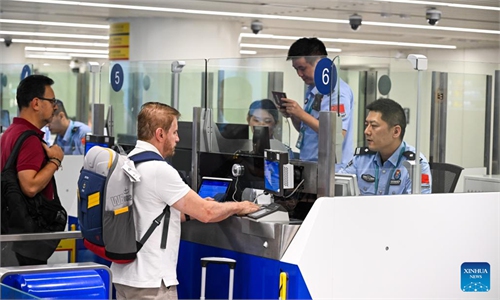
The effectiveness of this policy has been validated by data: Statistics from the Shenzhen border inspection station show that as of November 25, the number of inbound and outbound travelers at Shenzhen airport has surpassed 6 million for the first time in five years, representing a year-on-year increase of over 23.4 percent. Among these, visa-free foreign nationals accounted for nearly 60 percent of the total number of inbound foreign travelers, with a year-on-year growth of over 133.3 percent.
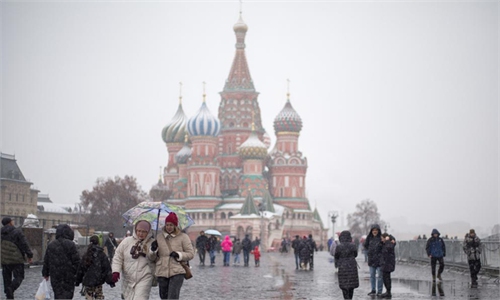
Chinese citizens exploring the outside world and foreign tourists engaging in "China Travel" represent a story of mutual journey. The suggestions from South Korea's tourism industry are not an isolated case. Starting in November, New Zealand implemented a visa-free policy for Chinese citizens holding valid Australian visas; in the same month, the Philippines launched an eVisa for Chinese nationals; Russian President Vladimir Putin stated recently that a visa-free policy for Chinese citizens traveling to Russia will take effect. As more and more countries experience tangible benefits from their interactions with China, and as an increasing number of people form genuine friendships through cross-border exchanges, a more open, inclusive, and cooperative world is no longer a distant ideal, but a reality that is on the horizon.
The scale and quality of Chinese tourists "going out" are generating positive spillover effects on a global scale. Today's Chinese tourists place greater emphasis on cultural experiences and in-depth travel, which in turn drives global tourist destinations to continuously improve service quality and enrich product offerings. Meanwhile, an increasing number of foreign tourists are entering China through visa-free policies, discovering a modern China that transcends established perceptions and information cocoons. They are no longer limited to visiting iconic sites like the Forbidden City and the Great Wall. Instead, they are exploring the urban streets and rural landscapes of China. This deep cultural exchange allows the world to gain an accurate, multidimensional and panoramic image of China, effectively promoting mutual learning among civilizations and connecting hearts.
Through the mutual visa-free policy between China and South Korea, there is a broader picture: In an era of China's sustained development and deep global interconnectivity, mutual benefit and win-win outcomes are not just theoretical concepts but achievable realities; open cooperation is not a "win-lose" situation but a wise choice that benefits all parties. Each foreign tourist coming to China through the visa-free policy and every Chinese travel group enjoying the convenience of outbound travel are vivid reflections of China's connectivity with the world, contributing to the construction of an innovative, vibrant, interconnected, and inclusive global economy.
RELATED ARTICLES