SPORT / MISCELLANY
Heilongjiang to host inaugural ice-snow sports super league
Top winter tourism destination hits peak season
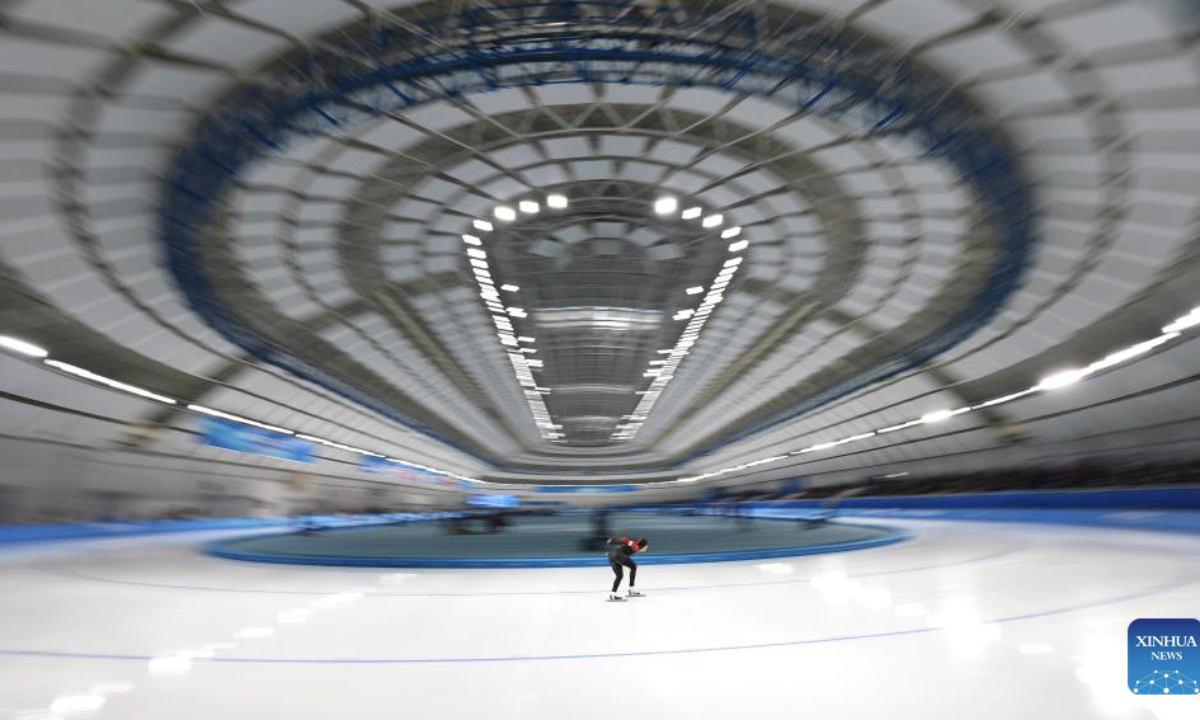
Photo: Xinhua
Following the Cunchao (Village Super League) in Southwest China's Guizhou Province and the Suchao (Jiangsu Football City League) in East China's Jiangsu Province, Heilongjiang Province in Northeast China will host the inaugural ice-and-snow sports super league (Bingchao), according to the Heilongjiang Provincial Sports Bureau.Featuring 100 events ranging from skiing and skating to snowball fights, the Bingchao will be held as the region enters its peak winter tourism season. It includes traditional winter sports such as ice hockey, curling, skating and skiing, as well as leisure and fitness activities built around ice-and-snow settings, including ice dragon boat racing, snow soccer and winter fishing. It covers almost every sport and game that can be played on ice or snow.
For example, in addition to professional speed skating and snow rugby competitions involving international participants, it will also stage popular, fun-focused events such as snow football challenges and a snowball fight tournament.
Wang Xianyu, director of the bureau, told the Global Times that the event aims to harness the sports fever sparked by the 2025 Harbin Asian Winter Games. This is expected to further promote the integration of winter sports, culture and tourism.
"By using winter sports as a driving force, the super league is set to spur the development of the entire ice-and-snow industry chain, including winter culture, equipment and tourism, and inject new momentum into the province's high-quality development," noted Wang.
Wang said the Bingchao will utilize distinctive tourism resources across the province to launch city culture festivals, travel photography contests and other activities around major competition venues, thus creating an immersive ice-and-snow tourism experience combining athletic excitement, leisure travel and specialty consumption.
Suihua will host a youth winter sports meet, where young athletes from 13 cities across the province will compete. The event will also feature ice hockey, curling and other competitions aimed at identifying and developing promising future talent, according to Wang.
With its emphasis on youth participation, the ice-and-snow super league is designed to do more than stimulating consumption, Bu Xiting, an associate researcher with the School of Cultural Industries Management at the Communication University of China, told the Global Times.
According to Bu, it also aims to help cultivate talent for winter sports, offering a replicable northern model for transforming China's ice-and-snow economy from short-term "traffic" to long-term "retention."
The competition will run from December 2025 to March 2026, with its focus primarily on mass participation sports. Super league competition participants will be granted a cultural-tourism pass for special activities such as "Skating with Champions" courses and world champion gold medal exhibitions held in Qitaihe in Heilongjiang, said Zhang Yueyang, vice mayor of the city, at a press conference held on Thursday.
As home of multiple Winter Olympic and world champions, including Yang Yang, Wang Meng and Fan Kexin, this city is expecting a surge in visitors this winter, Zhang added.
In line with the "sports-plus" model seen in the Cunchao, which boosted local cultural tourism, and the Suchao, which drove service-sector revenues, the ice-and-snow super league builds on Heilongjiang's strong winter season consumption base. Balancing public accessibility with competitive sports, it both extends the mass participation spirit of grassroots events like Cunchao and taps into regional IPs such as "the city of ice hockey," deepening the integration of sports, culture, tourism and industry, Bu noted.
Beyond the cities hosting major events, the broader province is also accelerating its winter tourism push. Boasting a range of landmark winter attractions, Heilongjiang is mustering its unique ice-and-snow resources to generate new economic momentum.
The market size of the ice-and-snow economy in this province reached 266.17 billion yuan ($37.6 billion) in 2024, of which ice-and-snow tourism contributed 182.33 billion yuan, the provincial bureau of statistics said, according to Xinhua.
RELATED ARTICLES