Illustration: Liu Rui/GT
Editor's Note:The term "Cool China" has recently gained traction as a fresh descriptor in certain Western public opinion. Many publications have engaged with this idea, propelling "Cool China" further into global conversation. Against this backdrop, Beat Schneider (Schneider), emeritus professor at the Bern University of the Arts in Switzerland, recently shared his impressions of China over the decades in an interview with the Global Times (GT). Schneider told the reporter that the leadership of the Communist Party of China (CPC) and China's institutional advantages have enabled rapid development of the country's productive forces in a short period, and that Europe should enhance cooperation with China in global governance to promote positive reform of the international order.
GT: You have visited China many times. What do you think are the biggest changes in China over the past decade or so?
Schneider: My first trip to China was in 1986. Compared with that time, today's China has undergone truly astonishing changes. What I find most incredible is the fact that over 800 million people have been lifted out of poverty over more than 40 years of reform and opening-up. I have visited rural areas in China, where the infrastructure is now very well developed. People have shaken off poverty and embarked on a new chapter in their lives.
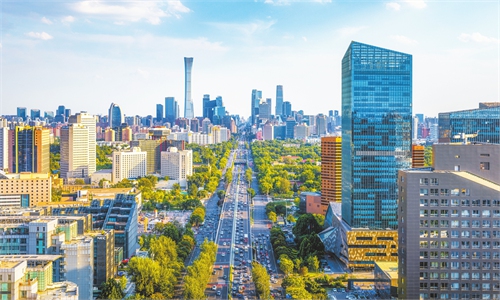
Chinese cities are extremely modern. Today, China is even more modern than Switzerland. Take Beijing as an example - its number of solar photovoltaic panels exceeds that of many European cities. In terms of everyday life, whether it is electric vehicles, convenient rail transit or 5G communications, the infrastructure of Chinese cities feels very modern to Europeans.
GT: The Fourth Plenary Session of the 20th CPC Central Committee has deliberated and adopted the Recommendations of the CPC Central Committee for Formulating the 15th Five-Year Plan for National Economic and Social Development. As a Western scholar, how do you view Chinese modernization? What lessons can China's five-year plans offer for Western governance?
Schneider: My understanding is that the core essence of the recommendations is that China will pursue modernization in its own way over the next five years.
As a Western scholar, I believe that Chinese modernization has important reference value for Western modernization. In my view, Western-style modernization has already failed, as the destructive effects of the capitalist system on productive forces are becoming increasingly evident. Chinese modernization has avoided these drawbacks. One important concept is the leadership role of the CPC in China's economic development. It is precisely because of the CPC's leadership that China's productive forces have been able to develop at an extraordinary pace in a short period, enabling China to become both an economic powerhouse and a beautiful country.
As for what Western countries can learn from this, the West cannot learn from China's five-year plans due to differences in political systems. Elections in Western countries take place one term after another, which makes long-term planning difficult. Even if the best plans are made, they are hard to implement. Planning is a major advantage of China's system. It is precisely through macro regulation and long-term planning that China's productive forces have developed rapidly and its innovation has continuously gained momentum.
GT: How do you view the Global Governance Initiative (GGI) proposed by China? This year marks the 50th anniversary of diplomatic relations between China and the EU, as well as the 75th anniversary of the establishment of China-Switzerland diplomatic ties. In advancing positive reform of the international order, in which areas do you think the Europe and China can cooperate?
Schneider: A new multipolar world order is taking shape. What will the future of a multipolar world look like? China has put forward the Global Development Initiative, the Global Security Initiative, the Global Civilization Initiative, and the GGI. Through these proposals, China is offering its vision and suggestions for the development of multipolarity to the entire world. I approach this goodwill with a very positive and highly appreciative attitude.
In my view, the most important aspect of the GGI is its emphasis on the equal participation of all sovereign states in global governance. All countries in the world and all of humanity share a common future - this is a cultural tradition and philosophical concept that China has long upheld. Another impressive feature of the GGI is its inclusiveness. Regardless of differences in political systems or social and cultural backgrounds, all countries are equal participants. Moreover, the initiative is highly pragmatic, as it emphasizes practical cooperation.
Europe and China should seek new forms of cooperation in international governance. From a rational perspective, most people in Europe are willing to accept the GGI, although there may be certain practical difficulties, such as the influence of the US and that of Western consortiums and capital. Even so, I believe it is still necessary to make proactive efforts in this direction. Despite the challenges, cooperation remains worth pursuing.
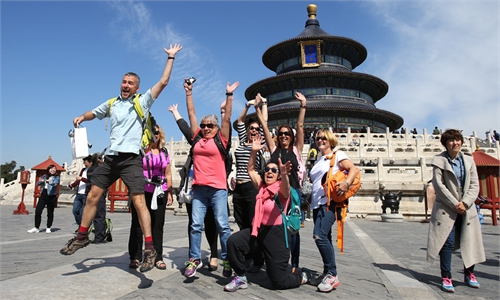
GT: In recent years, China has expanded its visa-free policy for citizens from many countries. With the growing number of foreign visitors to China, more people are using the term "Cool China" to describe the country's innovation and vitality on overseas social media. From your exchanges with scholars and friends in Europe, which aspects of contemporary China do they find the "coolest"?
Schneider: In recent years, "Cool China" has become a symbol of China's rising soft power. It is precisely this kind of soft power beyond politics that has made China appear increasingly "cool."
Many young students at universities in Western countries are exploring China at a deeper level. For instance, they show a strong interest in Chinese philosophical concepts such as yin and yang. More importantly, China's high-tech achievements have left a deep impression on European youth. China's high-speed rail, electric vehicles and technology hubs like Shenzhen all give China tremendous appeal in the eyes of many Europeans.
In other words, China's high-tech achievements have made a strong impression on young Europeans. This sentiment isn't limited to the younger generation - my peers share this view as well. Thus, while some Europeans still harbor unfriendly attitudes toward China, most acknowledge that China is "cool" in these areas.
RELATED ARTICLES