Illustration: Liu Rui/GT
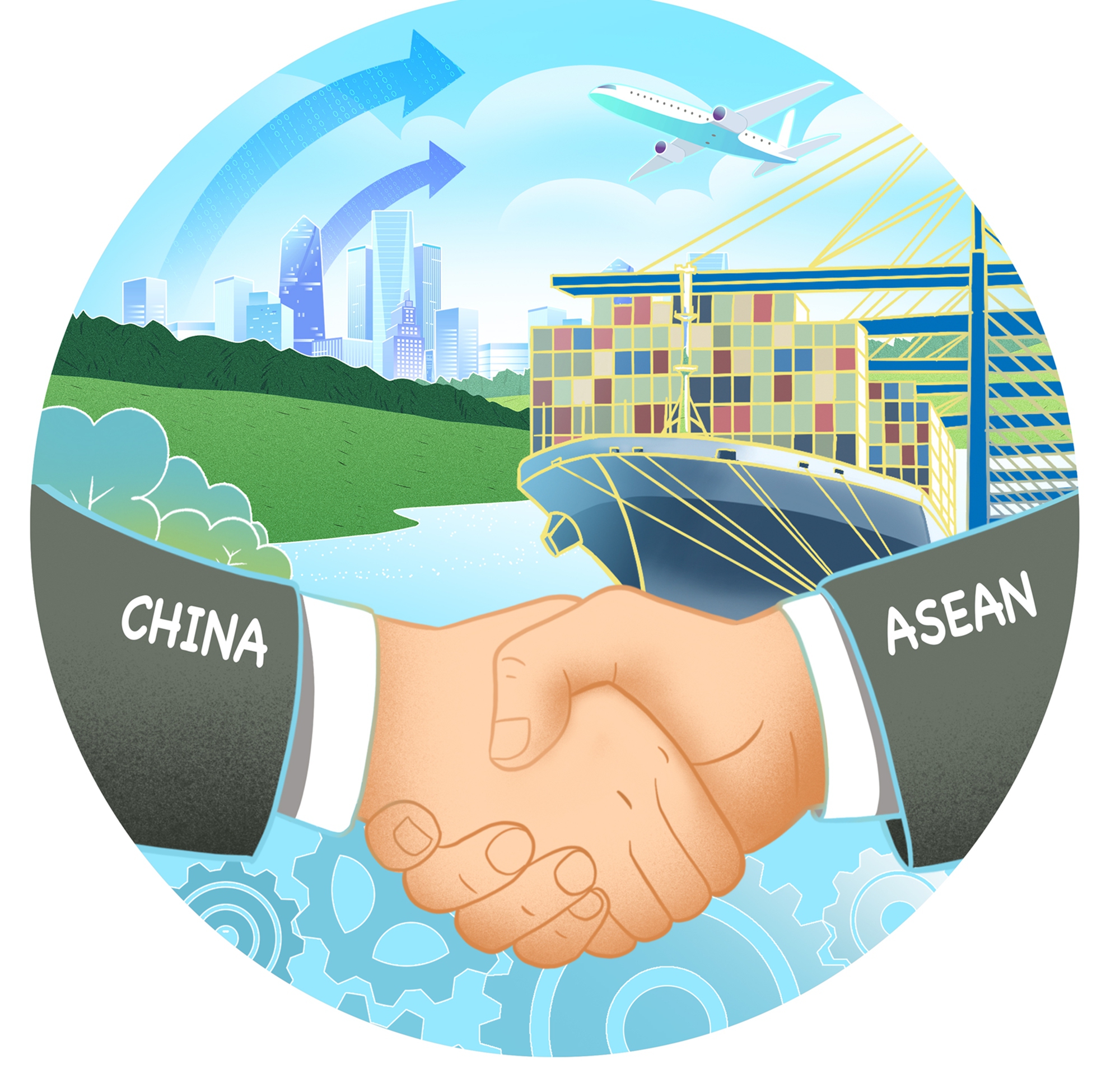
A segment of a new high-speed railway, connecting Pingxiang and Chongzuo in South China's Guangxi Zhuang Autonomous Region, is set to be put into operation on Friday, marking the full opening of the Nanning-Pingxiang high-speed line, according to China State Railway Group.Located in the southwestern part of the Guangxi Zhuang Autonomous Region, the Nanning-Pingxiang high-speed railway links Nanning, the capital of Guangxi, with Pingxiang, a city on the China-Vietnam border. Its launch not only creates a fast passenger corridor directly to the frontier but also strengthens Nanning's role as an economic hub by enhancing regional connectivity, offering a clear window into the deepening economic and trade ties between China and ASEAN.
Market demand and public need are the primary drivers behind the project. Industrial chains between China and Vietnam have become increasingly intertwined, and cross-border personnel exchanges have grown rapidly. China has been Vietnam's largest trading partner for more than two decades, with bilateral trade surpassing $260 billion in 2024.
As a major land port for China-Vietnam trade, Pingxiang has faced increasing strain from surging logistics and passenger flows. By cutting the travel time to just one hour and 15 minutes, the new high-speed railway will facilitate closer industrial cooperation, smoother business interactions and more integrated supply chains, turning geographical proximity into tangible economic synergy.
The railway also marks a new phase of "refined network construction" in China-ASEAN connectivity. The Nanning-Pingxiang high-speed railway serves as a critical link in the regional transport network. With its full operation, Guangxi has now established three major railway corridors connecting with ASEAN countries, and its border railway system has evolved into an integrated and efficient framework in which high-speed and conventional rail services complement and reinforce each other.
From a broader perspective, railway projects, both within Guangxi and those linking China with ASEAN nations, are gradually forming an expansive transport network that supports regional trade and personal mobility. Since its launch in 2021, the China-Laos Railway has handled more than 62.5 million passenger trips and carried more than 72.5 million tons of cargo, injecting strong momentum into regional economic and social development. With enhanced connectivity, trade costs are continuously reduced, and the development potential of the region is further unleashed.
This progress embodies the joint efforts by China and ASEAN to deepen cooperation and advance regional integration. As each other's largest trading partners, China and ASEAN together represent one-fourth of the world's population and more than one-fifth of the global economy, contributing more than 30 percent to global economic growth.
In this context, Guangxi, which is China's only province with both land and sea connections to ASEAN, serves as a pivotal gateway and frontier window. Nanning has established a comprehensive multi-modal transportation network that integrates road, rail, maritime, and air links. Railways enable sea-rail intermodal transport to ASEAN countries, cross-border China-Vietnam freight trains operate regularly, and the Nanning Airport has launched 15 international cargo routes reaching 17 cities across ASEAN and South Asian countries, according to the Guangming Daily.
The continuous upgrading of Guangxi's transport network offers a tangible reflection of the growing economic and trade ties between China and ASEAN. It exemplifies how pragmatic cooperation fuels regional growth, translating infrastructure development into shared prosperity for people.
In summary, the opening of the Nanning-Pingxiang high-speed railway carries significance far beyond local transport improvement. It sends a clear signal about the increasingly close economic ties between China and ASEAN, which make continuously improving infrastructure connectivity essential for deepening cooperation amid the shifting global economic and trade landscape.
RELATED ARTICLES