Chinese vice premier holds video call with US treasury secretary, trade representative
Business groups seek mutually beneficial co-op despite politicized move by some US lawmakers
China US Photo: VCG
Chinese Vice Premier He Lifeng, also Chinese lead person for China-US economic and trade affairs, held a video call on Friday with US Treasury Secretary Scott Bessent and US Trade Representative Jamieson Greer, the Xinhua News Agency reported on Friday.
Both sides held in-depth and constructive discussions on implementing the important consensus reached during the meeting between the two heads of state of China and the US in Busan and their phone call on November 24. They exchanged views on advancing practical cooperation in the next stage and properly addressing each other's economic and trade concerns.
Both sides spoke positively of the progress made in carrying out the outcomes of the China-US economic and trade consultations in Kuala Lumpur, and said they would continue, under the strategic guidance of the two heads of state, to make full use of the consultation mechanism, expand the list of areas for cooperation, narrow the list of outstanding issues, and work to ensure that China-US economic and trade relations move steadily in a positive direction, per the report.
The talk came as US industries, such as the semiconductor sector, made efforts to retain their presence in the Chinese market against US restrictions, while heightened exchanges in other sectors, including soybeans, underscored the strong desire among industries in both countries to stabilize bilateral cooperation.
US chipmaker Advanced Micro Devices' (AMD) CEO Lisa Su said on Thursday that the company holds licenses to ship certain MI308 chips to China and is prepared to pay a 15 percent tax to the US government if it proceeds with shipments, Reuters reported. Su made the remarks at a conference hosted by Wired in San Francisco.
When asked whether China is prepared to purchase AMD's MI308 products, Chinese Foreign Ministry spokesperson Lin Jian reiterated on Friday that China has made clear its position more than once on the US export of chips to China. "We hope the US will take concrete actions to keep the global industrial and supply chains stable and unimpeded, Lin said.
Meanwhile, another US chip giant, Nvidia, has been lobbying the US administration and Congress to ease export controls that currently prevent the company from selling its leading-edge AI chips like H200 and Blackwell in China, according to media reports.
Nvidia is on the verge of securing a massive lobbying win after US lawmakers kept a measure out of must-pass defense legislation that would have limited the company's ability to sell their advanced AI chips to China and other adversary nations, Bloomberg reported on Wednesday.
Also speaking on Wednesday, Nvidia CEO Jensen Huang said during a meeting with White House officials that he was uncertain whether China would accept the H200 even if US regulators approved its export. "We can't degrade chips that we sell to China, they won't accept that," he said, as cited by Bloomberg.
Chinese experts said that these developments highlight US tech giants' efforts to safeguard their position in China's highly lucrative semiconductor market, which have proven to be critical for their long-term profitability and global competitiveness, while urging hawkish lawmakers not to ignore business calls for mutually beneficial cooperation, which the latter sees as essential to stabilizing bilateral relations.
US chipmakers such as Nvidia and AMD rely heavily on China to maintain production scale and profitability, and as China accelerates the development of domestically produced alternatives with strong in-house R&D, these companies risk permanently losing access to the Chinese market — a key source of concern for industry leaders, Xin Qiang, deputy director of the Center for American Studies at Fudan University, told the Global Times on Friday.
"Within the US, particularly in the business community, there is strong resistance to further confrontation. Many fear deeper decoupling or supply-chain disruptions, as maintaining basic stability serves the interests of both sides," Xin said.
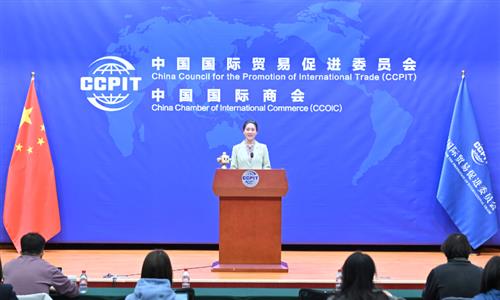
On Wednesday, China Council for the Promotion of International Trade (CCPIT) Chairman Ren Hongbin led a Chinese business delegation to a meeting with the US Semiconductor Industry Association (SIA) and its member companies. The two sides held in-depth discussions on promoting China-US semiconductor cooperation, strengthening multilateral collaboration, and ensuring stable and resilient global industrial and supply chains, per CCPIT.
Broader call for cooperation
Beyond the semiconductor sector, other US industries with substantial exposure to the Chinese market are also working to stabilize and expand bilateral ties to offset the negative effects of Washington's protectionist policies.
Jim Sutter, CEO of the US Soybean Export Council, said in Washington on Thursday that China's scale as an importer, combined with the US role as a leading exporter and the long history of bilateral agricultural cooperation, provides vast opportunities for collaboration in green development and low-carbon production, Xinhua reported on Friday.
These comments came as CCPIT Chairman Ren Hongbin met with Sutter in Washington to discuss strengthening cooperation in agriculture.
Sutter said that China remains critical to the US soybean industry. The US Soybean Export Council has been active in China since 1982 and has developed a strong and extensive network, which is why the Chinese market is "hard to be replaced," he said.
Also on Thursday, the China-US Economic and Trade Cooperation Forum and the promotion event for the fourth China International Supply Chain Expo were held in Washington, with more than 100 representatives from business communities on both sides participating, according to a CCPIT repost of a China Trade News report.
Ren emphasized that mutual benefit is the defining feature of China-US economic relations. "After decades of engagement, the two economies have become deeply interconnected," Ren said, adding that CCPIT will continue to support companies in both countries in deepening practical cooperation. Ren also invited US firms to actively participate in APEC China Year business events in 2026.
US business representatives at the forum expressed confidence in the long-term potential of the Chinese market and pledged to strengthen supply-chain partnerships with Chinese firms. They called on both governments to maintain an open, stable, and predictable business environment, create more opportunities for cooperation, and jointly build secure, efficient, and resilient global supply chains, per the report.
"If Washington hopes to restore stability and reopen space for cooperation, some of its politicians must adopt a more pragmatic, rational, and responsible approach to China, especially honoring the consensus reached during the leaders' meetings in Busan and earlier in Kuala Lumpur," according to Xin.
RELATED ARTICLES