Illustration: Chen Xia/GT
Data from South Korea's Ministry of Trade, Industry and Resources showed that the country's exports reached $640.2 billion in the first 11 months of this year, a year-on-year increase of 2.9 percent and the highest level for the period since 2022, according to a Yonhap News Agency report on Sunday.Meanwhile, Chinese customs figures revealed on Monday that China's imports from South Korea during the same period grew by 3.2 percent year-on-year.
As South Korea's largest overseas market, China plays a significant role in sustaining its export growth. The steady expansion of China's imports aligns closely with the overall rise in South Korea's exports, illustrating the deeply interconnected nature of bilateral trade.
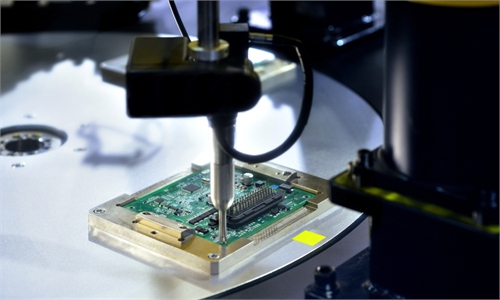
This linkage is particularly evident in key industries. For instance, the semiconductor sector, which serves as a pillar of the South Korean economy, accounts for more than 20 percent of its total exports, with a big portion of those semiconductors destined for China, strongly supporting China's vast electronics manufacturing sector and consumer market.
In 2024, bilateral trade reached $328.08 billion, a year-on-year increase of 5.6 percent. China has remained South Korea's largest trading partner for 21 consecutive years, and South Korea has returned to being China's second-largest trading partner. As the global industrial chain faces restructuring pressures, such close trade exchanges not only reflect the resilience of the bilateral economic relationship but also indicate broad potential for further deepening cooperation.
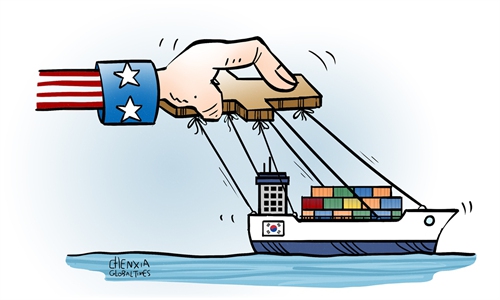
There are indeed voices in South Korea expressing concerns about industrial competition with China. For instance, according to a report released on Sunday by a senior research fellow at the Korea Institute of Finance, Chinese export prices fell steadily from the second quarter of 2023 to September 2025, intensifying the competitive pressure on South Korean exporters across a range of sectors, according to Yonhap.
This trend largely reflects the ongoing adjustments in global manufacturing and China's industrial upgrading, but it won't change the strategic and mutually beneficial nature of the cooperation between the two sides.
Competition and cooperation often coexist. In the electronics industry, for example, South Korea's strengths in high-end chips and China's robust manufacturing capacity and market demand have created a relationship of deep complementarity and synergy. While China's industrial advancement introduces competitive dynamics, it also opens broader avenues for the application of South Korean technologies and products. Therefore, over-focusing on competitive threats may instead lead to neglecting the huge opportunities for industrial chain collaboration and joint market development.
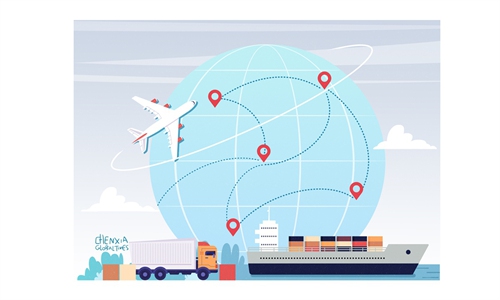
Moreover, jointly exploring the Asian market has emerged as a crucial pathway for China and South Korea to navigate global industrial chain restructuring and achieve mutual benefits. The continued expansion of intra-Asian trade underscores the region's strong internal economic momentum. Recent figures show that South Korea's exports to China and Southeast Asia have grown significantly, further confirming the importance of the Asian market.
In November, South Korea's exports to China increased by 6.9 percent year-on-year, and its exports to Southeast Asia rose by 6.3 percent, while exports to the EU fell by 1.9 percent, government data showed.
With the in-depth advancement of the Regional Comprehensive Economic Partnership Agreement and the growth opportunities brought by emerging fields such as the digital economy and green transformation, the scope for cooperation between China and South Korea will become increasingly broad.
Amid uncertainties in the global economy, as important participants in the Asian and even global manufacturing and trade networks, efforts by China and South Korea to strengthen industrial chain synergy and jointly maintain regional economic stability will not only help deepen the integration and expansion of the two countries' markets but also inject important impetus into promoting sustained regional prosperity and global economic growth.
RELATED ARTICLES