Chinese envoy to UN refutes erroneous remarks by certain countries, reiterates China’s position on South China Sea
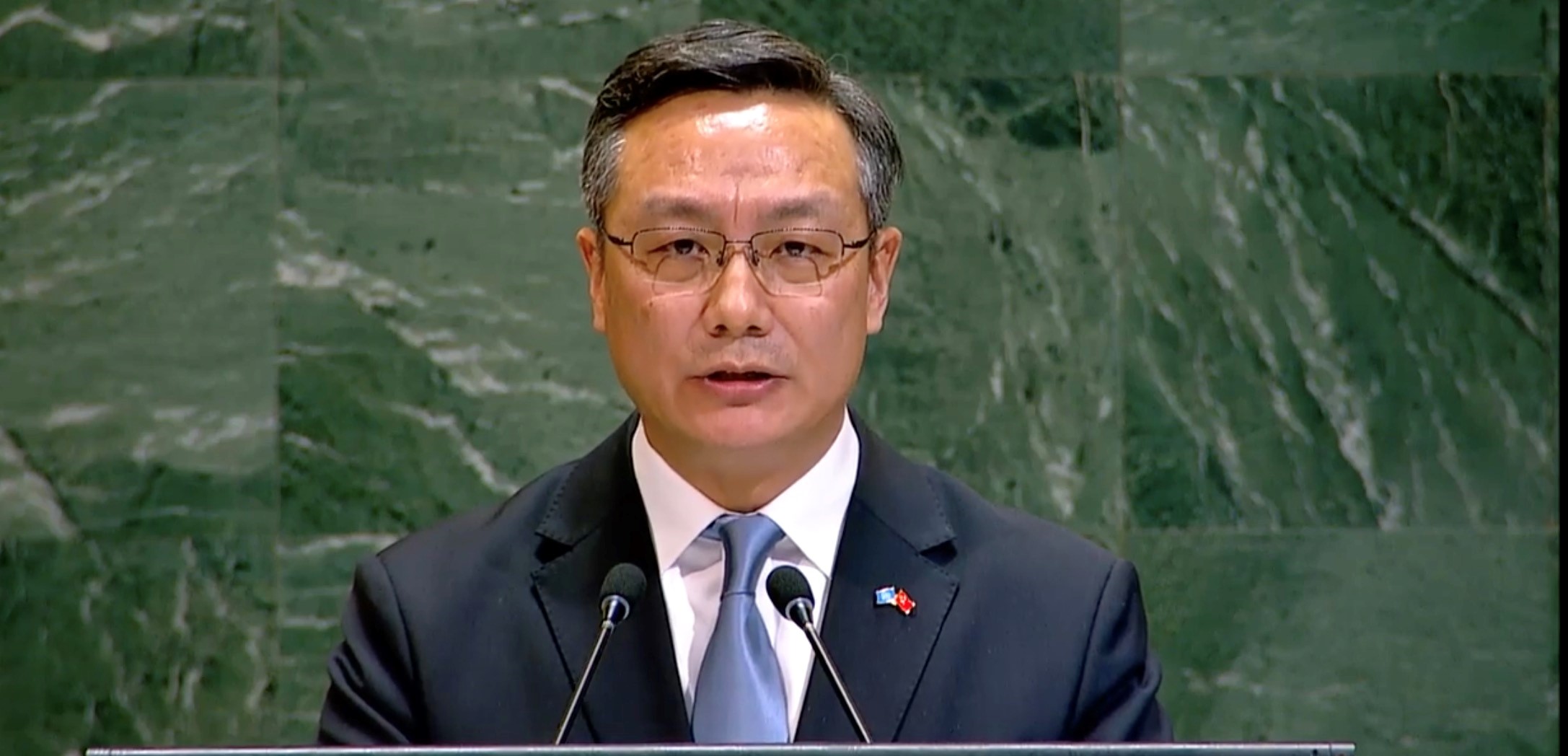
Screenshot of Deputy Permanent Representative Sun Lei speaking at the UN General Assembly's 80th session on December 8, 2025.
A Chinese envoy to the UN said at a United Nations session on Monday local time that the General Assembly is not the proper forum for addressing the South China Sea issue, but said it must firmly counter "erroneous" remarks by certain countries.At the UN General Assembly's 80th session on Monday local time, during a plenary discussion on "Oceans and the Law of the Sea," Ambassador Sun reiterated that China has indisputable sovereignty over the Nansha Islands and their adjacent waters, as well as sovereign rights and jurisdiction over the relevant maritime areas. China's territorial sovereignty and maritime rights and interests in the South China Sea are supported by solid historical and legal grounds, according to a release from China's Permanent Mission to the UN.
Sun emphasized that China's position on the so-called "South China Sea arbitration" is consistent, clear and firm. He said the arbitration was "a political farce disguised as law," violating fundamental principles of international law such as pacta sunt servanda and estoppel, as well as the United Nations Convention on the Law of the Sea (UNCLOS) and basic facts about the South China Sea. The "arbitral tribunal," he noted, acted beyond its authority and issued an unjust ruling that is illegal and void.
China does not accept or recognize the ruling, nor will it accept any claims or actions based on it, Sun said, stressing that China's territorial sovereignty and maritime rights in the South China Sea are unaffected under any circumstances.
He said that the Philippines' "maritime zones act," which unlawfully incorporates China's Huangyan Dao and the Nansha Islands into Philippine waters, constitutes a serious infringement on China's sovereignty and maritime rights and interests — and China firmly opposes it.
Sun stressed that the South China Sea remains one of the world's safest and freest shipping lanes, and that freedom of navigation and overflight has never been a problem. China supports such freedoms in accordance with international law, he said, but firmly opposes using the banner of "freedom of navigation" to infringe on China's sovereignty and security.
Sun said the Philippines' so-called "archipelagic sea lanes passage" actions for diverging from international rules and undermining the navigation rights of all parties.
Sun noted that while the overall situation in the South China Sea remains stable, the US continued military deployments and operations in the region are fueling tensions and constitute the greatest security challenge in the South China Sea.
China remains committed to resolving disputes peacefully through negotiations with directly concerned parties, fully implementing the DOC with ASEAN countries, and advancing a binding Code of Conduct to safeguard stability and promote shared prosperity, said Sun.
He outlined three proposals for maritime governance: putting people first and advancing sustainable ocean development; strengthening the rule of law to improve global ocean governance; and upholding multilateralism to maintain a fair and equitable maritime order.
Sun said the global maritime environment is facing mounting instability, accusing the US of pushing ahead with unilateral deep-sea mining that undermines the common heritage of humankind, using force at sea under dubious pretexts and politicizing issues ranging from undersea cables to distant-water fisheries and maritime routes. Such actions, he warned, pose serious risks to regional security and damage the international maritime order.
He called on the international community to resist unilateral maritime hegemony, uphold multilateralism and protect shared global interests, adding that China is willing to work with all parties to defend a maritime order grounded in international law.
Sun underscored that UNCLOS, together with other treaties and customary international law, forms the essential framework of today's ocean governance system. China supports the work of the International Tribunal for the Law of the Sea, the International Seabed Authority and the Commission on the Limits of the Continental Shelf. He reiterated China's opposition to any distortion or abusive application of UNCLOS, especially attempts to use dispute-settlement mechanisms without state consent.
Sun said the US not joining UNCLOS while selectively invoking its provisions when it suits and discarding them when it does not, and such behavior incompatible with the international rule of law.
RELATED ARTICLES